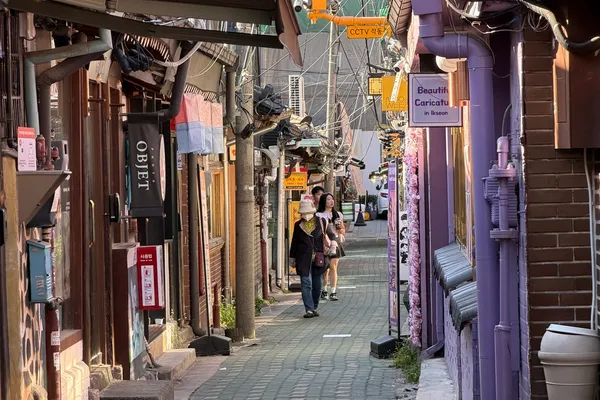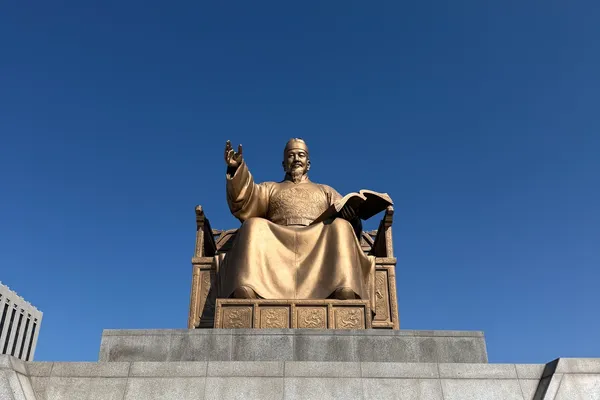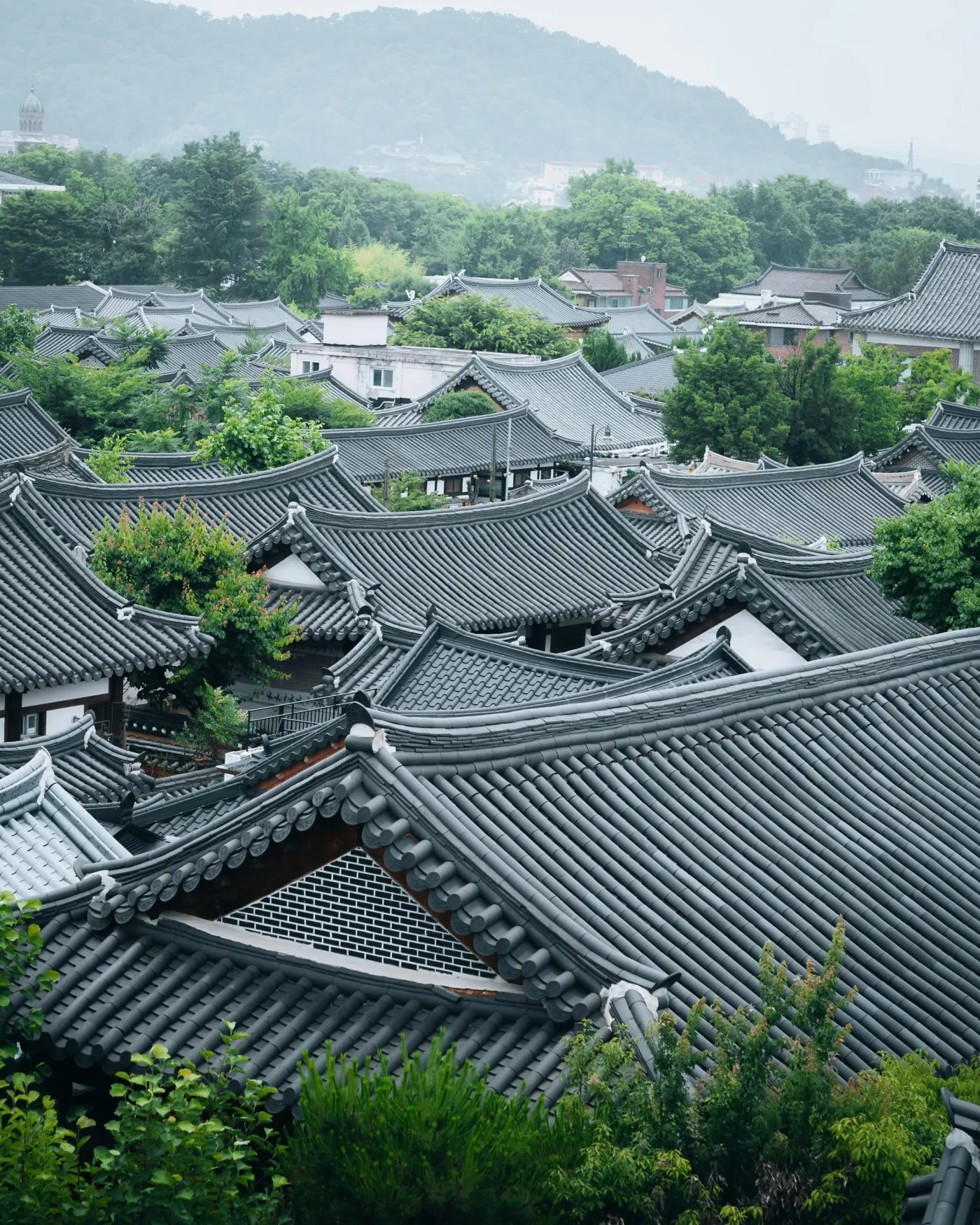
Tucked between the stone walls of Gyeongbokgung and Changdeokgung palaces, Bukchon Hanok Village is the rare neighborhood in central Seoul where the city's twentieth-century building boom seems to have politely stepped aside. The tiled rooftops of more than 900 hanok—traditional Korean wooden houses—descend the hillside in slow, overlapping waves, framed by gingko trees and the distant silhouette of Bugaksan.
For first-time visitors, Bukchon can feel deceptively simple: a few photogenic alleys, a hilltop view, an hour or two of wandering. In practice, the neighborhood rewards a slower, more deliberate walk. Many of the hanok are private homes, several house artisan studios and small museums, and the most beautiful corners are easy to miss without a route in mind.
This guide outlines a practical half-day plan—where to enter, which lanes to prioritize, how to behave as a guest in a residential district, and how to extend the afternoon into a memorable evening in Jongno.
What Is Bukchon Hanok Village, Exactly?
Bukchon, meaning "northern village," is a residential district of preserved hanok houses dating largely from the late Joseon dynasty and the early twentieth century. It is not a reconstructed folk village or theme park—people live here, walk their children to school here, and pay property taxes on homes that have stood for a century or more.
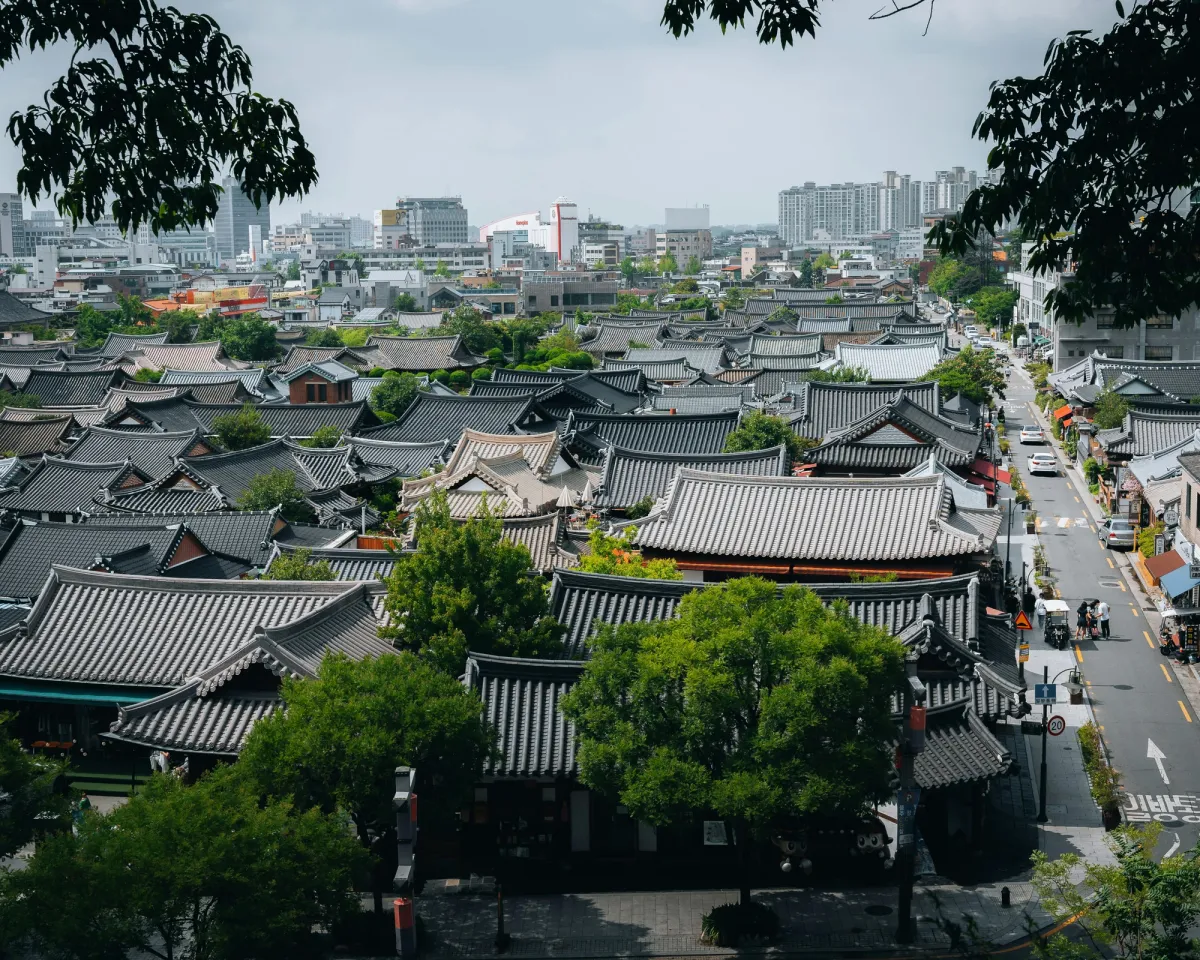
During the Joseon era, Bukchon was home to high-ranking civil servants and aristocratic *yangban* families, owing to its proximity to the two main royal palaces. The neighborhood's tight grid of alleys, sloping topography, and unified roofline survived the rapid redevelopment of postwar Seoul largely because of protective zoning introduced by Jongno-gu and the Seoul Metropolitan Government in the 1980s and refined in the 2000s.
Under the Seoul Metropolitan Government's hanok policy (hanok.seoul.go.kr), Bukchon today functions as both a living community and a cultural heritage area, with public subsidies available to residents who maintain traditional features such as wooden lattice doors, *giwa* tile roofs, and inner courtyards.
How Do You Get There, and When Should You Go?
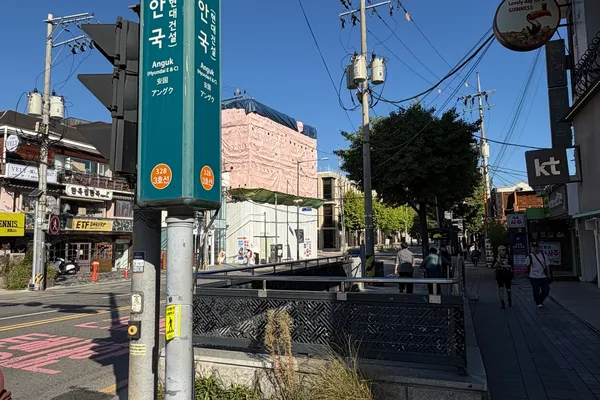
The most direct approach is by Seoul Metro Line 3 to **Anguk Station, Exit 2**. From the exit, walk north along Bukchon-ro for roughly five minutes and the first hanok-lined lanes will appear on your right.
| Detail | Information (as of September 2026) |
|---|---|
| Nearest station | Anguk Station (Line 3), Exit 2 |
| Walking time from exit | 5 minutes to first lanes |
| Suggested visit length | 2 to 3 hours |
| Best time | Weekdays, right at 10:00 |
| Tourist access | 10:00–17:00 only in the Bukchon-ro 11-gil zone; entry restricted 17:00–10:00, ₩100,000 fine (since 1 March 2025). No Sunday closure. |
| Admission | Free (paid entry for select museums and hanok stays) |
Weekday mornings offer the clearest light for photography and the lowest foot traffic. By early afternoon, particularly on weekends and Korean holidays, the main viewpoint on Bukchon-ro 11-gil can be densely crowded. Autumn (mid-October to early November) brings amber gingko leaves against grey tile, while late spring offers softer green and longer daylight.
Winter visits have their own appeal—frost on the rooftops, fewer tourists—but bring sturdy footwear, as the granite-paved slopes become slippery.
A Walking Route: The Eight Bukchon-gil Viewpoints
The most efficient way to see Bukchon is to follow the **Bukchon Eight Views (Bukchon Palgyeong)**, a series of eight numbered photo points identified by Jongno-gu. The route forms a rough loop of about 2.5 kilometers and takes between 90 minutes and three hours depending on stops.
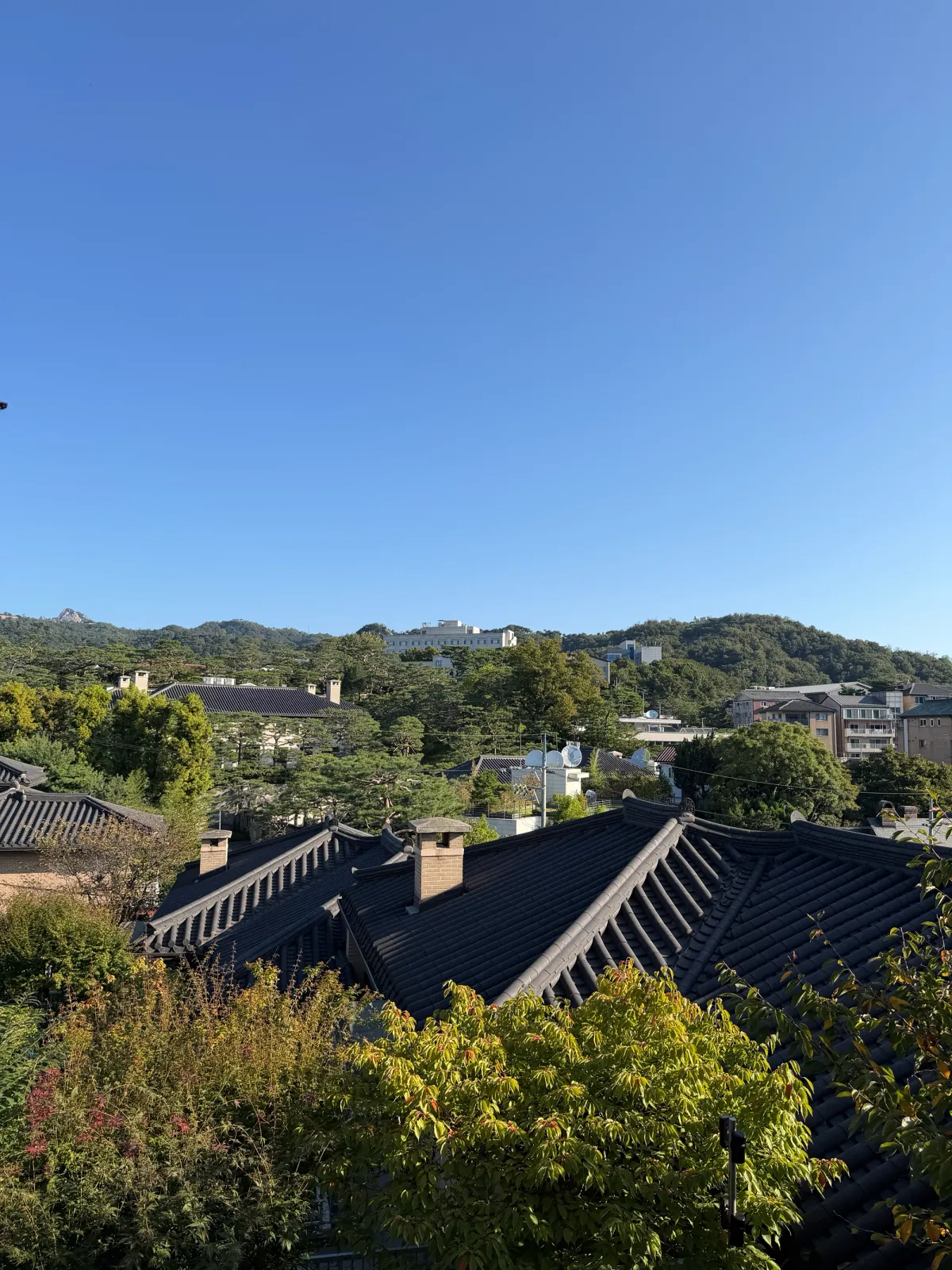
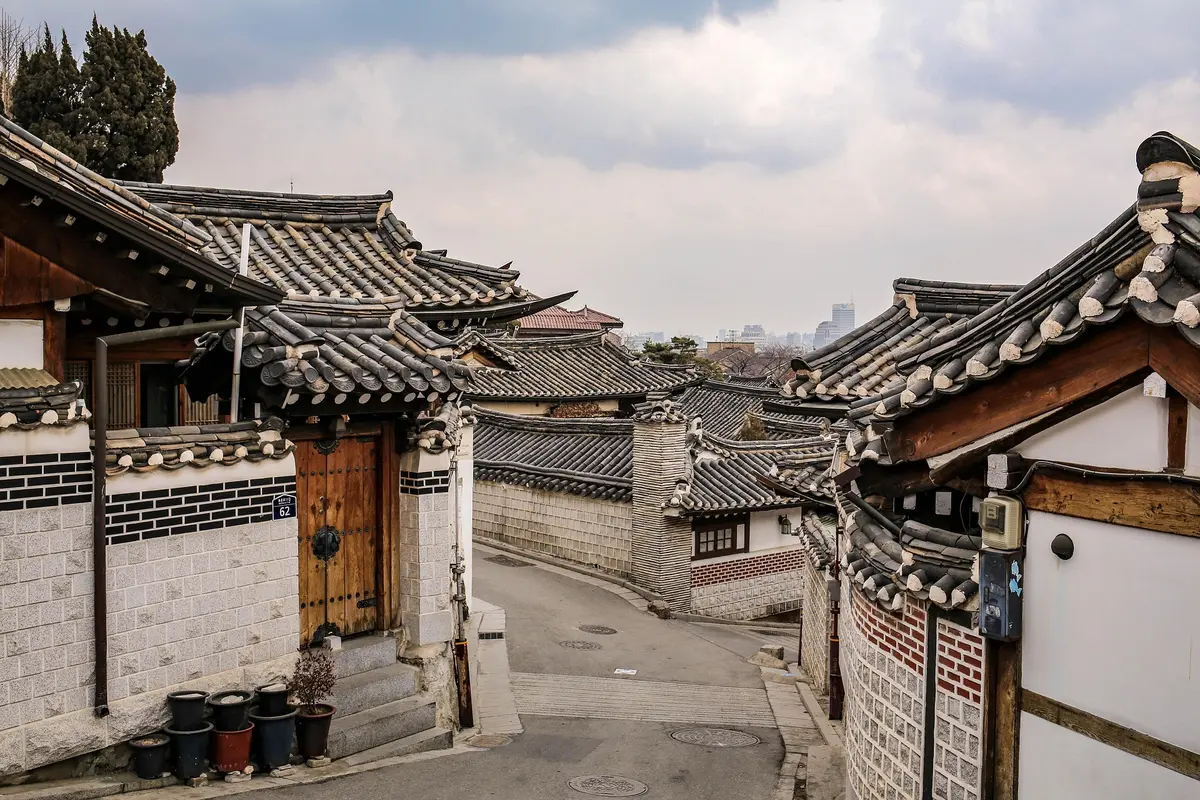
From Anguk Station Exit 2, walk north and turn right onto Bukchon-ro 5-gil. The early views (1 through 3) take in Changdeokgung's outer walls and the Wonseo-dong artisan quarter. View 4 climbs into the residential heart of the village, and views 5 through 7—along **Bukchon-ro 11-gil**—offer the iconic image of grey-tiled rooftops cascading toward the skyscrapers of central Seoul. View 8 descends through Samcheong-dong, where hanok mingle with independent galleries and cafés.
A few practical notes on the route:
- **The hill is real.** Bukchon climbs roughly 40 meters from Anguk Station to its highest point. Comfortable shoes are not optional. - **Signposts are bilingual.** Look for the small dark-blue numbered markers; tourist information booths near Anguk Station distribute free printed maps. - **Public restrooms** are available at the Bukchon Traditional Culture Center (free admission) on Gyedong-gil, which is also worth a 20-minute pause for its small exhibits on hanok architecture.
What Are the Visiting Hours and Rules?
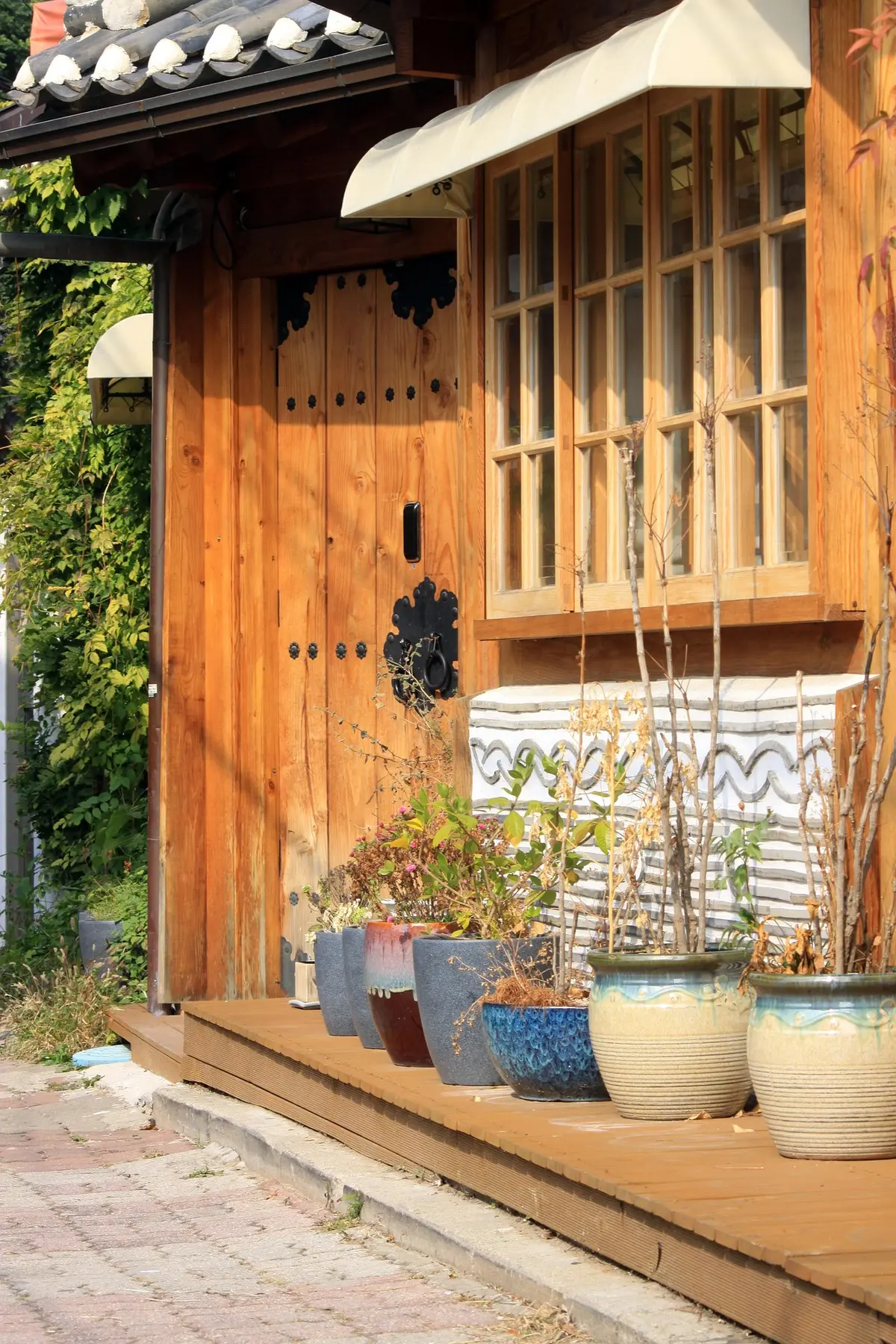
The single most important thing to understand about Bukchon is that it is someone's home. Residents have, in recent years, voiced concerns about noise, litter, and visitors entering private courtyards without permission. In response, Jongno-gu has designated a Special Management Zone along Bukchon-ro 11-gil: tourists may enter 10:00–17:00 only, entry is restricted 17:00–10:00, and there is no Sunday closure (enforced since 1 March 2025; as of September 2026).
A few guidelines that make the difference between a welcome guest and an unwelcome one:
- Speak quietly. Voices carry along the narrow stone lanes.
- Do not touch doors, gates, or *jangdokdae* (clay jar pots) on stoops.
- Photograph the architecture, not the residents.
- If a hanok displays a small "Private Residence" sign, do not pause directly in front of it.
- Avoid full hanbok photo shoots blocking the lane during peak hours.
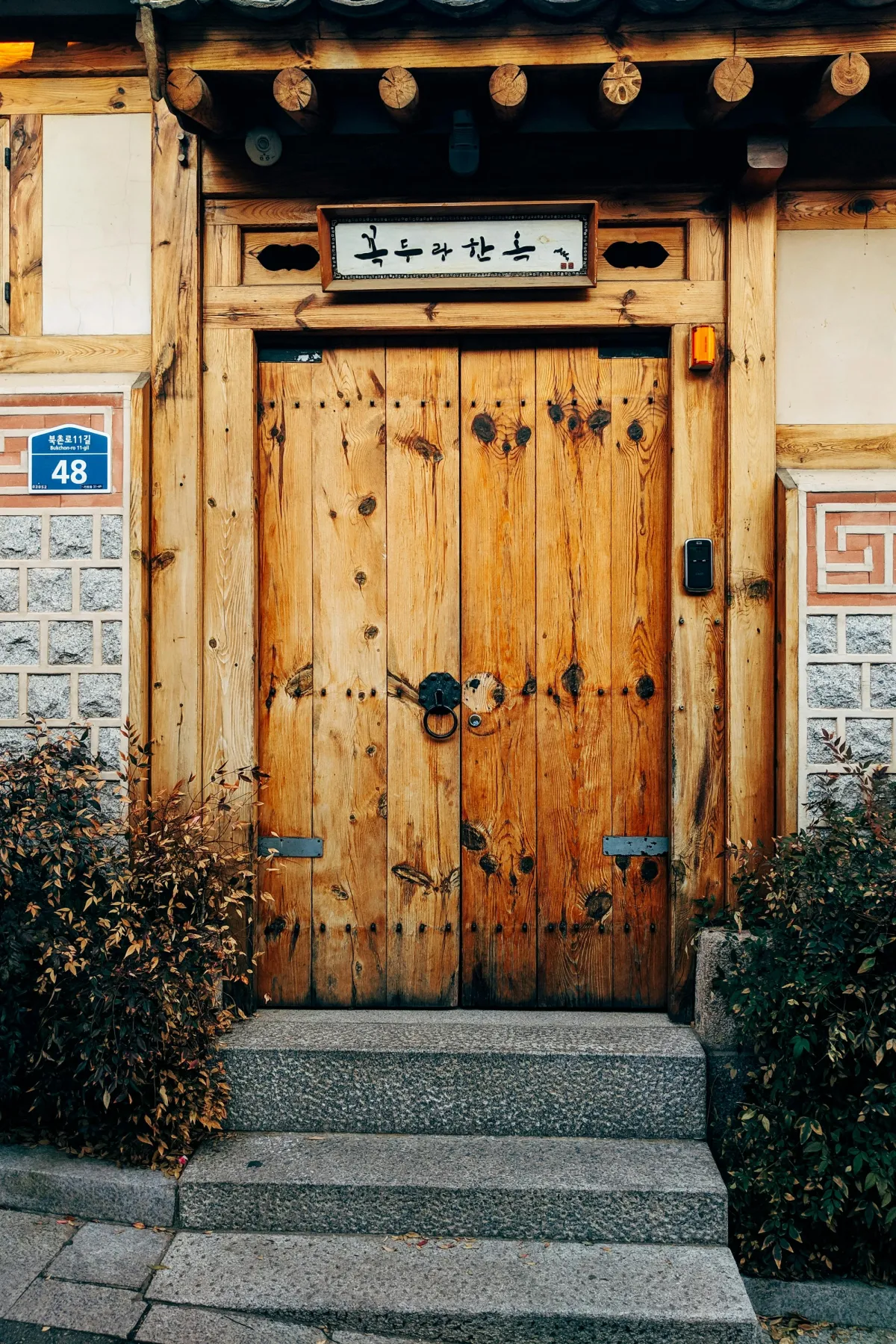
These are not abstract requests. Jongno-gu issues a ₩100,000 fine for entering the zone for tourism outside 10:00–17:00 (as of September 2026), and uniformed monitors are present on most weekends.
What to See Beyond the Photo Points
Beyond the viewpoints themselves, Bukchon hides several small institutions worth seeking out.
Bukchon Traditional Culture Center offers free entry to a restored hanok with interpretive panels on traditional construction. Gahoe Minhwa Museum at 52 Bukchon-ro (on the main road, not Bukchon-ro 11-gil; ₩5,000, closed Mondays, as of September 2026) houses an excellent collection of Joseon-era folk paintings and amulets. Baek In-je House (Tue–Sun 09:00–18:00, free, as of September 2026) allows a rare glimpse inside a fully preserved aristocratic hanok with its courtyards intact.
For a quieter detour, walk west into **Seochon**, the lesser-known sister neighborhood on the opposite side of Gyeongbokgung. Seochon's hanok are humbler and its lanes less photographed, but the cafés and bookshops there offer a calmer afternoon than the busier sections of Samcheong-dong.
Pairing Bukchon With the Rest of Jongno
Bukchon sits at the geographic heart of historic Seoul, which makes it easy to fold into a longer itinerary. Most first-time visitors combine the walk with one or two of the following — our Insadong half-day guide covers the afternoon leg:
| Nearby Attraction | Walking Time from Bukchon | Suggested Duration |
|---|---|---|
| Gyeongbokgung Palace | 10 minutes | 1.5–2 hours |
| Changdeokgung & Secret Garden | 8 minutes | 2 hours (reservation required for garden) |
| Insadong (art and crafts street) | 12 minutes | 1–2 hours |
| Samcheong-dong cafés | Within Bukchon | 1 hour |
| Gwanghwamun Square | 15 minutes | 30 minutes |
A workable full-day itinerary: Gyeongbokgung in the morning (arrive for the 10:00 a.m. changing of the guard), Bukchon by late morning, lunch in Samcheong-dong, Insadong in the afternoon, and dinner in Jongno proper. Visit Korea recommends this same anchor route in its central Seoul cultural circuit.
For the dinner leg, KUT SEOUL is 10 minutes by taxi from Anguk or a 5-minute walk from Jongno 3-ga Exit 15 — reservation only, so book on CatchTable before you set out.
Ending Your Day in Jongno
A day spent walking the slopes of Bukchon has a particular cadence—it begins with architecture and ends, ideally, with a long, unhurried meal. Jongno's culinary tradition leans heavily on Hanwoo, the indigenous Korean cattle breed whose finest cuts are graded BMS No. 9 for marbling and prized by Korean chefs above almost any imported alternative.
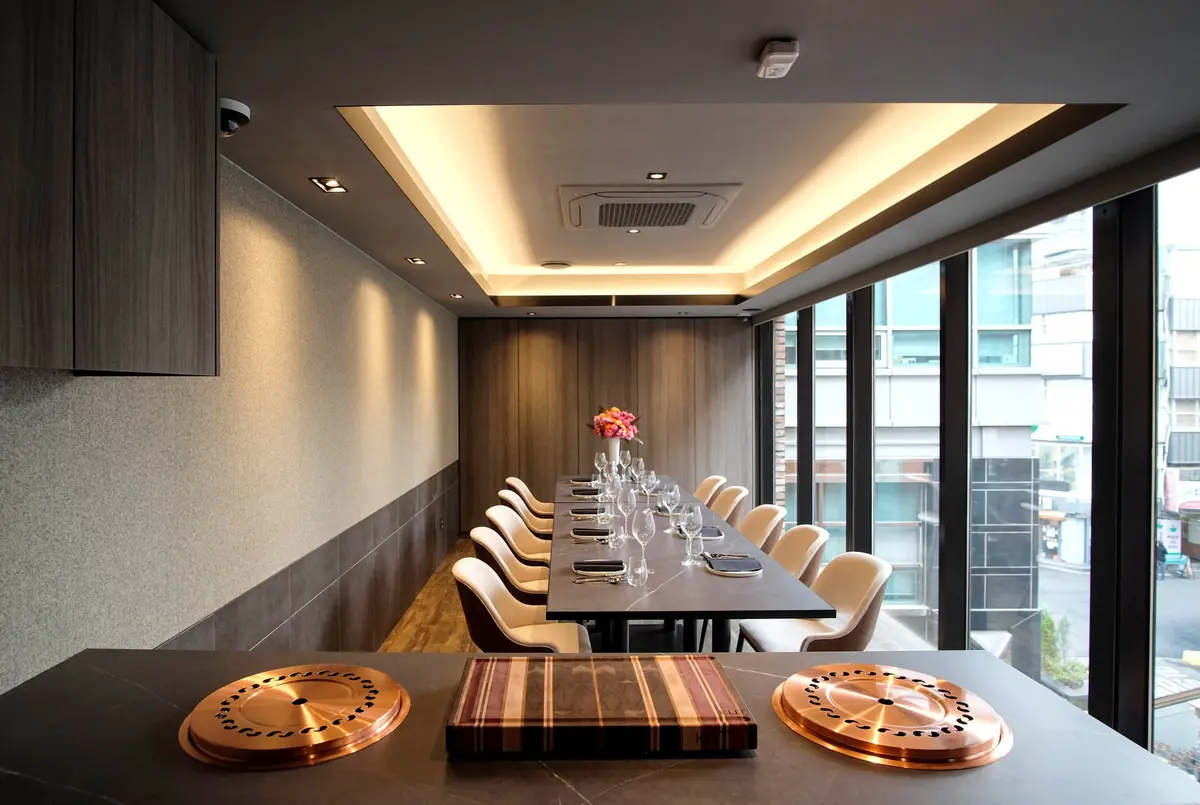
KUT SEOUL is about 10 minutes by taxi from Anguk (15+ minutes on foot) — 3F Hanol Tower, 96 Jongno, next to Tapgol Park. Counter seats take the Posh course (₩175,000); private rooms start from Posh at weekday lunch, Signature (₩210,000) at dinner and on weekends, up to Royal (₩280,000); on weekdays the 8-dish ₩69,000 lunch runs 80 minutes at the counter. Reservation only on CatchTable — which seat suits your evening.
KUT SEOUL: Bar 8 dishes ₩69,000 (weekday lunch, counter only, 80 min) · Posh 11 ₩175,000 · Signature 13 ₩210,000 · Royal 15 ₩280,000 · Kids ₩45,000 (ages 7 and under). Signature and Royal are private-room only; Posh is also served in a private room at weekday lunch (counter at weekday dinner and on weekends and holidays). BMS No. 9 Hanwoo, vacuum (wet) aged four weeks — not dry-aged. Grades run 3/2/1/1+/1++; since December 2019, 1++ covers marbling scores 7–9 and the number is displayed. KUT serves No. 9 only.
3F Hanol Tower, 96 Jongno — 5–7 minutes from Jongno 3-ga Station (Lines 1·3·5) Exit 15 or Jonggak Station (Line 1) Exit 4; next to Tapgol Park; 20–25 minutes on foot from Gyeongbokgung. Lunch 11:30–15:00 (last order 14:30), dinner 17:30–22:00 (last order 19:30), closed Tuesdays. Reservation only, through CatchTable or Naver. Deposit is 100% of the order; cancellation is free two days before, 50% one day before, none on the day.
Autumn foliage season and the major Korean holidays are when both Bukchon and Jongno's restaurants see their highest demand — book early.