There is a particular kind of pilgrimage that has settled over Jongno in the past two years. Travellers arrive with phones already open to a streaming app, comparing a paused frame against the bench in front of them, looking for the angle from which Gong Yoo, in his sharp grey suit, offered passers-by a choice between a loaf of bread and a lottery ticket. The scene lasts only a few minutes of screen time. The place it was filmed has stood for more than five centuries.
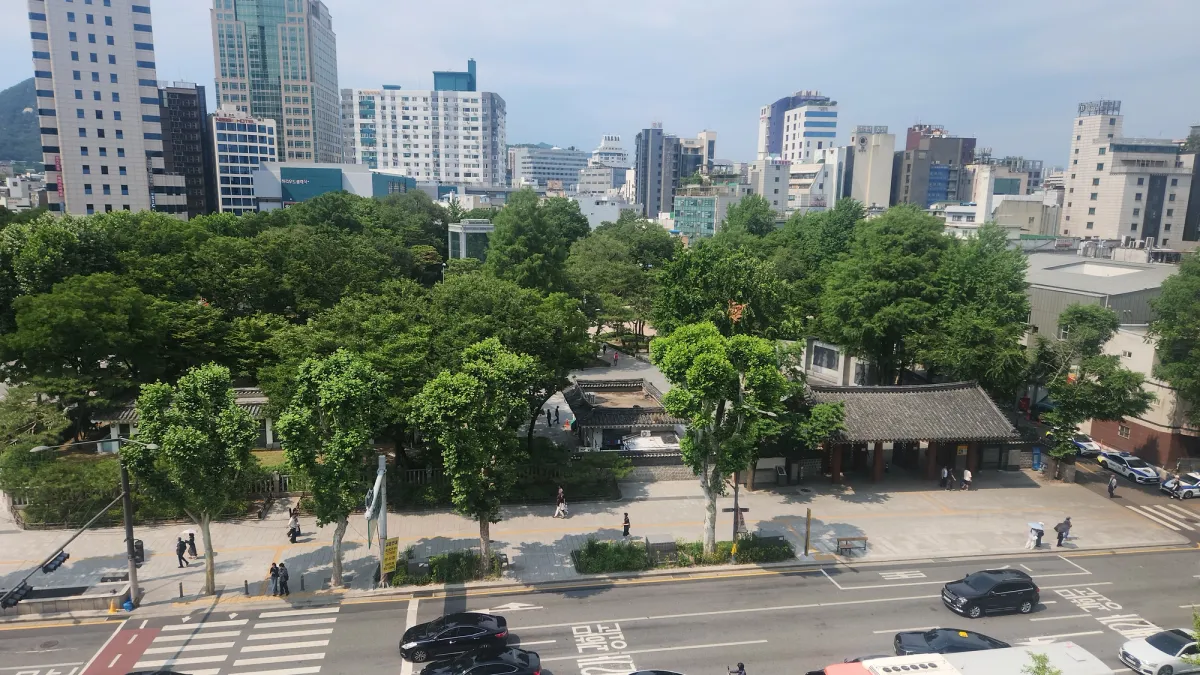
Tapgol Park sits in the centre of old Seoul, a small green rectangle hemmed in by the long commercial spine of Jongno. It is, by any measure, one of the most historically dense plots of land in the country: the site of a vanished Joseon-era Buddhist temple, the birthplace of the 1919 March First Independence Movement, and — since December 2024 — the unlikely opening backdrop of *Squid Game* Season 2. To walk it now is to read three Koreas at once.
What follows is a considered walking route through the park and the surrounding Jongno streets that frame the Recruiter's scene, with the historical context that gives those few minutes of television their weight, and practical notes on access, timing, and where the walk most naturally ends.
Why Does Tapgol Park Appear in Squid Game Season 2?
The Recruiter's return is the first real beat of the new season. Squid Game Season 2 was released on Netflix on 26 December 2024, and the opening episodes find Gong Yoo's salesman character once again on the hunt for desperate players — this time at Tapgol Park, where he approaches homeless men with scratch cards and bread, offering one or the other. The choice, of course, is never really a choice.
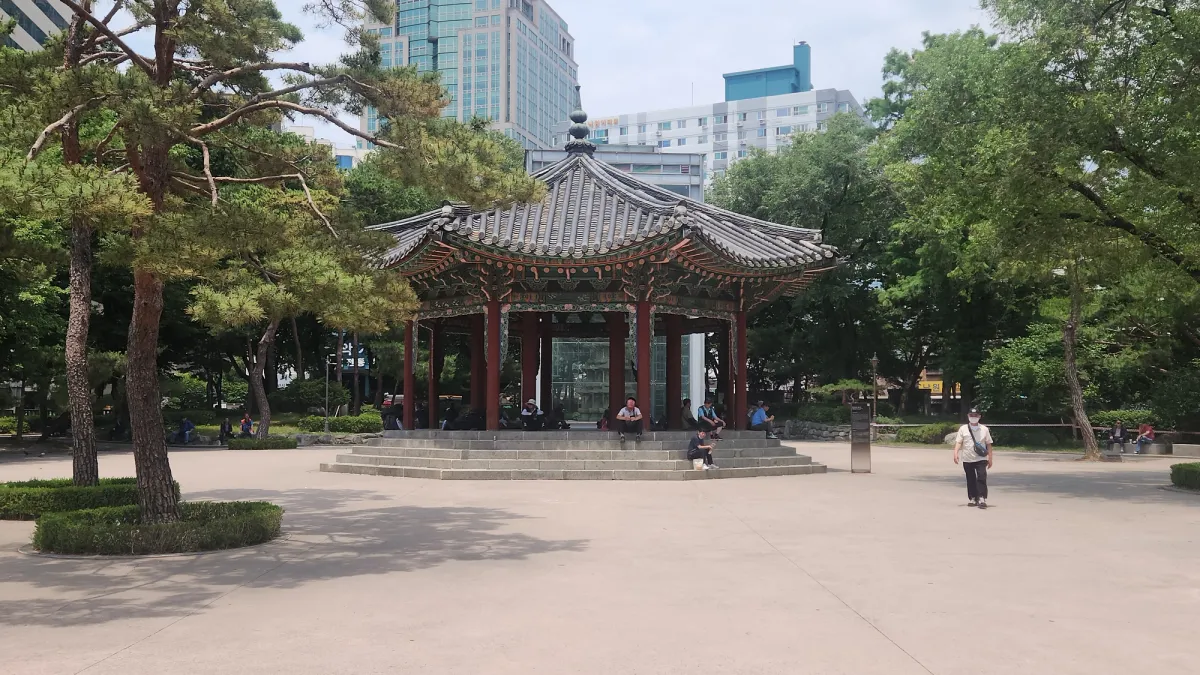
The selection of the park was not accidental. Director Hwang Dong-hyuk has a habit of layering real Seoul geography onto his fiction, and Tapgol carries an unusual double charge. It is at once a place of national reverence — the site where Korea's modern independence movement began — and, in present-day Seoul, a daytime gathering place for elderly men and the city's homeless. Squid Game leaned into that contrast deliberately, using the park's history and its present in the same frame.
For visitors who only know the scene from the show, it is worth knowing that the games themselves were not filmed here. The dormitory, the glass bridge, the Red Light Green Light arena — all were constructed on purpose-built sets in Daejeon and have since been dismantled. The island where the games are set, Seongapdo, is privately owned and not open to the public. What survives in the real world are the establishing scenes: Yangjae Citizen's Forest for the original subway ddakji moment in Season 1, and, for Season 2, Tapgol Park.
A Walk Through Tapgol Park
Tapgol Park is small — roughly 1.5 hectares — and a thorough visit takes well under an hour. That compactness is part of its appeal: every monument inside it is within sight of the next, and the historical layers reveal themselves in a single slow loop.
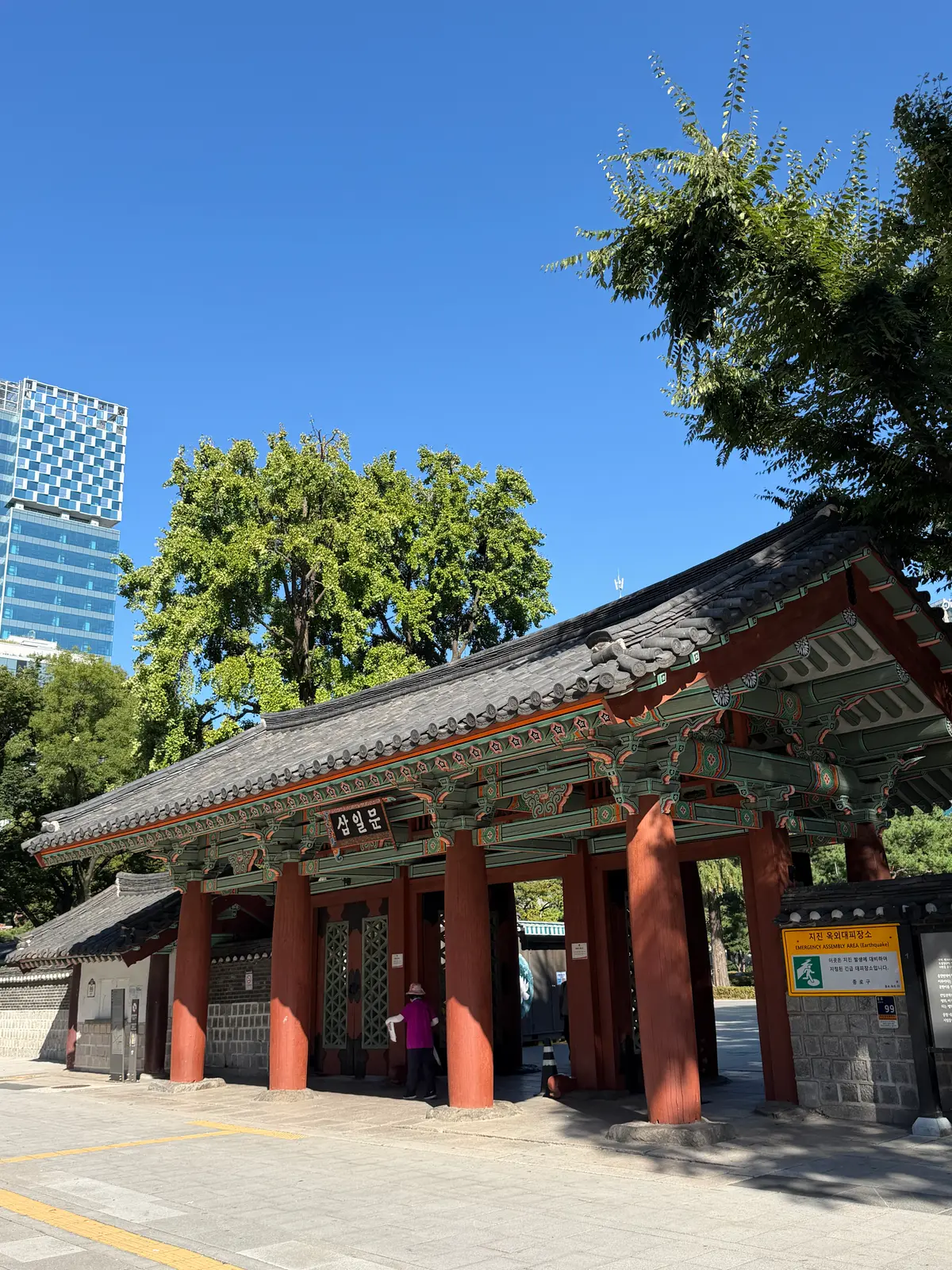
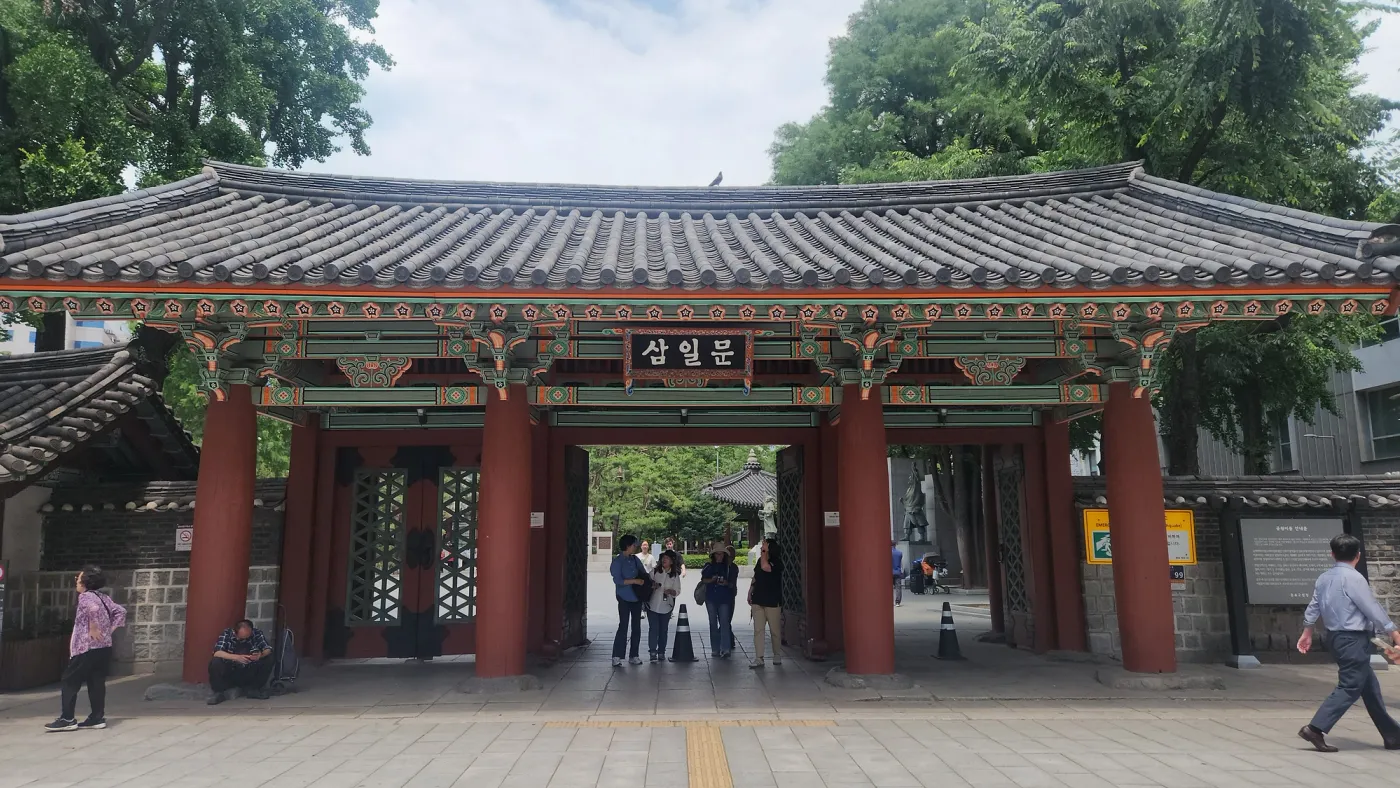
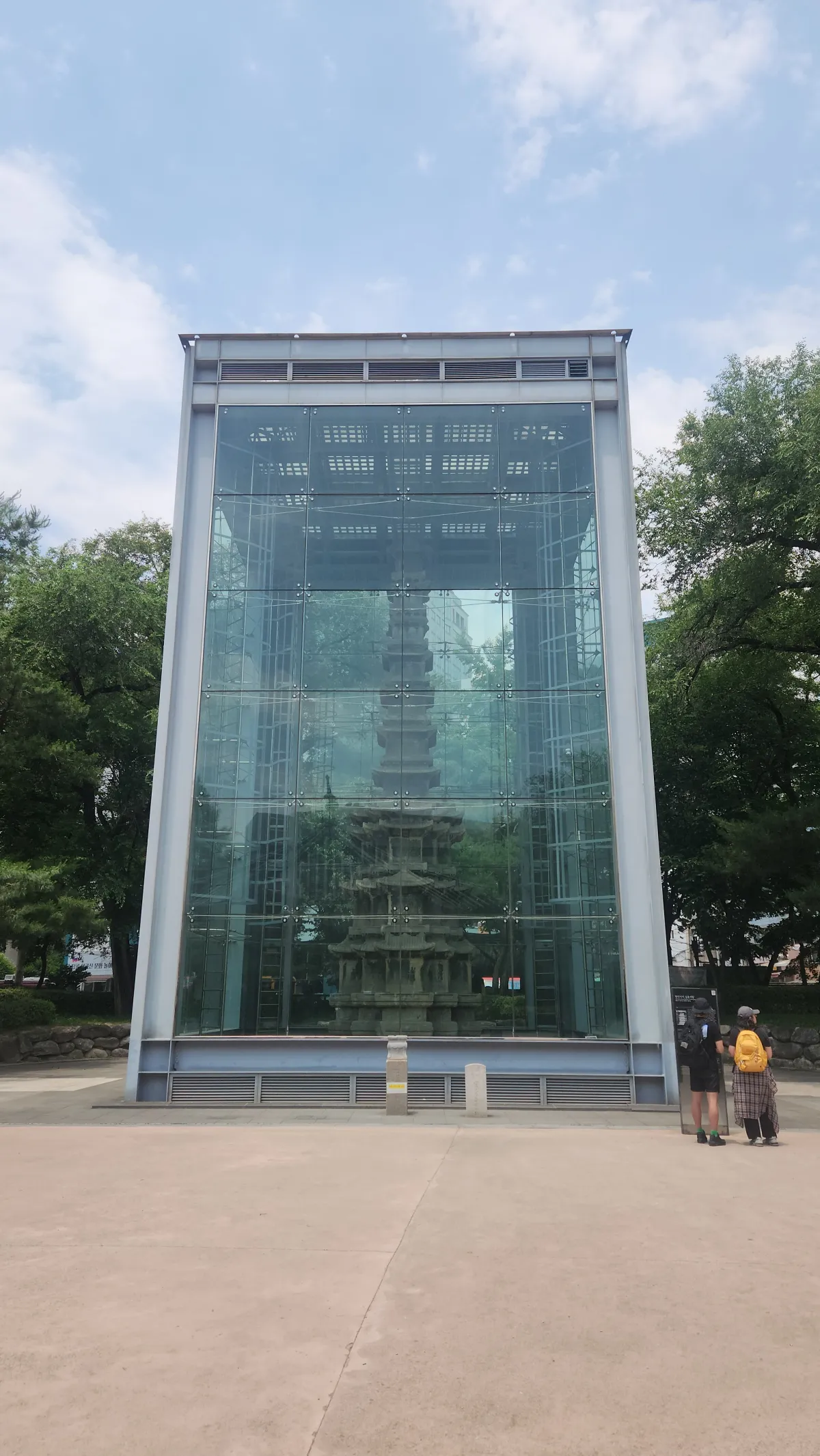
Enter through Samil Gate from the Jongno side and the first thing that draws the eye is a tall glass-and-steel enclosure protecting a marble pagoda. This is the Wongaksa Pagoda, the structure that gives the park its name — *tap* means pagoda in Korean. It stands roughly twelve metres high, was built in 1467 during the thirteenth year of King Sejo's reign, and was designated National Treasure No. 2 of South Korea in December 1962. It is one of the few pagodas in Korea made from marble rather than granite, and art historians consider it among the finest examples of Joseon-era stone art. The glass case, installed in the late 1990s, was meant to shield the marble from acid rain, pollution and pigeon droppings; its visual heaviness is a recurring point of debate among preservationists.
A few steps north stands the Palgakjeong, an octagonal wooden pavilion that looks, at first glance, like a generic park ornament. It is, in fact, the most historically charged structure in the park. On 1 March 1919, at around 2 p.m., a crowd of several thousand students and citizens gathered here expecting to hear the thirty-three signatories of the Korean Declaration of Independence read the document aloud. The signatories had quietly relocated to the nearby Taehwagwan restaurant to avoid clashes with Japanese police, so an unidentified young man climbed the steps of the pavilion and read the declaration in their place. The cries of *Daehan dongnip manse* — long live Korean independence — that followed are considered the spark of the March First Movement, which spread across the peninsula and inspired similar nonviolent resistance movements abroad.
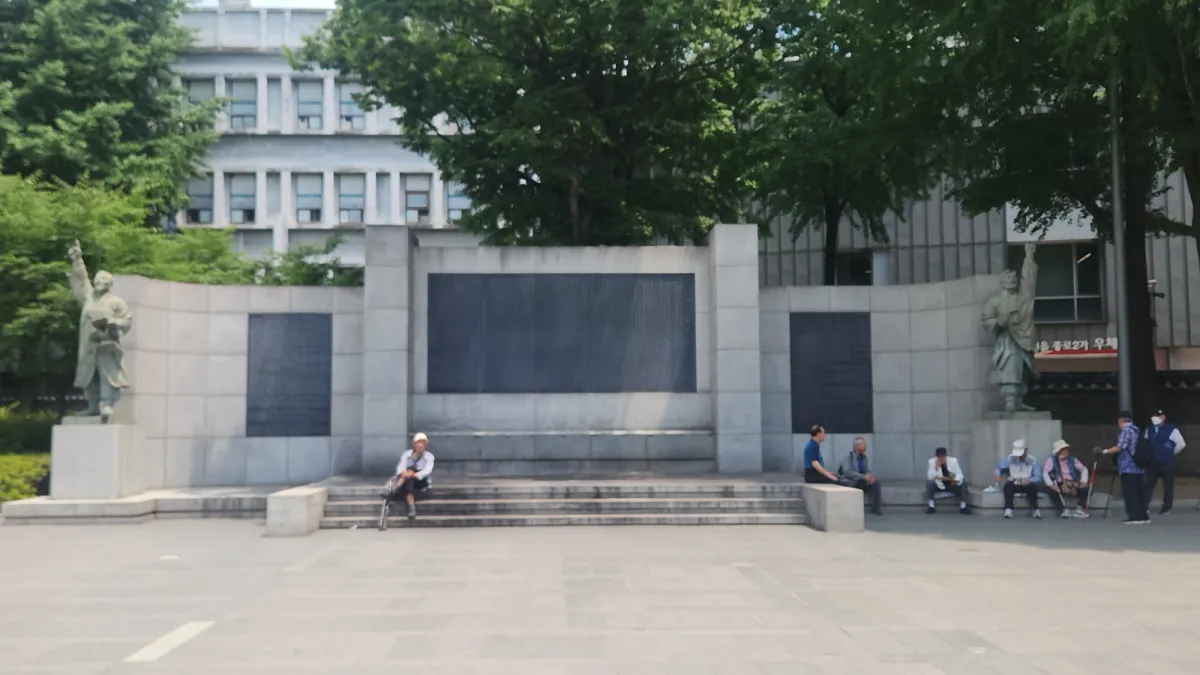
Around the pavilion, a series of bronze bas-reliefs depict scenes from the 1919 protests, and a separate monument is inscribed with the names of the thirty-three signatories. A statue of Son Byeong-hui, one of the leaders of the movement, stands nearby. The juxtaposition is striking: a Joseon Buddhist relic, a pavilion of national resistance, and, on most days, a slow procession of elderly Seoulites playing janggi beneath the trees.
Where Is the Recruiter's Bench?
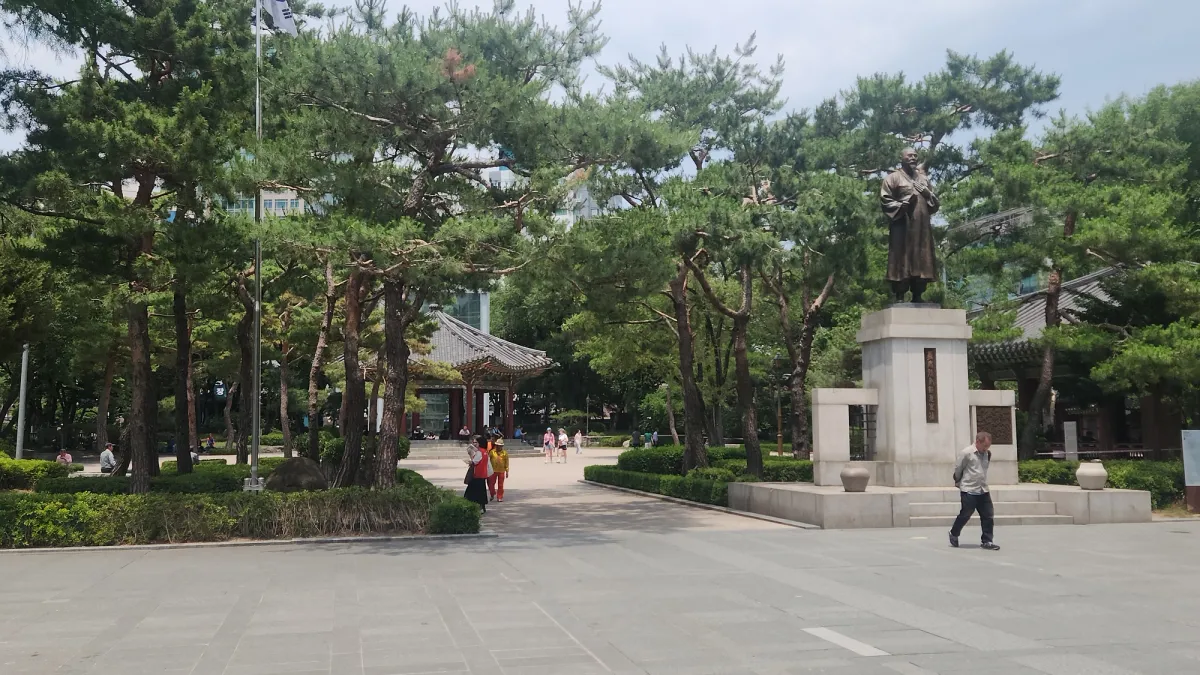
The specific bench where the Recruiter approaches his marks in Season 2 is not formally marked, and the park's management has not erected signage about the show. This is intentional restraint, and it is part of why the place still feels like a park rather than a film set. Most visitors find the location by walking the perimeter near the Palgakjeong Pavilion, comparing screen-grabs against the actual benches. The lush greenery and ornate pavilion that frame the scene on screen are exactly as they appear in real life.
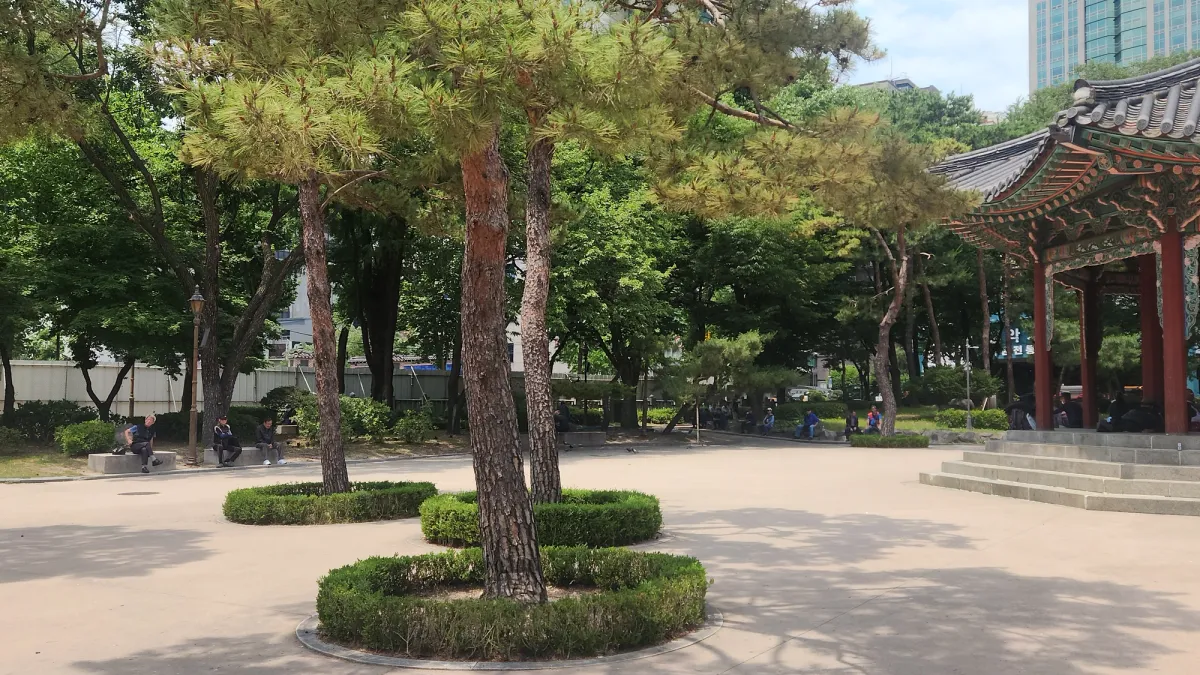
A quiet etiquette has emerged among fans. The park is used daily by elderly residents and unhoused people who have nothing to do with the show, and reenacting the bread-stomping scene or photographing strangers without consent is, plainly, unwelcome. A more respectful approach is to sit on a bench for a few minutes, watch the pagoda, and let the strangeness of the overlap settle: a fictional recruiter for a fictional death game, filmed at a site where ordinary Koreans once gathered to risk their lives for a real one.
For a different angle on the same benches, the third-floor windows of KUT SEOUL at 96 Jongno look straight down onto the park's trees. The weekday lunch Bar Course (₩69,000, 80 minutes) is served at the counter, three minutes from the park gate.
How Do You Get There, and When Should You Go?
| Detail | Information |
|---|---|
| Address | 99 Jongno, Jongno-gu, Seoul |
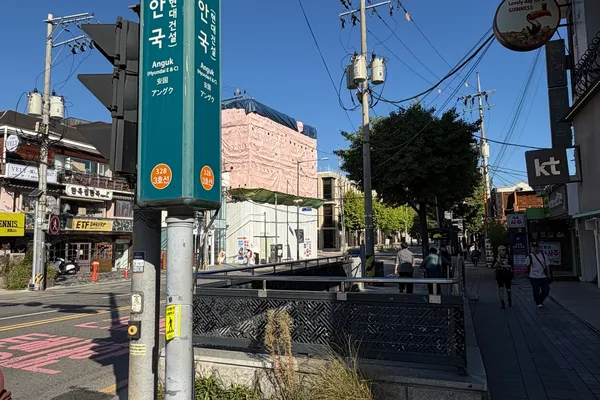
| Nearest stations | Jongno 3-ga Station (Lines 1, 3, 5), Exit 1 — about a 3-minute walk; Jonggak Station (Line 1), Exit 3 — about a 5-minute walk |
| Admission | Free |
| Tapgol Park opening hours (as of September 2026) | 09:00–18:00 March–October; 09:00–17:00 November–February |
| Suggested visit length | 30–45 minutes |
| Best seasons | April for cherry blossoms; October–November for autumn foliage |
The park is genuinely walkable from much of central Jongno. From Gyeongbokgung it is roughly a twenty-minute walk east along Yulgok-ro and then south through the Insadong alleys. From Cheonggyecheon stream it is a five-minute walk north. Bukchon Hanok Village sits about fifteen minutes north on foot. For travellers arriving from the airport, our airport-to-Jongno guide explains the three sensible options for reaching this neighbourhood.
Right at the 09:00 opening offers the quietest experience and the softest light on the pagoda's marble. Late afternoon, when the surrounding alleys begin to fill with diners, has its own pleasant tempo. Avoid 1 March itself unless you intend to attend the annual reenactment of the Declaration reading, which draws significant crowds and street closures.
What to Pair with the Park: Insadong, Ikseondong, and Beyond
Tapgol Park works best as one stop on a longer Jongno walk rather than a destination in its own right. The neighbourhood around it is unusually rich in directions worth taking.
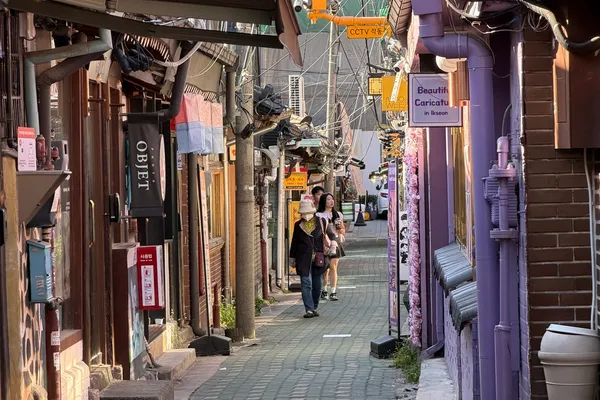
Immediately west sits Insadong, the long pedestrianised street known for traditional teahouses, brushwork shops, and contemporary craft galleries. A slow stroll down Insadong-gil ends naturally at the Ssamzigil complex, a spiralling building of small designer shops worth a half-hour browse. North-east of the park, behind Jongno 3-ga Station, lies Ikseondong — a hanok village reimagined as a dining and café quarter, its low-tiled roofs hiding some of the most considered small kitchens in central Seoul. East along Jongno you reach Jongmyo Shrine, the UNESCO-listed royal ancestral shrine of the Joseon dynasty.
For a longer cultural arc, the area sits within easy walking distance of Gyeongbokgung and Bukchon. Our perfect day in Jongno itinerary sketches one well-paced route through the historic core, ending with dinner.
A Note on Squid Game Tourism in Seoul
It is worth keeping perspective on what is actually here. Apart from Tapgol Park, the Seoul filming locations from Season 2 are scattered: Seoul Land amusement park in Gwacheon (the theme park scenes), Hongdae for some street sequences, Ssangmun-dong in northern Seoul for Gi-hun's old neighbourhood, which carries over from Season 1, and a subway sequence shot at Jonggak Station on Line 1 — the station whose Exit 4 is three minutes from KUT SEOUL. The Yangjae Citizen's Forest subway station was used for the original Season 1 ddakji scene with Gong Yoo. No single Seoul itinerary will give you all of Squid Game in a tidy day, and the show's most iconic visuals — the pink-suited guards, the giant doll, the dormitory bunks — exist only as sets, now gone.
This is, on reflection, part of what makes Tapgol the most interesting of the locations. It is not a film set dressed for tourists. It is a working historical park that *Squid Game* simply borrowed for a few minutes, and which carries on its slow afternoon life unchanged. The fiction passes through it; the pagoda remains.
Ending Your Day in Jongno
KUT SEOUL is right next to Tapgol Park — the third-floor windows look straight onto the park — 3F Hanol Tower, 96 Jongno, next to Tapgol Park. Counter seats take the Posh course (₩175,000); private rooms start from Posh at weekday lunch, Signature (₩210,000) at dinner and on weekends, up to Royal (₩280,000); on weekdays the 8-dish ₩69,000 lunch runs 80 minutes at the counter. Reservation only on CatchTable — which seat suits your evening.
KUT SEOUL: Bar 8 dishes ₩69,000 (weekday lunch, counter only, 80 min) · Posh 11 ₩175,000 · Signature 13 ₩210,000 · Royal 15 ₩280,000 · Kids ₩45,000 (ages 7 and under). Signature and Royal are private-room only; Posh is also served in a private room at weekday lunch (counter at weekday dinner and on weekends and holidays). BMS No. 9 Hanwoo, vacuum (wet) aged four weeks — not dry-aged. Grades run 3/2/1/1+/1++; since December 2019, 1++ covers marbling scores 7–9 and the number is displayed. KUT serves No. 9 only.
3F Hanol Tower, 96 Jongno — 3 minutes from Jongno 3-ga Station (Lines 1·3·5) Exit 15 or Jonggak Station (Line 1) Exit 4; next to Tapgol Park; 20–25 minutes on foot from Gyeongbokgung. Lunch 11:30–15:00 (last order 14:30), dinner 17:30–22:00 (last order 19:30), closed Tuesdays. Reservation only, through CatchTable or Naver. Deposit is 100% of the order; cancellation is free two days before, 50% one day before, none on the day.
The shift in register from the park is intentional. After an afternoon spent reading bronze reliefs and standing in front of a 15th-century pagoda, a long, quiet dinner of Korean beef cut to order feels like the right kind of full stop. For travellers new to the form, our first-timer's guide to choosing a Hanwoo omakase course explains what each tier actually offers.
There is something fitting about ending a Squid Game walk this way. The show traffics, after all, in what people will do for a good meal. In Jongno, the better answer is simpler: walk a little, read the history under your feet, and sit down somewhere worth lingering.