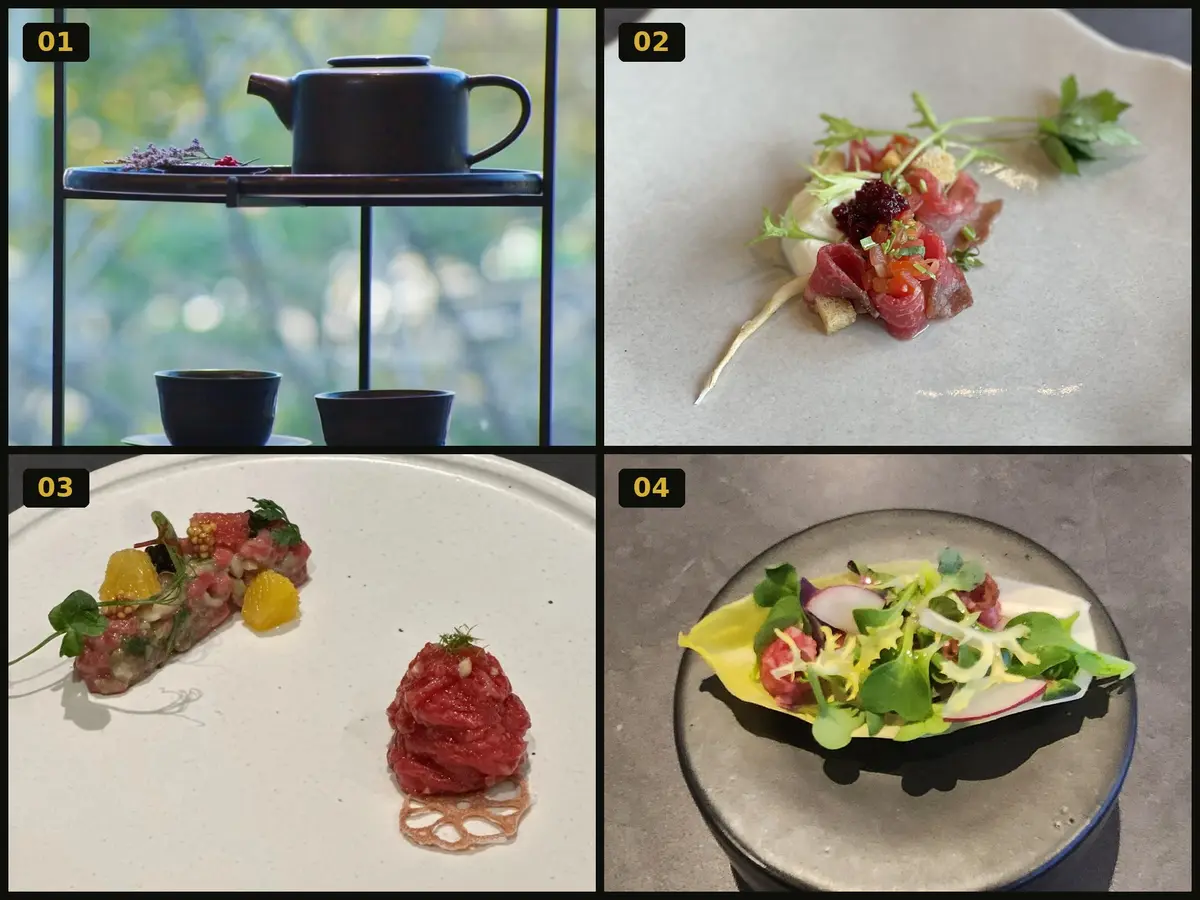
Hanwoo omakase is one of Seoul's quieter luxuries — a form of dining that takes Korea's most prized beef and presents it not as a slab on a grill, but as a sequence. A dozen or more small courses, each built around a single cut, a single technique, a single idea. For a first-time guest, the question is rarely whether to try it. The question is which course to choose.
Most Hanwoo omakase restaurants in Seoul offer two or three tiers, sometimes more. The names change — Royal, Signature, Premium, Chef's — but the underlying logic is consistent. Each step up adds dishes, rarer cuts, and more elaborate garnishes: caviar, truffle, wild ginseng, lobster. The lowest tier is often a weekday-lunch introduction. The highest is built for anniversaries and the kind of business dinner where the meal itself is the message.

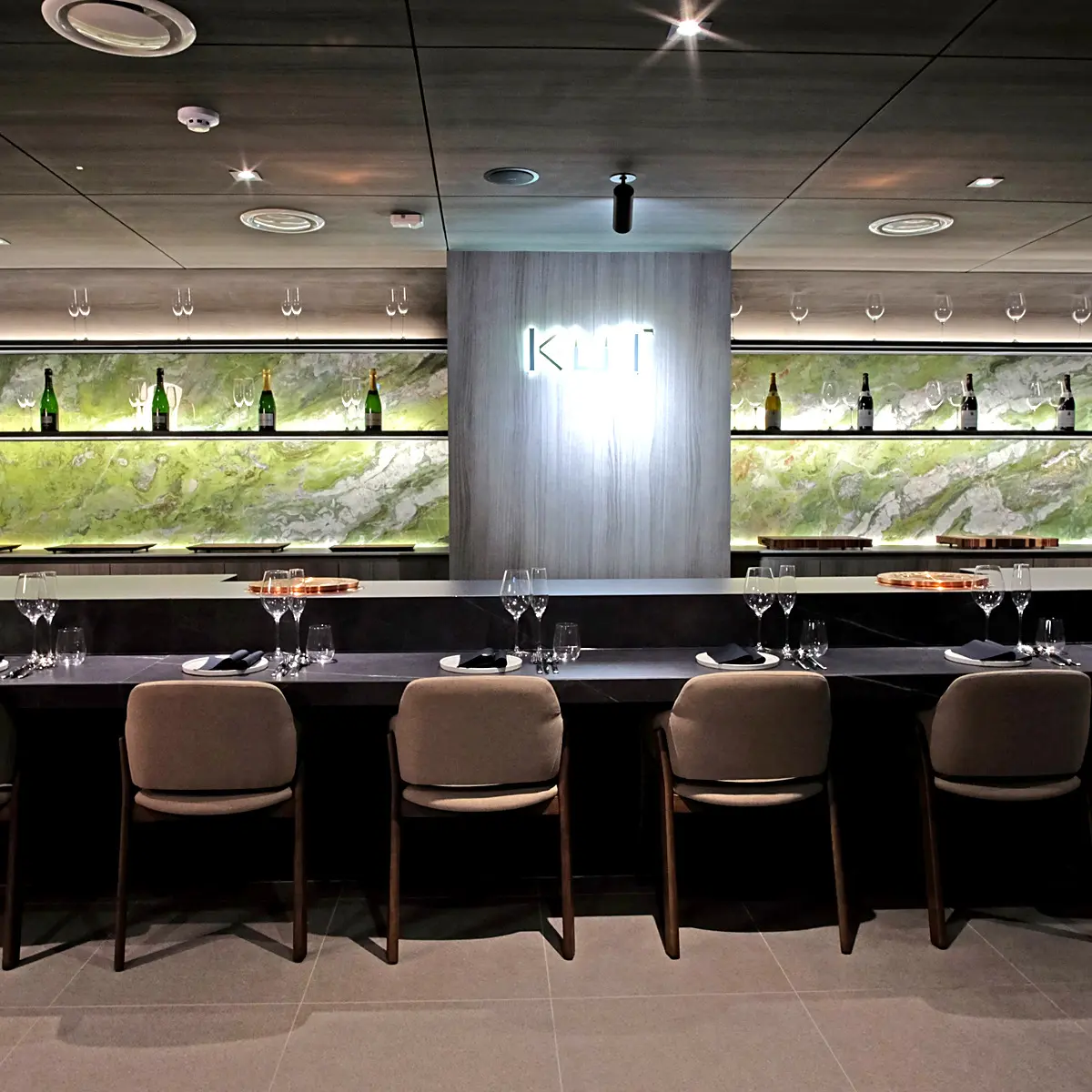
This guide walks through how those tiers are typically structured, what changes as you move up, and how to match a course to the occasion you are actually planning. It uses KUT SEOUL — a five-tier Hanwoo omakase in Jongno — as a working example, because its lineup spans nearly the full range a traveler will encounter in Seoul.
How a Hanwoo Omakase Course Is Structured
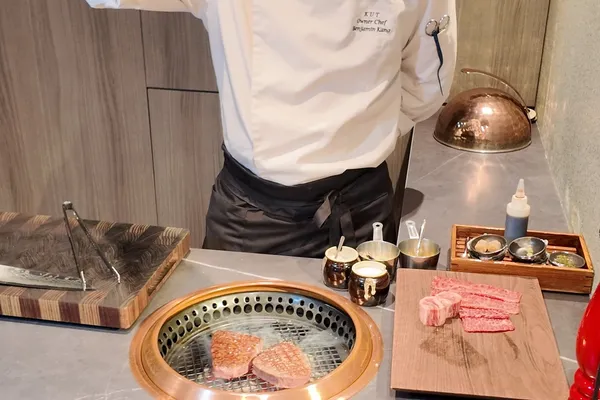
A Hanwoo omakase course is a sequenced tasting menu, usually eight to fifteen dishes, designed around the spectrum of cuts a single animal can yield. The progression typically opens with light, cold preparations — a tartare, a sashimi of beef, a delicate vegetable course — and builds toward the centerpiece steak, before closing with rice or noodles and a small dessert.
Three variables distinguish one course from the next within the same restaurant:
- **Number of dishes.** Entry-level courses run six to eight items; flagship courses can reach fifteen or more.
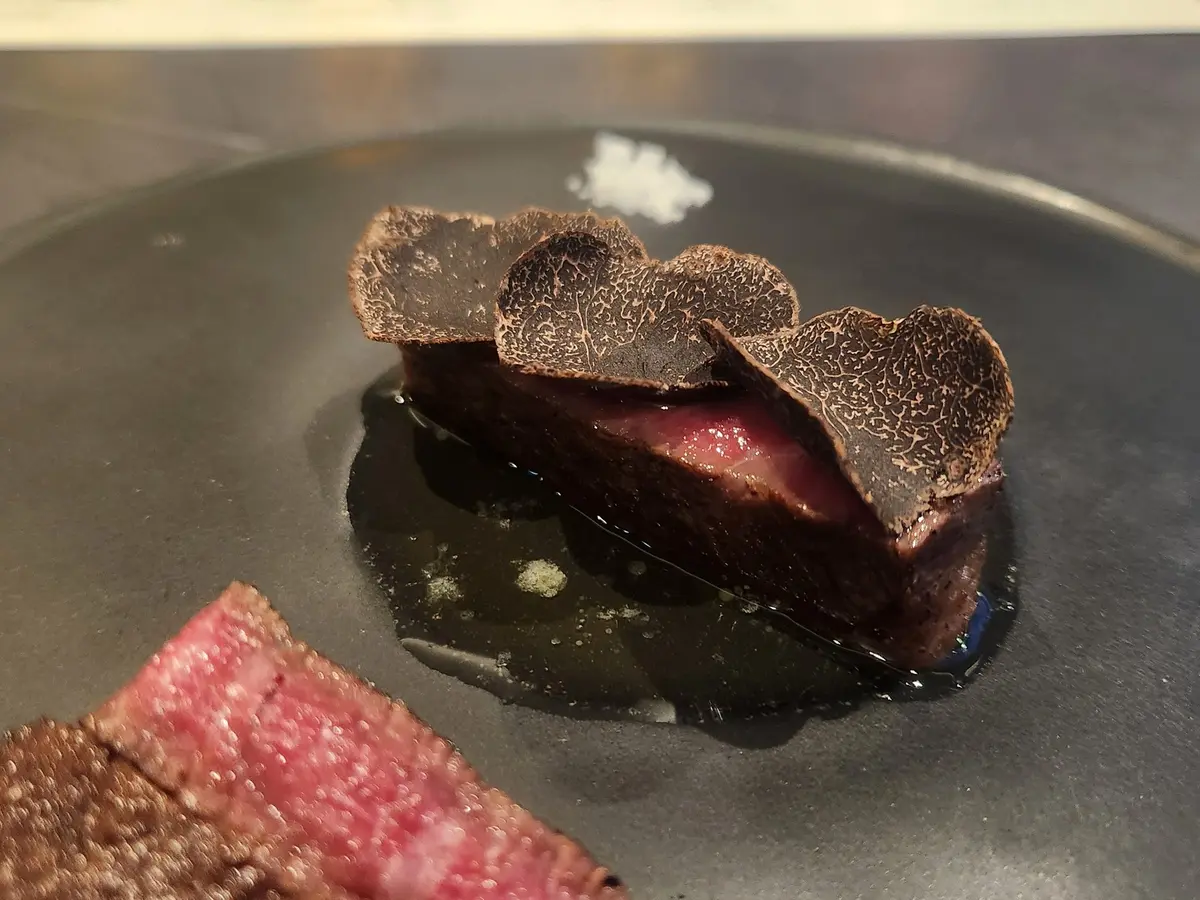
- **Cut variety and rarity.** Higher tiers include cuts that exist in very small quantity per animal — Châteaubriand (the heart of the tenderloin), specific intramuscular sections of the sirloin, or trim used only for tartare.
- **Non-beef luxury components.** Caviar, truffle, lobster, abalone, and wild ginseng appear at the upper tiers, not as the main event but as counterpoints to the beef.
Understanding these three variables is the entire framework. Everything else — plating, room, service tempo — tends to scale with them.
The Five Tiers at KUT SEOUL
KUT SEOUL organizes its menu into five named courses, each calibrated to a different occasion. The table below summarizes the published lineup.
| Course | Dishes | Price | Service | Best For |
|---|---|---|---|---|
| Royal (R) | 15 | ₩280,000 | Lunch · Dinner | Anniversaries, signature business dinners |
| Signature (S) | 13 | ₩210,000 | Lunch · Dinner | First-time guests (most recommended) |
| Posh (P) | 11 | ₩175,000 | Lunch · Dinner | Refined dining without ceremony |
| Bar (B) | 8 | ₩69,000 | Weekday lunch only | An introduction to the format |
| Kids | 6 items on 1 plate | ₩45,000 | All day | Young guests dining with family |
A few details worth noting before reading further. All courses use BMS no.9 Hanwoo, the highest marbling grade in the Korean beef grading system administered by the Korea Institute for Animal Products Quality Evaluation. The Bar Course is available only at weekday lunch, which makes it the hardest to slot into a typical traveler's itinerary but the most accessible price point. The Kids Course is served as a single plate of six items rather than a sequenced tasting, so the rhythm of the meal works for a family with children at the same table as adults on a longer course.
The Royal Course — When the Meal Is the Occasion
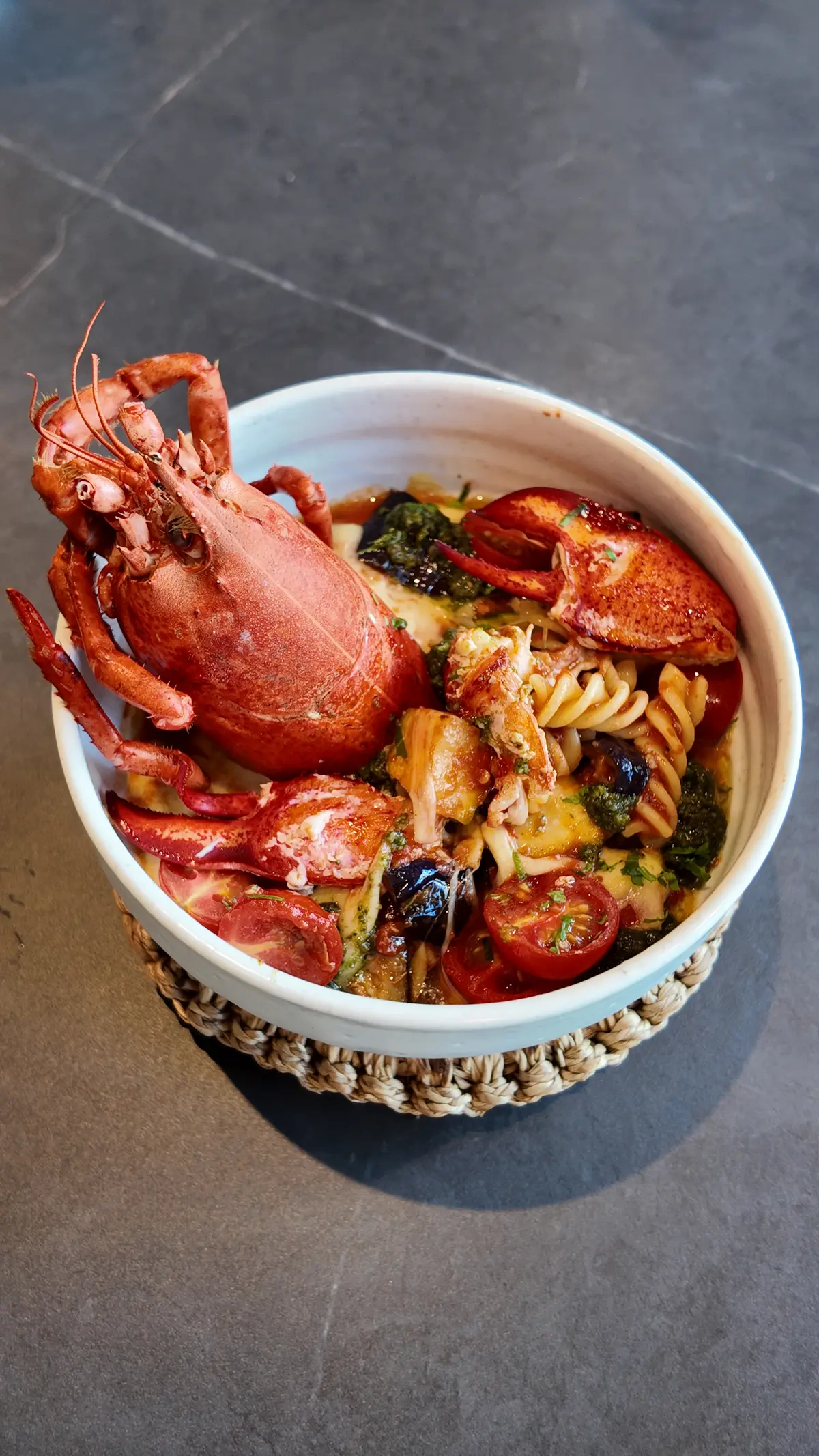
The Royal Course is the longest tasting on the menu: fifteen dishes anchored by live lobster sashimi with caviar and gold flake, a Châteaubriand-and-truffle centerpiece, and a closing lobster noodle. It is described by the restaurant as its most refined Hanwoo omakase, designed for anniversaries and signature business dinners.

What changes at this tier is not just the ingredient list but the pacing. Fifteen courses unfold over roughly two to two-and-a-half hours, which means the meal itself becomes the evening — there is no second venue, no after-dinner plan that survives contact with the schedule. Choose Royal when the dinner is the reason you are in Seoul that night, not a stop along the way.
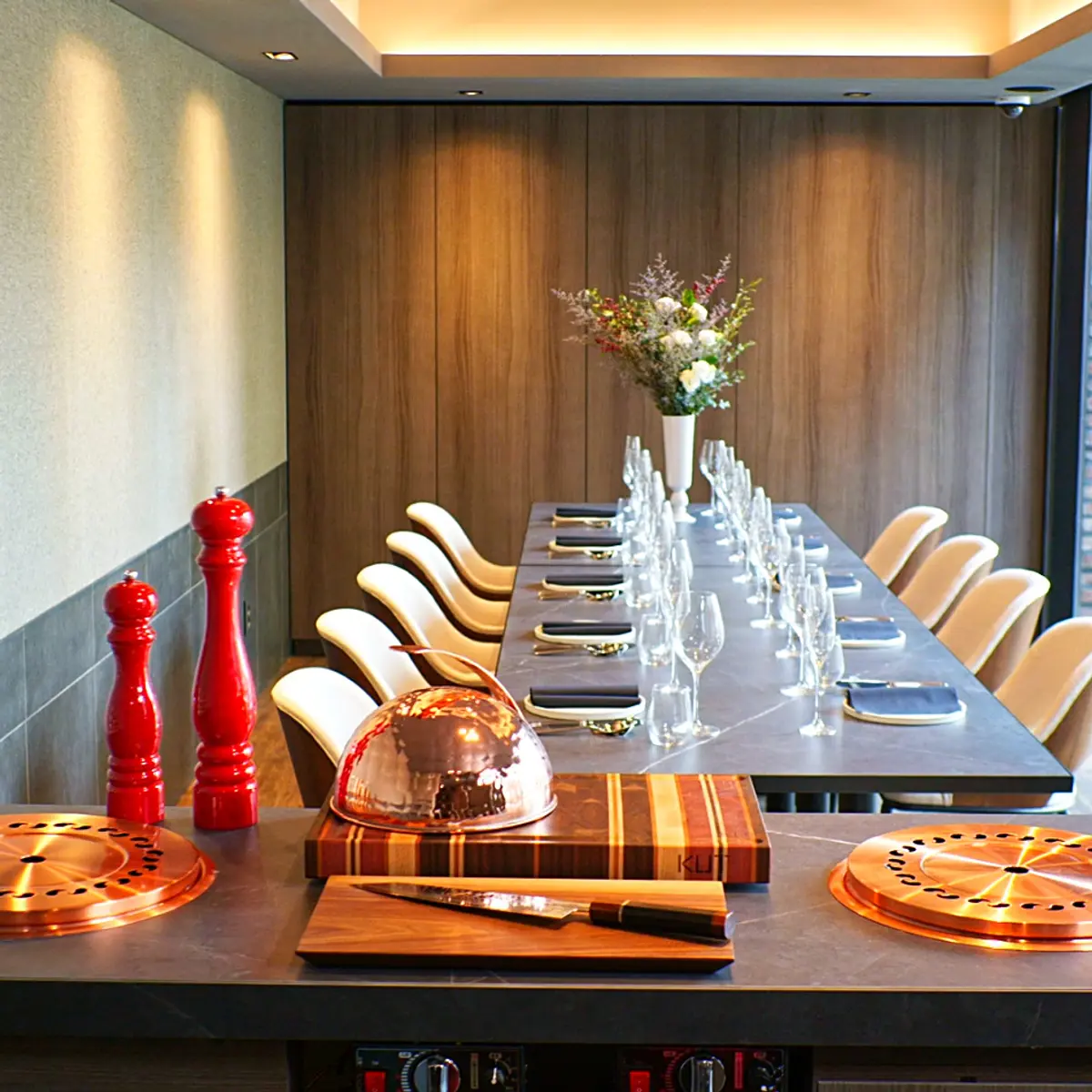
It is also the course best matched to KUT SEOUL's private dining rooms, of which there are five. The combination of a long tasting and a closed room is what most travelers picture when they think of a milestone dinner in Seoul.
The Signature Course — The First-Timer's Default
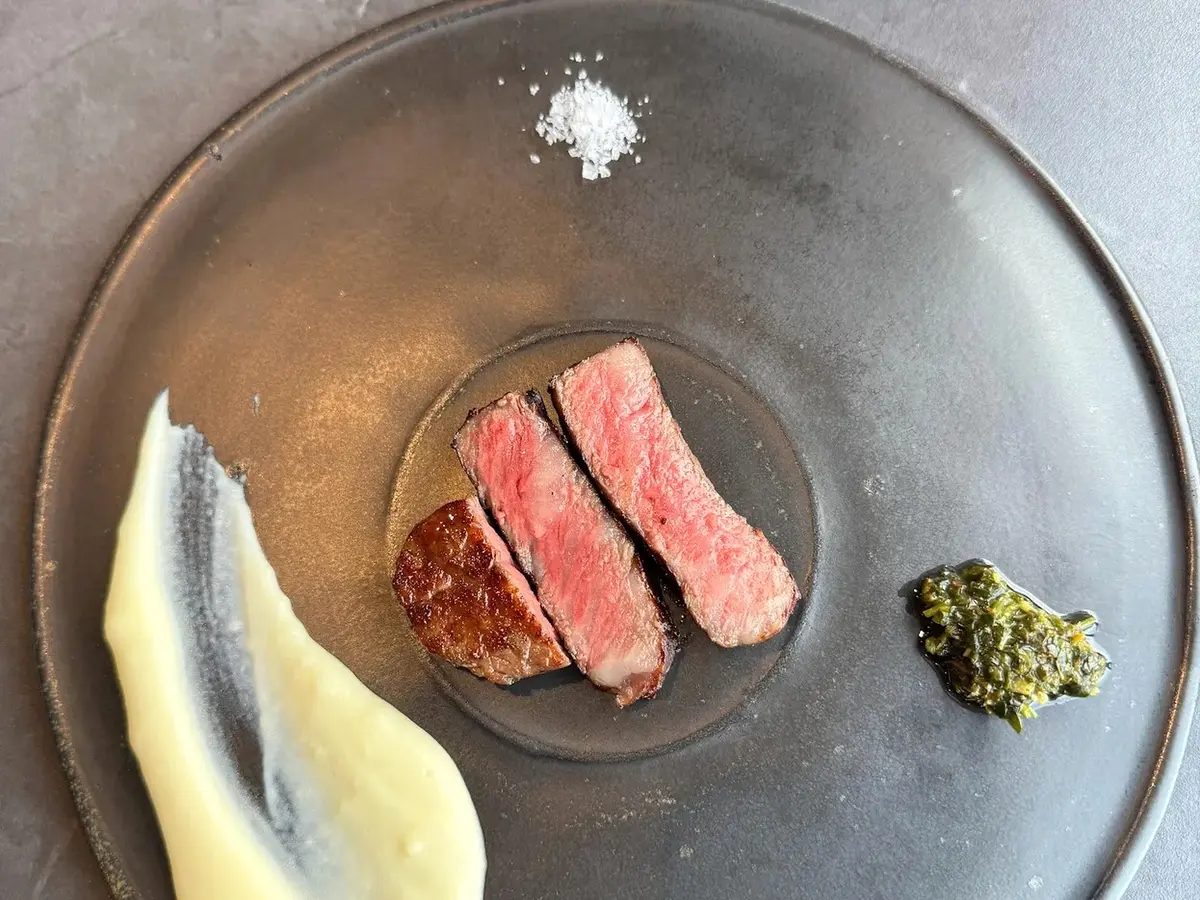
The Signature Course is the menu's thirteen-dish midpoint, built around wild ginseng, Avruga caviar, and Châteaubriand. The restaurant explicitly recommends it for first-time guests, and the reasoning shows in the structure: it includes the Châteaubriand course that defines the upper tiers, the caviar pairing that distinguishes the omakase from a grill-house meal, and the full sequenced progression — but stops short of the lobster components that push the Royal into a longer, more formal register.

For a traveler choosing one Hanwoo dinner during a Seoul trip, this is the course that answers the implicit question best. It is long enough to show what omakase is for, short enough to leave the evening open afterward, and priced in a band that matches a comparable kaiseki dinner in Tokyo or a tasting menu in a European city.

If you are pairing the dinner with a daytime walk through Jongno — the palaces, [Bukchon Hanok Village](https://kutseoul.com/en/blog/bukchon-hanok-village-walking-guide-first-time-visitors), the museums along Yulgok-ro — the Signature Course is the one that fits the day without overwhelming it.
The Posh Course — Refined Without Ceremony
The Posh Course runs eleven dishes and is built around tenderloin, sirloin, and special premium cuts. The restaurant frames it as a course that quietly unfolds the spectrum of Hanwoo cuts, intended for those who want refined dining without ceremony.

This tier is the one most often misunderstood by first-time guests. It is not a stripped-down Signature — it is a different proposition. The Posh removes some of the luxury accents (no Châteaubriand-and-truffle pairing, no wild ginseng) and concentrates instead on the beef itself: how a sirloin section differs from a tenderloin section, how a chef's choice cut behaves under a different technique. For a traveler who has already had Hanwoo on a previous trip and wants to understand the meat more deeply, Posh is often the more interesting course than Signature.
The Bar Course — A Weekday-Lunch Introduction
The Bar Course is eight dishes, priced at ₩69,000, and offered only at weekday lunch. It is positioned as an introduction to Hanwoo omakase — the most casual way to experience KUT SEOUL's approach to Korean beef. A citrus beef-shank cold noodle is among the signature items.

The practical constraint matters. Because the course runs only Monday through Friday at midday, it suits travelers whose itineraries include a weekday in Seoul with no fixed afternoon plans, or business travelers with a free lunch window. It does not work for weekend visitors. When it does fit, however, it is the most efficient entry point on the menu — a complete eight-course tasting at roughly a third of the Signature price.
Matching the Course to the Occasion
The simplest way to choose is to start from the occasion and work backward. A short framework:
| Occasion | Suggested Course |
|---|---|
| Anniversary, proposal, milestone celebration | Royal |
| First Hanwoo omakase, one dinner in Seoul | Signature |
| Returning guest interested in cuts and technique | Posh |
| Weekday lunch, introductory experience | Bar |
| Family meal with young children | Kids alongside an adult course |
A few additional considerations. Reservations at KUT SEOUL are handled through the CatchTable platform, and the longer courses — Royal in particular — book further in advance, especially around major Korean holidays and the spring and autumn travel seasons. If you are traveling with a group of four or more and want a private room, request it at the time of booking; the five private rooms are allocated in order of reservation, not on arrival.
Dietary notes are best communicated at booking rather than on the day. Hanwoo omakase is built around beef in its many forms, so vegetarian adaptation is not the strength of the format; one or two specific allergies (shellfish, dairy, nuts) can usually be accommodated with advance notice.
For broader background on the beef itself — the breed, the grading system, the cuts — the companion guide on [Hanwoo, Korea's native wagyu] covers the history and the marbling standards in more depth.
Ending Your Day in Jongno
The district around KUT SEOUL is one of the few in Seoul where a full day and a long dinner make a single coherent arc. Gyeongbokgung Palace sits a fifteen-minute walk to the northwest; Cheonggyecheon, the restored stream, runs a few blocks south; the museum quarter along Yulgok-ro is closer still. By early evening, the daytime crowds have thinned, and the restaurant's third-floor address on Jongno settles into the quieter register the menu is built for.
If you have read this far and the Signature Course is the one that fits — thirteen dishes, Châteaubriand, the full omakase sequence, the format the kitchen designed for a first visit — a table can be reserved through the official site at [KUT SEOUL]. For travelers building a fuller itinerary, the Jongno day-route guide pairs naturally with a later dinner reservation.
The right course, in the end, is the one that matches the evening you actually want. The menu is built to make that choice straightforward — five tiers, one philosophy, and a clear recommendation for where to begin.