Of Seoul's five royal palaces, Changdeokgung is the one that rewards patience. Where Gyeongbokgung impresses through symmetry and scale, Changdeokgung was designed to follow the land — pavilions tucked into wooded slopes, courtyards that open onto ponds rather than parade grounds. The palace was placed on the UNESCO World Heritage List in 1997, and much of what makes it distinctive lies behind a second gate: Huwon, the rear garden, still known in English as the Secret Garden.
Huwon is not a place you can drift into with a general admission ticket. Entry is by timed guided tour only, with fixed departures, a hard cap on numbers, and a booking window that opens exactly six days in advance. For first-time visitors, understanding those mechanics is the difference between a serene morning among royal pavilions and a disappointed walk back to the ticket office.
This guide covers how the two-ticket system works, how to secure an English-language slot, a suggested 2.5-hour route through the palace and garden, and what to do afterwards in Jongno — from Jongmyo Shrine next door to dinner in the lanes around Jongno 3-ga.
Why is Changdeokgung the UNESCO palace?
Because of how it was built, and how much of it survives. Where Gyeongbokgung was flattened and rebuilt, Changdeokgung's core layout has held its ground since the early Joseon dynasty, and the garden behind it is one of the oldest continuously maintained royal landscapes in East Asia.
The Secret Garden at Changdeokgung Palace, once used for royal entertainment and ceremonies, covers around 446,943 square meters and still has restricted areas that remain inaccessible to the public. Historically, it was off-limits to commoners, reserved only for the Joseon royal family. Nestled against Maebong Peak of Bugaksan Mountain, the garden features several ponds, including Buyongji, home to Buyongjeong Pavilion, Aeryeonji, Jangbangji, and Banwolji, with an arrangement of pavilions and buildings that reflects traditional Korean architecture in harmony with nature.
That harmony — landscape leading, architecture following — is why the palace and garden were inscribed together. On a slow morning walk, it also explains why the visit takes longer than you expect. You do not tick off buildings here; you move through a designed landscape.
How does the Huwon reservation actually work?
Two tickets, one route, and a booking window that opens six days ahead. The palace and the garden are sold and controlled separately, and the garden is the piece that sells out.
Admission to Huwon is limited to 100 people per session by language (50 online reservations + 50 on-site ticketing, as of September 2026), and viewing runs on a schedule under the guidance of a tour guide; individual viewing is not allowed. Crucially, visitors who reserve Huwon tickets must purchase a separate ticket for Changdeokgung Palace, and Secret Garden reservations are made through the Integrated Reservation Service on the Korea Heritage Service website.
The practical mechanics: reservation windows open based on Korean Standard Time (KST, UTC+9), with online bookings opening at 10:00 AM, 6 days prior to the tour date. If you are booking from abroad, set a calendar reminder for the hour that corresponds to 10:00 in Seoul — English sessions in high season disappear quickly.
One rule catches many groups out. The foreign language tours are strictly for foreigners; Koreans cannot book these slots, and a foreign passport holder may bring up to two Korean citizens per booking. Plan accordingly if you are travelling with Korean friends or family.
Missed the online window? There is a same-day path. Each tour slot is typically capped at 100 people — 50 from online sales and 50 from on-site walk-ins — with walk-in tickets for all of the day's time slots going on sale simultaneously at 9:00 AM at the main ticket office. In peak spring and autumn weekends, expect a queue well before opening.
When are the English tours, and what does the timetable look like?
English, Japanese and Chinese sessions each run at fixed times, with the English schedule expanding in the warmer months. Use these as a planning baseline and re-check the Korea Heritage Service page in the week before your visit — closures, weather and maintenance can shift the timetable.
| Session | Times (per official Visit Seoul listing) | Notes (as of the last official listing) |
|---|---|---|
| English (Mar–Nov) | 10:30 / 11:30 / 14:30 / 15:30 | Four daily slots in the extended season |
| English (Dec–Feb) | 10:30 / 11:30 / 14:30 | Reduced winter schedule |
| Japanese | 13:30, Wed / Fri / Sun | Foreign-language slot |
| Chinese | 12:30, Tue / Thu / Sat | Foreign-language slot |
| Korean (Mar–Oct) | 10:00–16:00, hourly | For comparison; separate cap |
| Korean (Nov–Feb) | 10:00–15:00, hourly | For comparison; separate cap |
Schedule source: the official Visit Seoul listing for Changdeokgung Secret Garden; the palace is closed Mondays. Check the official site for current details before booking, and note that ticket prices for both the palace and the garden change periodically — the Korea Heritage Service page shows the current fee.
One piece of geography worth internalising before you go. The meeting point for the garden tour is inside the palace grounds, more than a 15-minute walk from the main entrance. Arrive at Donhwamun with at least 40–50 minutes to spare before your Huwon slot; the walk from the front gate to Buyongji is not one you want to rush.
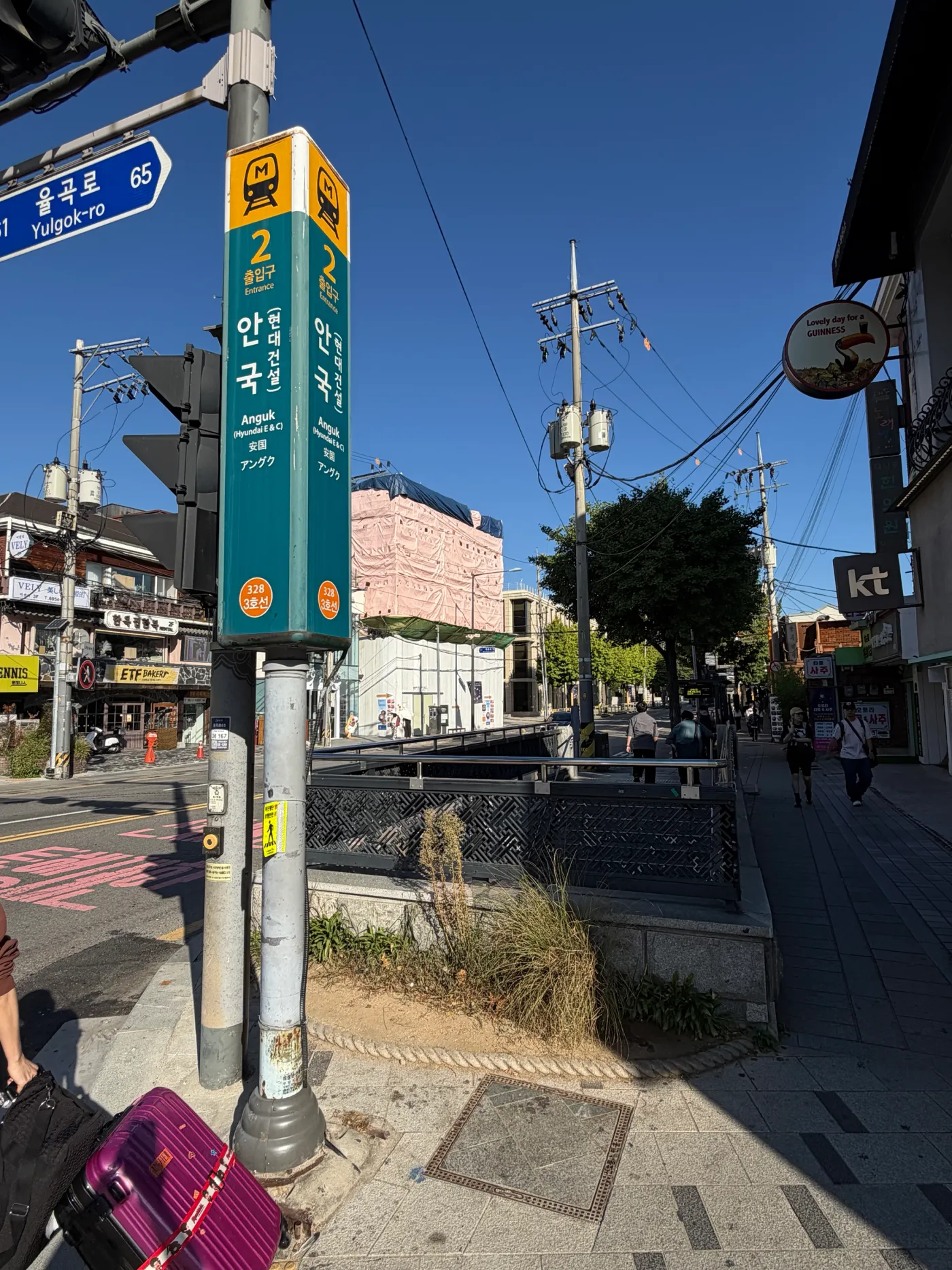
KUT SEOUL is about 10 minutes on foot from Anguk Station — on weekday lunches its 8-dish ₩69,000 Bar course runs 80 minutes at the counter, reservation only.
What is the best 2.5-hour route through Changdeokgung and Huwon?
Start at the front gate, work east through the ceremonial halls, drift into the residential courtyards, and reach the Huwon meeting point ten minutes before your session. That sequence uses the palace's own logic — public to private to garden.
Begin at Donhwamun, the main gate on Yulgok-ro, and cross the stone Geumcheongyo bridge. The first courtyard opens onto Injeongjeon, the throne hall used for coronations and state ceremonies — the palace at its most formal. From there, move east into Seonjeongjeon, the smaller everyday audience hall, and then into the residential clusters of Huijeongdang and Daejojeon, where the king and queen actually lived. This is the layer of Changdeokgung that rewards a slow pace: painted eaves, quiet stone paths, and the sense of a working household rather than a museum.
Continue southeast to Nakseonjae, a scholar-style complex added in the mid-nineteenth century. Its restrained wood-and-paper aesthetic — less royal, more literati — is one of the palace's quiet high points, and a good place to pause before the garden. From Nakseonjae, begin moving toward the Secret Garden meeting point well before your scheduled time.
The Huwon walk itself lasts around 70–90 minutes and follows a fixed route. Expect to see Buyongji pond with its Buyongjeong pavilion, the two-storey Juhamnu library, Aeryeonji with the small Aeryeonjeong pavilion, and the working hanok compound of Yeongyeongdang — a rare glimpse of what an aristocratic house looked like within palace walls. One note for planners: the Okryucheon section remains closed for conservation work under the current official guidance, with the closure listed as continuing into 2026 and no guaranteed reopening date announced, so the route may be shorter than in older travel blogs and videos.
Wear proper shoes. The Secret Garden route follows wooded slopes, uneven paths, ponds, and historic pavilions. This is not a paved circuit.
Should you add Jongmyo Shrine next door?
Yes, if you have the appetite for a second, quieter World Heritage Site — and the schedule to match. Jongmyo sits just south of Changdeokgung across Yulgok-ro, and its rhythm is deliberately slower.
As one of the most significant Confucian landmarks in the world, Jongmyo Shrine is a UNESCO World Heritage Site that houses the spirit tablets of the Joseon kings. The buildings are austere and horizontal — the antithesis of the palaces' painted flourishes — and the shrine's power lies in restraint. Jeongjeon, the main hall, is said to be the world's longest single wooden structure at 109 meters.
Access is largely by guided tour on weekdays, with self-guided time on weekends and Culture Day. Opening hours are 09:00–18:00 February–May and September–October, 09:00–18:30 June–August, and 09:00–17:30 November–January, with last admission one hour before closing.
If you began the palace at 09:00 and took a late-morning Huwon slot, an early-afternoon Jongmyo tour flows naturally. If you would rather keep the day light, walk south instead into the streets around Ikseon-dong.
What to do afterwards: Ikseon-dong, then dinner in Jongno 3-ga
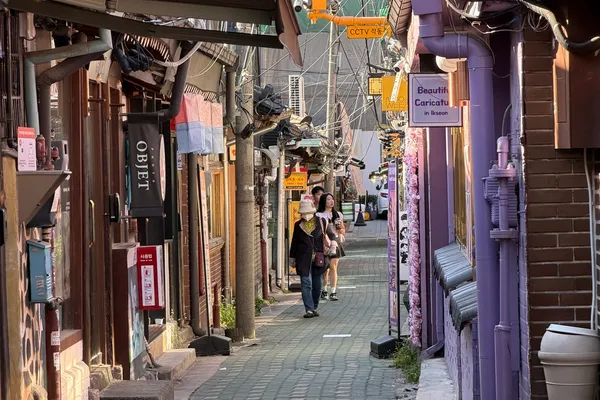
South of Jongno lies Ikseon-dong, a compact grid of restored hanok houses turned into cafés, small restaurants and independent boutiques. It is the natural decompression after a morning of pavilions and gravel paths — a place to sit with an iced hallabong tea and watch the alleys fill with early-evening traffic.
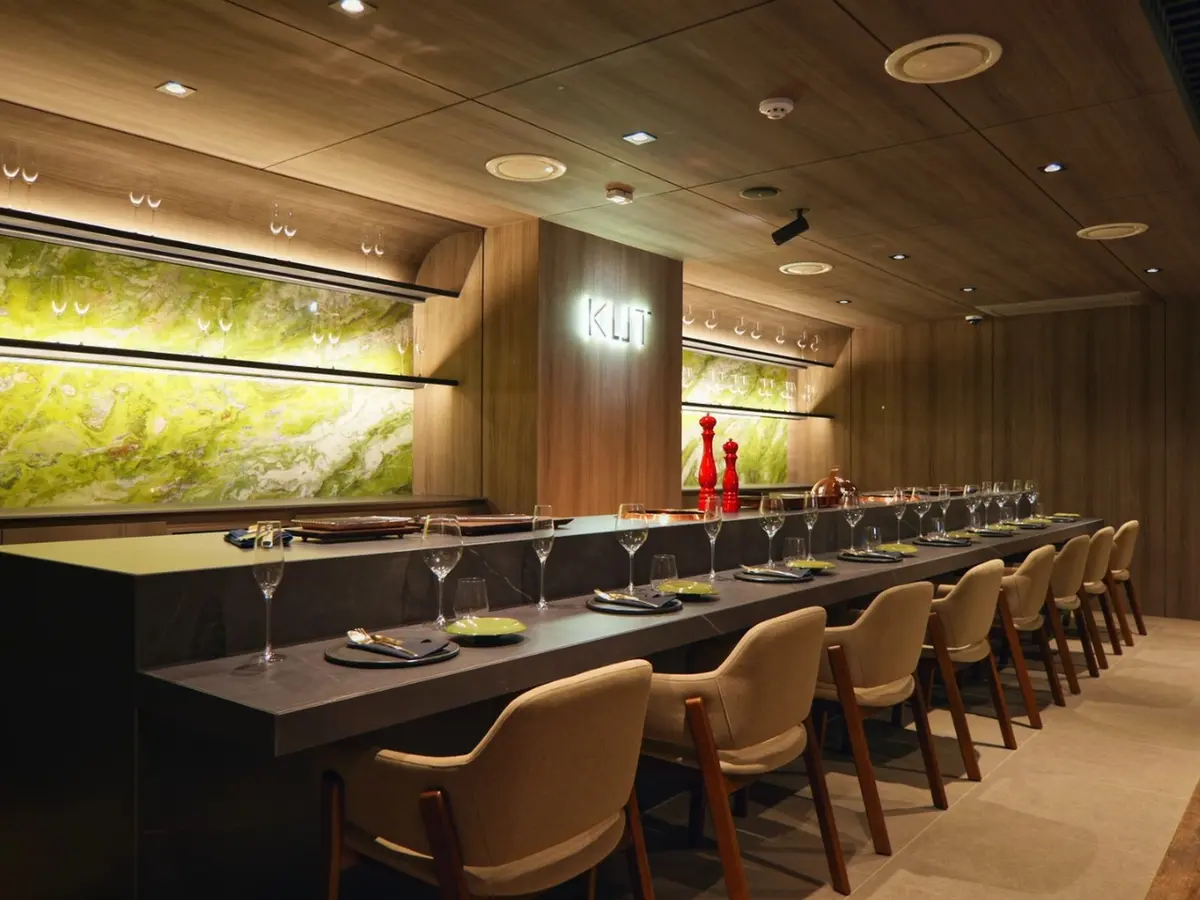
From Ikseon-dong, everything worth eating is within a short walk. The Jongno 3-ga grid to the south is one of Seoul's densest dining neighbourhoods: pojangmacha tents, grilled-eel counters, old ox-bone soup houses, and the newer wave of quiet counters and private-room restaurants that have opened along the main street. For a fuller after-dark plan, our perfect day in Jongno guide traces the route from Gyeongbokgung down to Cheonggyecheon and dinner; for a slower morning north of Jongno, the Bukchon Hanok Village walking guide sets out a considered route.
A practical booking note if dinner is the reward: three-hour tasting menus at private-room restaurants around Jongno 3-ga generally cannot start comfortably as late as 19:00, because they run past the usual close. Book the 17:30–18:00 window instead if you are choosing a longer course.
Ending Your Day in Jongno
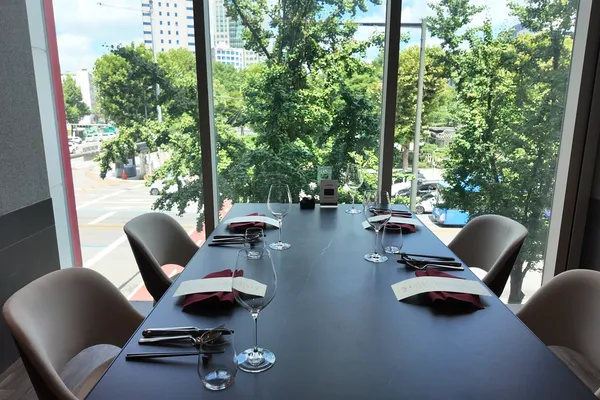
KUT SEOUL is about 10 minutes on foot from Anguk Station — 3F Hanol Tower, 96 Jongno, next to Tapgol Park. Counter seats take the Posh course (₩175,000); private rooms start from Posh at weekday lunch, Signature (₩210,000) at dinner and on weekends, up to Royal (₩280,000); on weekdays the 8-dish ₩69,000 lunch runs 80 minutes at the counter. Reservation only on CatchTable — which seat suits your evening.