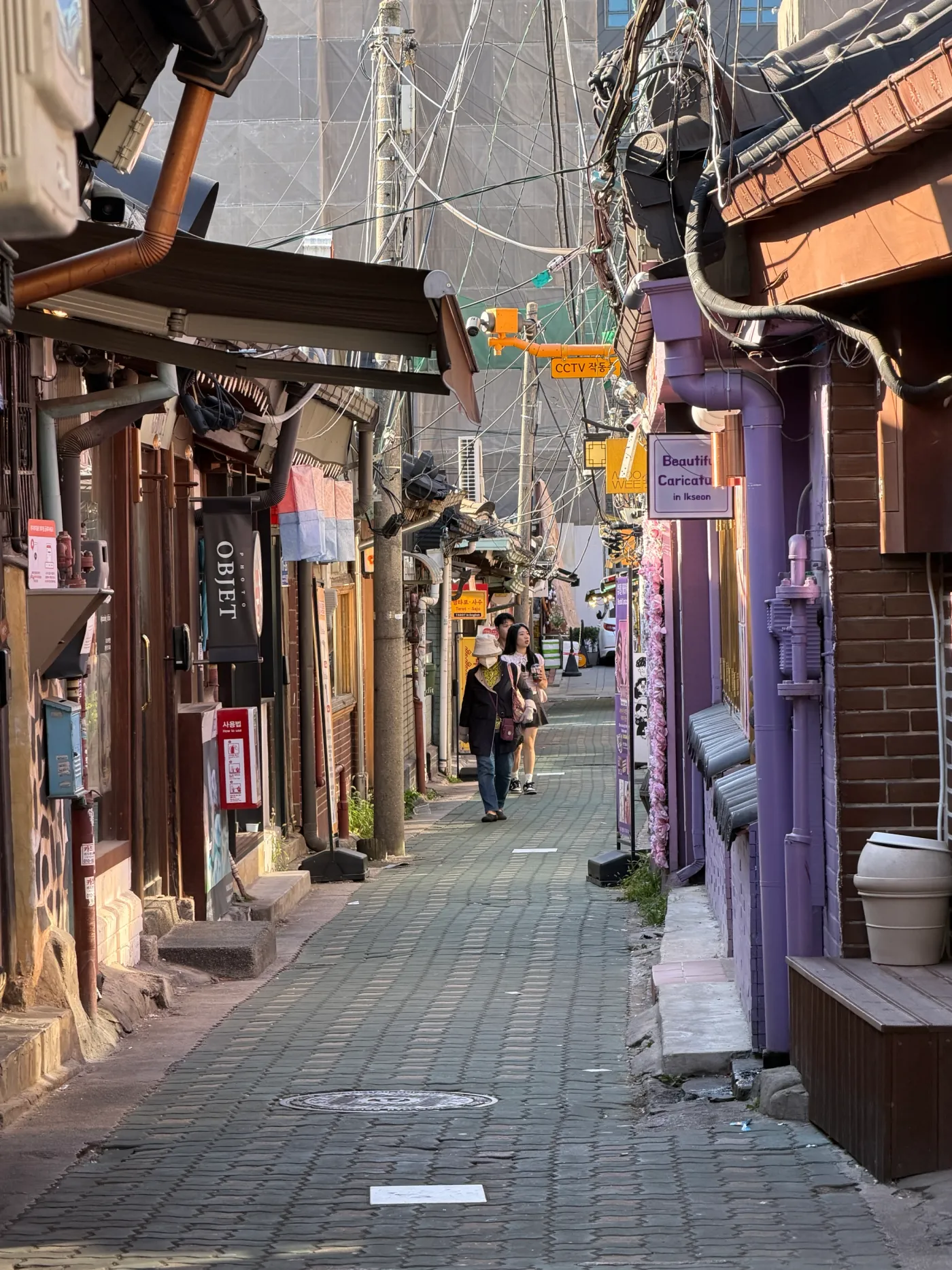
Slip through a gap between two modern buildings on Donhwamun-ro, barely wide enough for two people to pass abreast, and the noise of Jongno falls away in a single step. The pavement narrows into an alley of low grey-tiled roofs. A queue forms outside a bakery selling salt bread. Through an open gate, a courtyard café glows under old wooden rafters, and somewhere nearby a kettle of makgeolli is being poured into a brass bowl.
This is Ikseon-dong — Seoul's oldest concentrated hanok village, and, improbably, one of the city's most fashionable neighbourhoods. It occupies a compact grid directly behind Jongno 3-ga Station: about 110 hanok houses laid out in tight, flat alleys, almost all of them now cafés, bakeries, small restaurants, boutiques and bars.
Unlike Bukchon, which asks to be admired from outside, Ikseon-dong invites you in. This guide covers the practical questions a first-time visitor actually asks — when to come, which exit to use, what to see, how long the queues really are, and how to shape a half-day that ends well as the sun goes down over Jongno.
What is Ikseon-dong, and Why Does It Matter?
It is Seoul's oldest surviving concentrated hanok district, laid out in the 1920s not for aristocrats but for ordinary people. That single fact explains almost everything about how it feels today.
The neighbourhood was developed by Jeong Se-gwon, a Korean entrepreneur and independence activist, during the Japanese colonial period. He bought the former site of a royal in-law's residence and divided the roughly ten-thousand-pyeong plot into small parcels, building compact hanok — most under fifteen pyeong — that were then sold to the emerging Korean middle class of merchants, mid-level civil servants and teachers. Architectural historians describe the result as "urban hanok": a practical reinterpretation of the traditional form for dense city living.
There is a quietly political dimension to this too. At a moment when Japanese-style housing was spreading rapidly through Gyeongseong, as Seoul was then called, developing an affordable Korean-style neighbourhood for ordinary citizens was, in part, an act of cultural preservation.
The village then went quiet for decades. From the 1980s, as Gangnam boomed and apartments became the default, Ikseon-dong faded from memory; in 2004 it was even designated for redevelopment and demolition, a plan that collapsed under residents' conflicting interests. The empty hanok sat waiting until, in 2014, a fashion photographer converted three of them into a plant-filled café called Singmul — the pinprick of light that eventually became today's neighbourhood. In 2018 it was reshaped once more under a Seoul City urban regeneration project, arriving at its present form. In 2026 Time Out named Jongno 3-ga the coolest neighbourhood in the world, singling out Ikseon-dong by name (published September 2026).
How Does Ikseon-dong Differ from Bukchon?
Both are hanok neighbourhoods in Jongno-gu, but they answer completely different questions. Bukchon is for looking; Ikseon-dong is for going inside.
Bukchon was historically an aristocratic quarter of large, stately hanok, and much of it remains residential — which is why visitors are asked to be quiet and why access to the sensitive Bukchon-ro 11-gil zone is now restricted between 17:00 and 10:00, with a ₩100,000 fine for violations (as of 2026-09). You walk Bukchon for the sweep of tiled rooftops descending toward Gyeongbokgung, for the elegance of preserved courtyards seen from the street.
Ikseon-dong is the opposite proposition. The hanok are smaller, more modest in scale, packed shoulder to shoulder along alleys narrower than Bukchon's, and today almost every doorway is a business you are welcome to enter. You come here to sit inside a hundred-year-old house drinking a flat white, or to eat grilled meat in a courtyard, or to browse a scent shop set into an old front room. If Bukchon is a museum-quiet residential village, Ikseon-dong is a small, walkable food-and-café district that happens to be built inside 1920s hanok.
If you have time for both, do Bukchon first — quietly, within its permitted hours — then walk south for Ikseon-dong. Our Bukchon walking guide covers the etiquette rules and the best route through the residential zone.
| Ikseon-dong | Bukchon | |
|---|---|---|
| Built | 1920s | 14th–20th century (mostly late Joseon / early modern) |
| Original residents | Middle-class Koreans | Aristocrats and civil servants |
| Scale of houses | Small, compact urban hanok | Large, stately courtyards |
| Character today | Cafés, bakeries, bars, restaurants | Residential; visited on foot |
| Terrain | Flat | Hilly |
| Access rules | Open all hours | Bukchon-ro 11-gil restricted 17:00–10:00 |
| Best for | Sitting inside a hanok | Photographing a hanok streetscape |
How Do You Get to Ikseon-dong?
By subway to Jongno 3-ga Station — the alleys begin a two-to-three-minute walk from the exits. This is arguably the most convenient hanok neighbourhood in Seoul to reach.
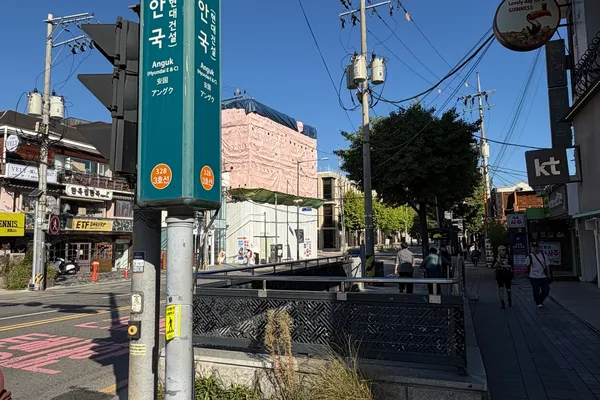
Jongno 3-ga is served by Lines 1, 3 and 5, which means you can arrive without changing trains from most parts of central Seoul, Hongdae, Gangnam or the Han River south bank. Take Exit 4 or 6 and cross onto Donhwamun-ro; the entrances to the hanok alleys are tucked between modern buildings along the main road, so look carefully for the narrow openings — first-timers routinely walk past them. Exit 3 also works and is preferred by some guides for the west side of the neighbourhood.
On foot, Ikseon-dong is also easy to reach from adjacent areas: about ten minutes south from Anguk Station and the Insadong tea houses, or a similar walk east from Jonggak. From Incheon Airport, the direct option is limousine bus 6002, which stops at Jonggak (YMCA) and Jongno 3-ga; the fare is ₩17,000 (as of 2026-09) and the ride takes around 75 minutes.
One small navigational note: the neighbourhood is easy to get *lost* in, in a pleasant way. The alleys form an interlocking grid rather than a single loop, and unless you make an effort to keep track, you will circle. Consider it part of the experience.
KUT SEOUL is about 10 minutes on foot from Ikseon-dong — on weekday lunches its 8-dish ₩69,000 Bar course runs 80 minutes at the counter, reservation only.
When Is the Best Time to Visit?
Weekday mornings, ideally between 10:00 and 11:30. This is the calmest window of the week, when the cafés have just opened, the light is good in the alleys, and the queues at the popular bakeries are shortest.
By lunchtime on any day, and throughout the afternoon and evening on weekends, the two-person-wide alleys become genuinely congested; on a Saturday afternoon in fine weather, taking a photograph without another visitor in frame is nearly impossible. Weekdays are consistently far calmer than weekends.
The rhythm of the neighbourhood also shifts as the day goes on. Come during the day for cafés, bakeries, dessert and photographs. Come in the evening for makgeolli bars and grill restaurants — the atmosphere is entirely different once the paper lanterns come on and the courtyards fill up. Near Exit 3 of Jongno 3-ga, after the daytime shops close, Donhwamun-ro 11-gil fills with pojangmacha — the red-tented street-food stalls that are one of the essential pleasures of downtown Seoul.
Seasonally, spring and autumn are ideal for lingering in courtyards; midsummer is hot but the alleys are shaded; winter is quiet and the interiors are warmly lit, which suits the neighbourhood's aesthetic.
What Should You Actually See?
Realistically, Ikseon-dong is about the alleys themselves — about wandering, ducking into whatever looks interesting, and staying inside a hanok for as long as you like. There is no single "main sight."
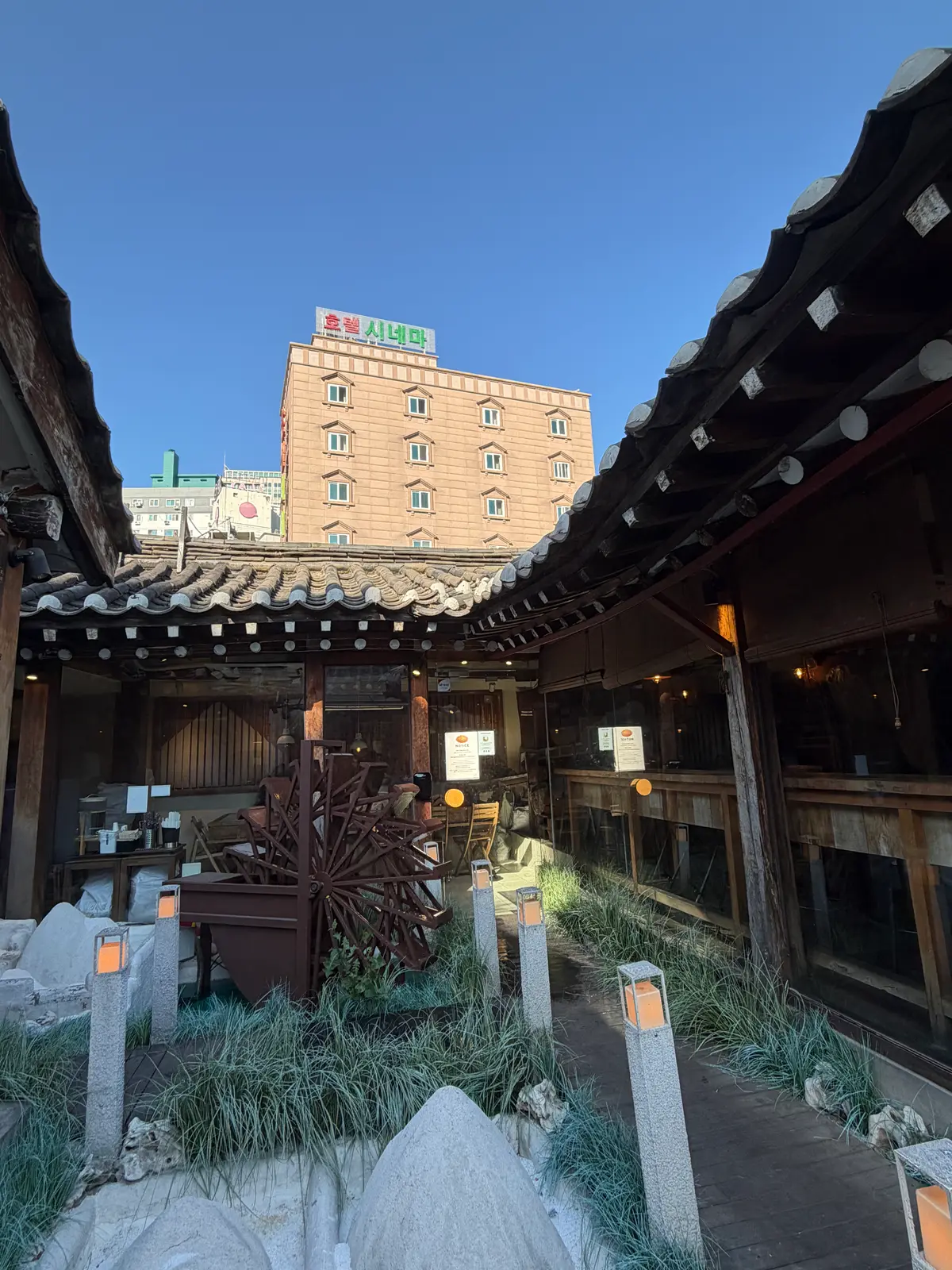
That said, a few reference points help you orient yourself. Donhwamun-ro 11-gil is the central spine, running north–south through the neighbourhood; almost all the side alleys branch off it. Near the middle you will find the concentration of hanok cafés, salt-bread bakeries and small boutiques; toward the western edge sit older restaurants and a well-known "meat street" of grill houses; the eastern side leans more toward evening bars, including craft-beer and makgeolli spots set inside modernly renovated hanok.
A few concrete things to look for as you walk:
- The tiled rooftops seen from ground level — small, uniform, and packed close, quite different from Bukchon's larger scale.
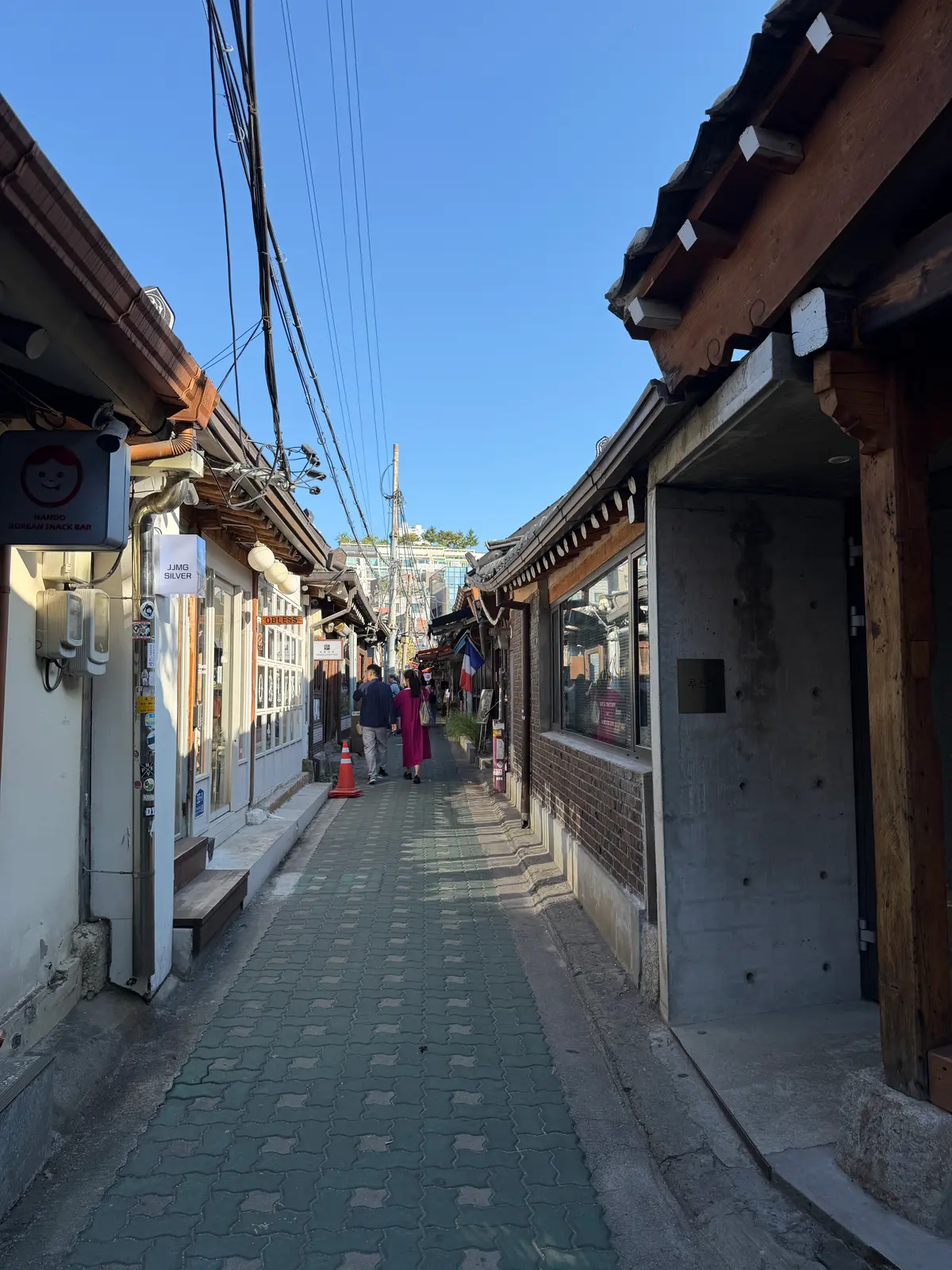
- Original wooden rafters and beams inside the cafés, often left exposed above renovated interiors.
- Interior courtyards (madang) that have been glassed over or planted, giving you a sense of how a small urban hanok organised its light and air.
- The scent shops and tea concept stores that give the neighbourhood its distinct commercial character — this is not a mass-market souvenir district.
It is worth acknowledging one criticism, because it will help you look at Ikseon-dong more thoughtfully. Success has brought soaring rents; well-capitalised franchises have moved in as the original creative small businesses have been pushed out, and some renovations have prioritised commercial convenience over hanok structural integrity. Approach the neighbourhood as a lived, contested place rather than a preserved set piece.
What About the Queues?
Be realistic: the most photographed bakeries and cafés have real queues, especially the salt-bread specialists and a handful of Instagram-famous dessert spots. On weekends, waits of thirty to sixty minutes at the headline addresses are entirely normal.
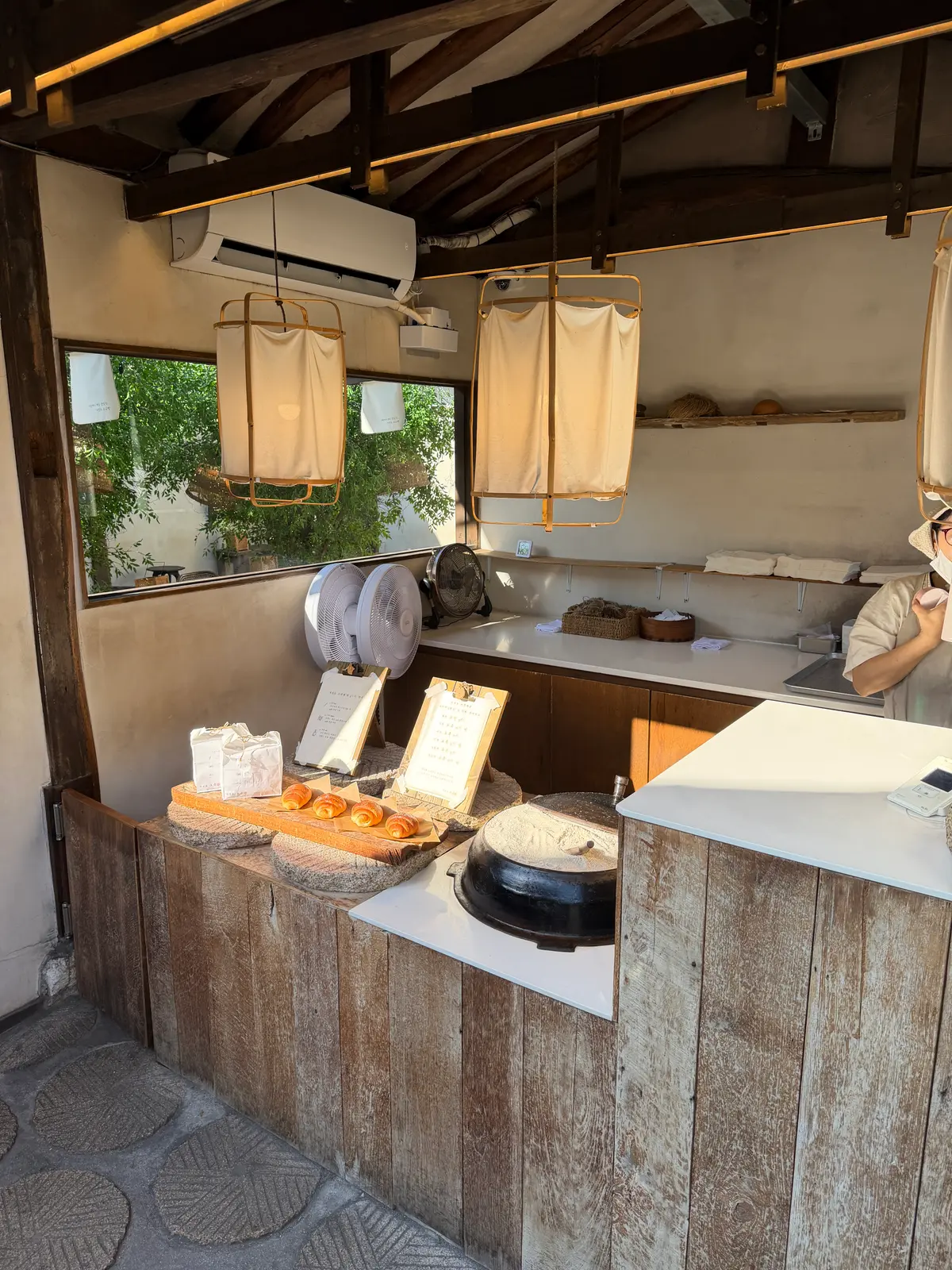
Three practical strategies work. First, arrive before 11:00 on a weekday and go straight to the place at the top of your list. Second, accept the queue at one address and be flexible about everything else — there are always alley cafés with immediate seating a hundred metres away. Third, come in the evening, when the crowds shift to the makgeolli bars and grill restaurants, and the daytime bakery queues have dissolved. For the food side of the neighbourhood in detail — where to eat, what to order, how long each place actually takes — see our separate Ikseon-dong food guide and Insadong companion.
A Half-Day Route Through Ikseon-dong
A calm three-to-four-hour plan, starting from Jongno 3-ga Station Exit 4. Adjust the timings by season and appetite.
| Time | Stop | What to do |
|---|---|---|
| 10:00 | Jongno 3-ga Station Exit 4 | Walk two minutes north to the alley entrance on Donhwamun-ro |
| 10:10 | First loop of the alleys | Walk the central spine slowly, before crowds arrive |
| 10:45 | Hanok café with courtyard | Coffee under old wooden rafters; watch the light change |
| 11:30 | Salt-bread bakery | The queue is still short before noon on a weekday |
| 12:15 | Lunch inside a hanok | A courtyard restaurant on the western edge |
| 13:30 | Second loop | Boutiques, scent shops, a tea concept store |
| 14:15 | Walk to Insadong | Ten minutes west to hanji stationers and tea houses |
| 15:00 | Tapgol Park | Small green square with a Joseon-era pagoda; open 09:00–18:00 Mar–Oct (as of 2026-09) |
| 15:30 | Cheonggyecheon | Descend to the restored stream — a 5.84 km walk if you want to keep going |
| 17:30 | Dinner in Jongno | See below |
The route is deliberately flat and short — under two kilometres in total walking — because Ikseon-dong rewards slowness rather than distance. If you would like a longer day that pairs the neighbourhood with the palaces further west, our perfect day in Jongno itinerary extends the same walking logic from Gyeongbokgung down to Cheonggyecheon.
Ending Your Day in Jongno
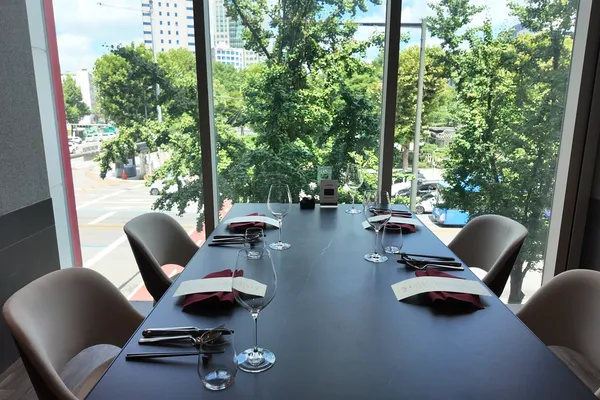
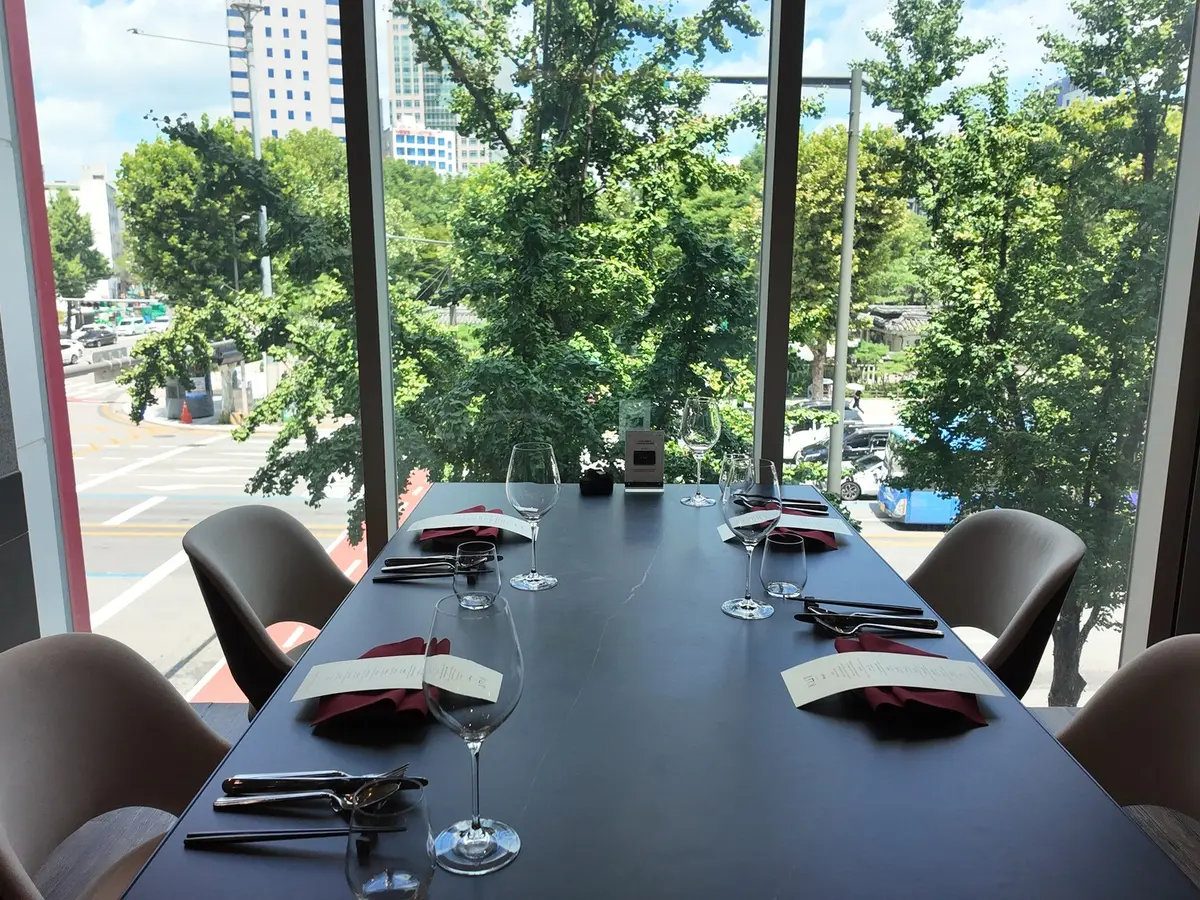
KUT SEOUL is about 10 minutes on foot from Ikseon-dong — 3F Hanol Tower, 96 Jongno, next to Tapgol Park. Counter seats take the Posh course (₩175,000); private rooms start from Posh at weekday lunch, Signature (₩210,000) at dinner and on weekends, up to Royal (₩280,000); on weekdays the 8-dish ₩69,000 lunch runs 80 minutes at the counter. Reservation only on CatchTable — which seat suits your evening.