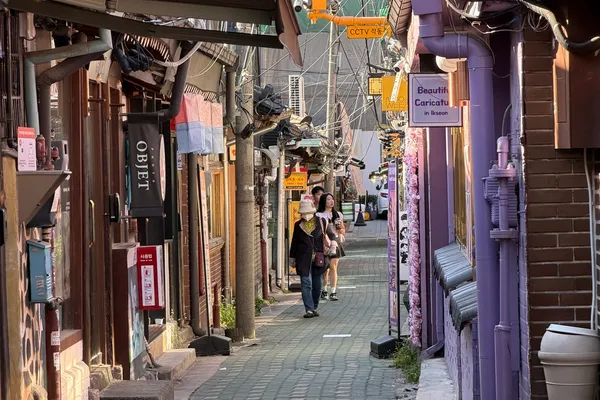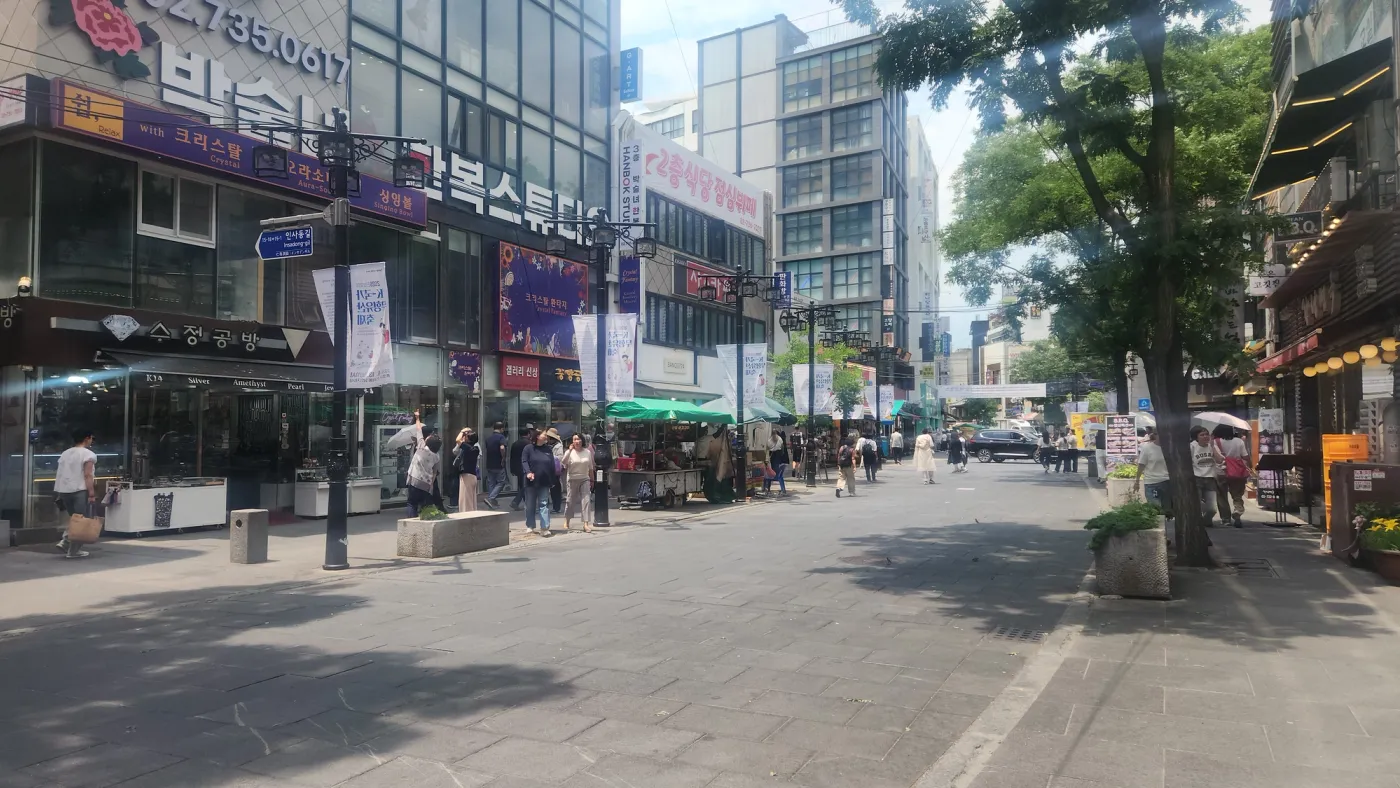
Insadong rewards the unhurried. Between Anguk Station and Jongno, a single pedestrian street — barely 700 metres long — gathers more of old Seoul's craft culture than any other neighbourhood in the city: brushes laid out in lacquered trays, hanji paper stacked by weight and grain, antique celadon behind glass, and the low murmur of tea poured in wooden rooms. Its 700-meter main road, Insadong-gil, is filled with traditional hanok architecture, antique stores, and craft shops.
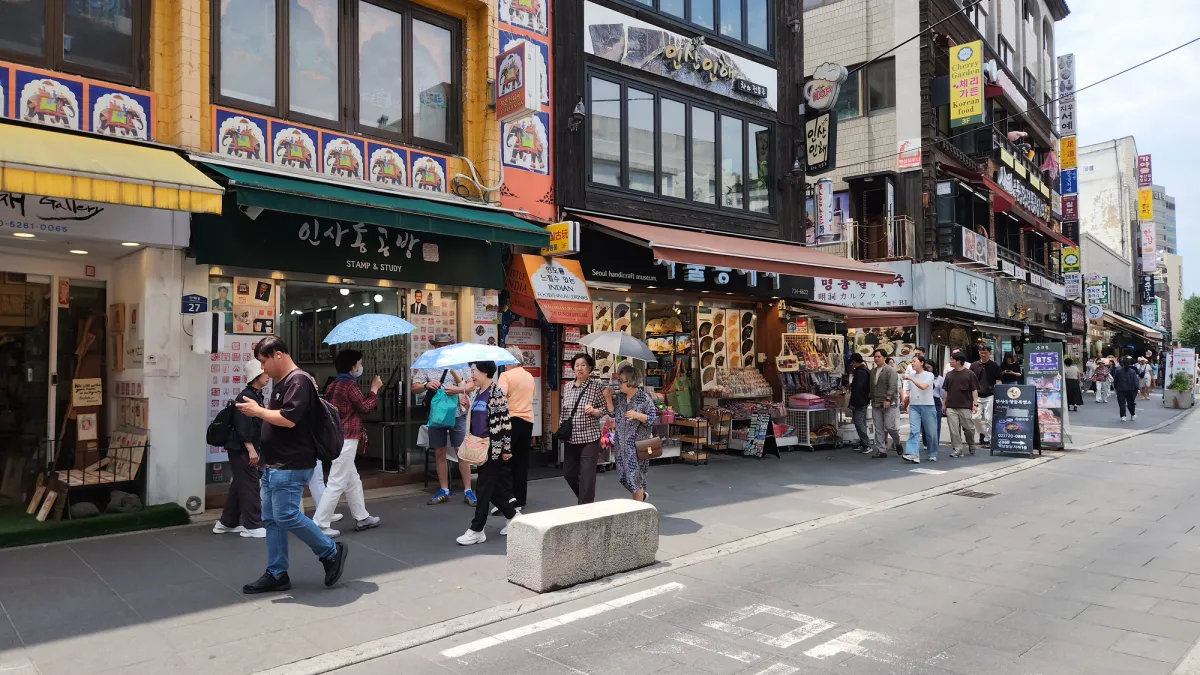
A half day is enough to feel the place properly — to step into two or three galleries, find a stationery shop worth sending things home from, and spend an honest hour over a pot of omija tea. What follows is a walking route built around those three pleasures: tea, art, and the quiet craft of paper and brush. It assumes a late-morning start, comfortable shoes, and the willingness to turn off the main street whenever an alley looks promising.
If this is your first day in Jongno, the route below pairs naturally with a longer itinerary; for that, see our perfect day in Jongno from Gyeongbokgung to Cheonggyecheon.
Where Do You Begin?
The most intuitive entrance to Insadong is Anguk Station, Exit 6, on Subway Line 3. From the exit, walk straight for roughly 100 metres along Yulgok-ro, then turn right onto Insadong-gil — the unmistakable pedestrian spine of the district. From Anguk Station Exit 6, walk approximately 100m and turn left onto Insadong-gil, then continue to reach Ssamzigil on the left. Jonggak Station on Line 1 (Exit 3) is the alternative if you are coming from the south, with a five to ten minute walk to the same street.
Mid-morning is the gentler choice. Parts of the main street switch to pedestrian-only hours, and mid-morning is calm for browsing; late afternoon brings a lively street feel and more vendors. By eleven the galleries are open, the tea houses are warming their kettles, and the crowds that build through the afternoon have not yet arrived.
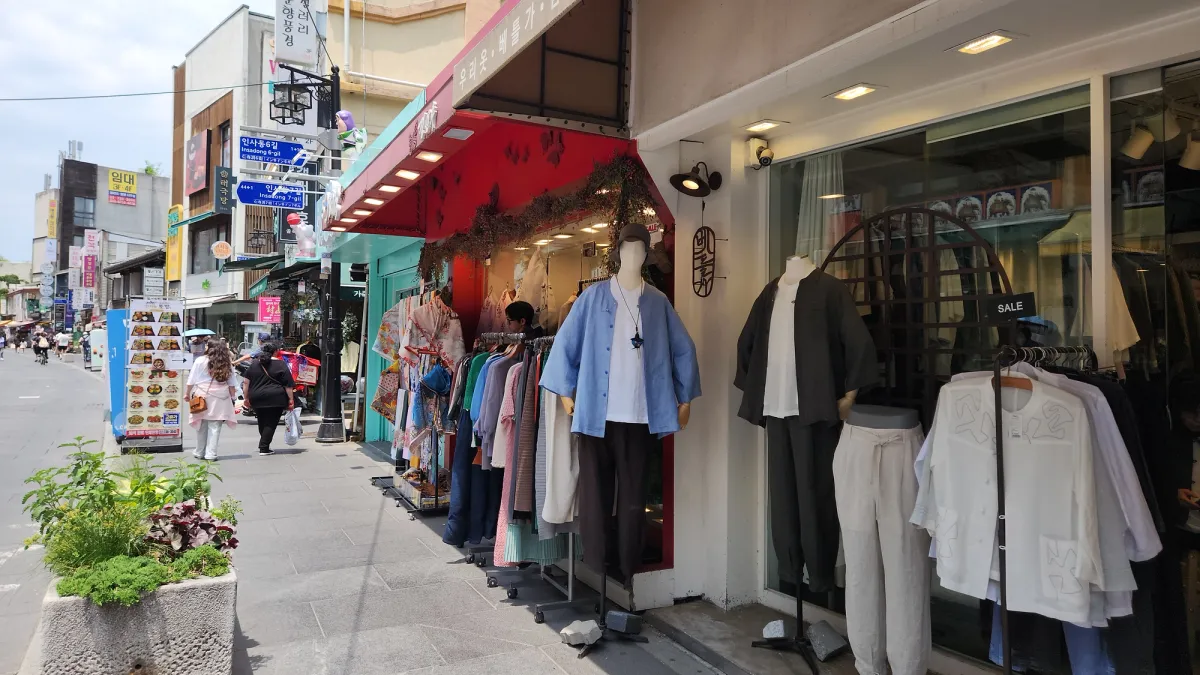
A brief orientation before you set off: Insadong-gil runs roughly north–south. The northern end, near Anguk, leans toward galleries and antique shops. The middle hosts Ssamziegil and the densest cluster of craft stores. The southern end, toward Jonggak, feeds back into modern Jongno and is the natural exit if you plan to continue to dinner. KUT SEOUL is directly across Jongno from the southern end of Insadong-gil, 2–3 minutes on foot — on weekday lunches its 8-dish ₩69,000 Bar course runs 80 minutes at the counter, reservation only.
The Galleries: Insadong's Intellectual Heart
Insadong has been Seoul's art quarter for over a century, and the legacy is visible on every block. Since the Joseon Dynasty, it has been known as a hub for calligraphy, paintings, and antiques — and that legacy continues today with antique shops, art galleries, and craft stores lining the street. The character of the galleries varies wildly: some occupy a single hanok room with a rotating exhibit of folk painting; others, like the larger commercial spaces, mount contemporary shows that would not look out of place in Samcheong-dong.
A few practical notes. From exhibitions of calligraphy and folk paintings to works by emerging modern artists, these galleries host a wide variety of shows, and many have affordable or even free admission, making them easy to explore. Step in even if a sign is in Korean only — most gallerists are accustomed to visitors and will not pressure you to buy. The Korean Craft & Design Foundation Gallery Shop, a few minutes south of Ssamziegil, is a reliable stop for high-end ceramics and lacquerware carrying the UNESCO Seal of Excellence for Handicrafts.
If you have time for only one gallery, choose one in a hanok building rather than a modern storefront — the architecture itself is part of what you are seeing. The wooden beams, the paper-screened windows, the low ceilings: they frame the work in a way no white cube can.
Ssamziegil: The Spiral in the Middle of Everything
Roughly halfway down Insadong-gil, at number 44, stands Ssamziegil — the spiral-ramped craft complex that has anchored the neighbourhood since 2004. Ssamziegil has over 70 shops including craft shops, galleries, tea houses, and restaurants. The design is deceptively simple: instead of stairs, a single sloping path winds upward around an open courtyard, passing every shopfront in turn until it deposits you on the rooftop.
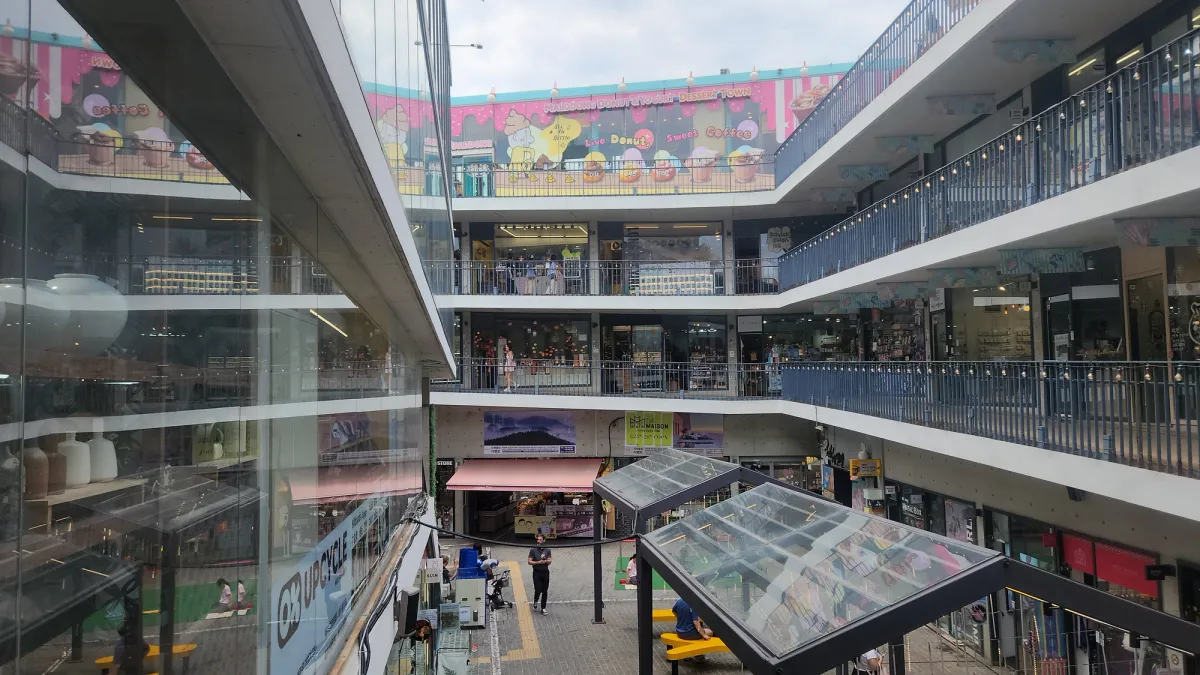
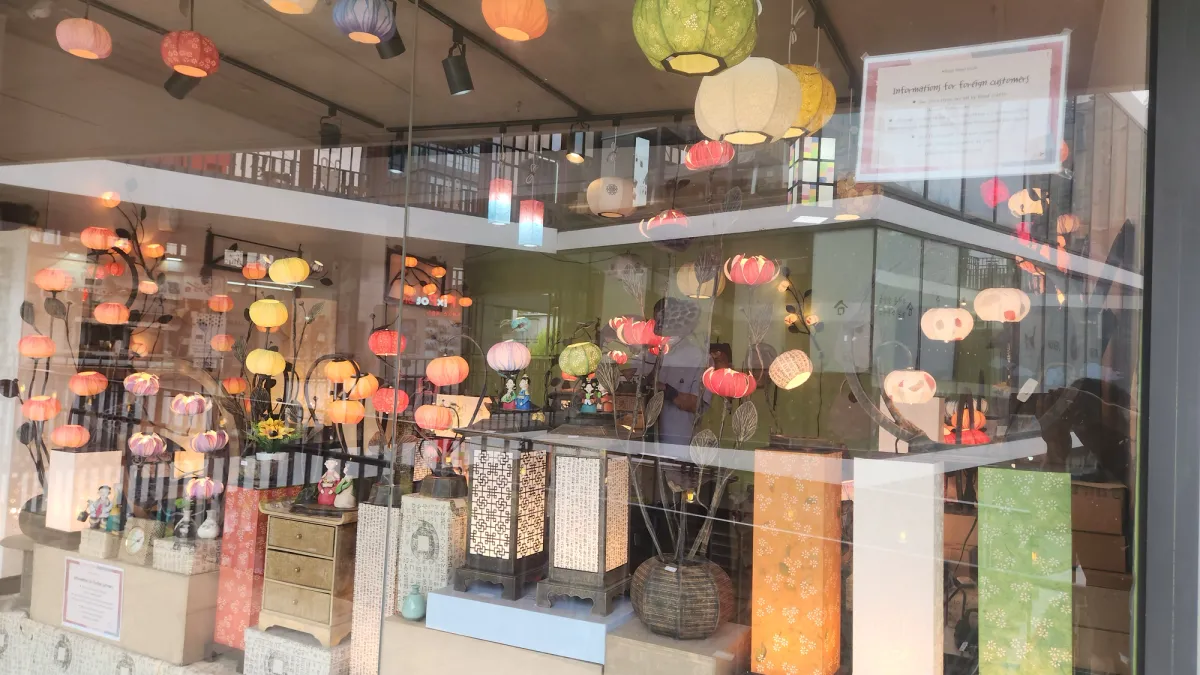
The shops rotate. Some are run by independent ceramists or jewellers who keep a stall for a few months; others have been there for years. Visitors can learn how to design ceramic crafts like cups and dishes, make mother-of-pearl crafts like rings and cell phone accessories, and make hanji (Korean paper) crafts like jewel boxes and paper lamps. If a workshop fits your schedule, it is one of the more memorable souvenirs you can take home from Seoul.
A quick reference for the practical details:
| Detail | Information |
|---|---|
| Address | 44 Insadong-gil, Jongno-gu |
| Hours | Daily, roughly 10:30–20:30 (check on the day) |
| Closed | Lunar New Year and Chuseok |
| Nearest subway | Anguk Station (Line 3), Exit 6 |
| Admission | Free; workshop fees vary |
Ssamziegil opened on December 18, 2004, and has been called the "Special Insa-dong within Insa-dong." Allow forty-five minutes to an hour if you intend to climb to the roof, browse properly, and pause for a snack on the way down.
The Stationery: Hanji, Brushes, and the Name Stamp
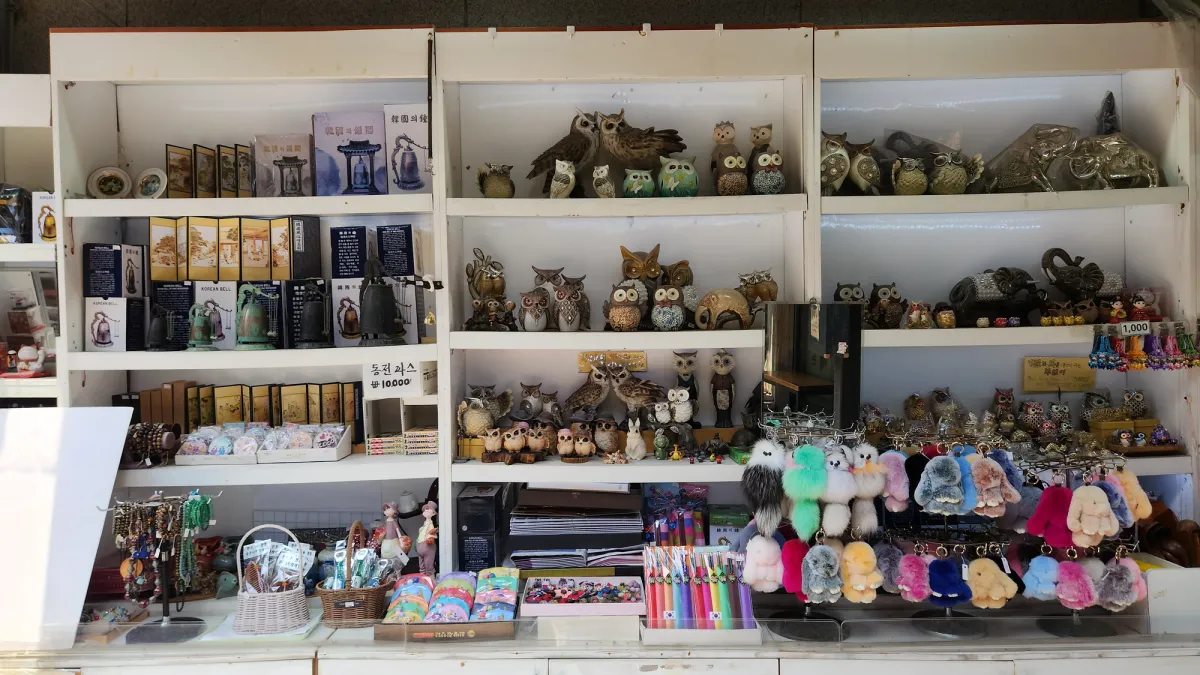
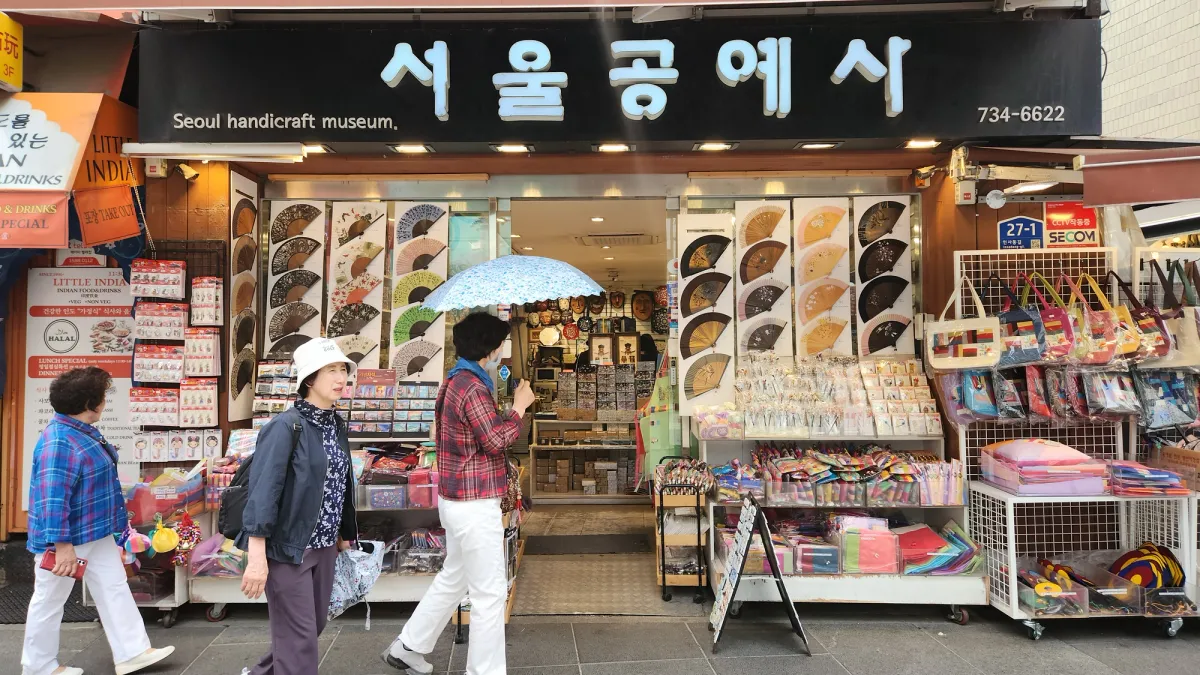
If Insadong has a single signature object, it is paper. Hanji — the handmade mulberry-bark paper that Korean artisans have produced for centuries — is everywhere here: as notebooks bound in indigo cloth, as folded fans, as the surface of small lamps and jewellery boxes. The neighborhood is better known for hanji stationery, brushes, ceramics, folded fans, small traditional crafts, and giftable objects that feel tied to Korean material culture.
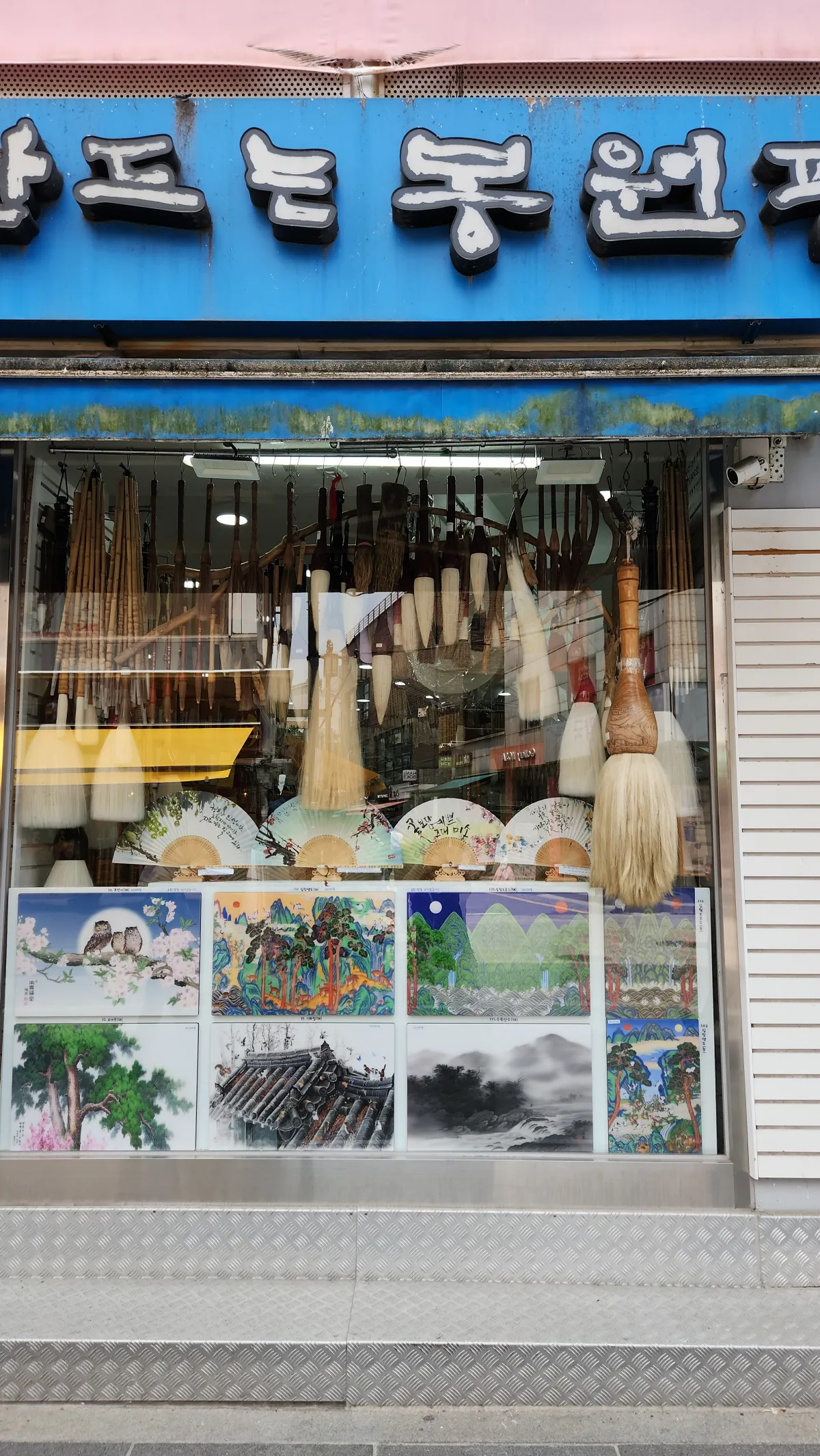
Look for the brush shops along the northern stretch of Insadong-gil, where calligraphy supplies are sold by the same families who have stocked them for generations. A wolf-hair brush, a stone ink slab, a sheet of properly weighted hanji — these are the kinds of small purchases that feel disproportionate to their cost.
The one souvenir most travellers regret not buying is a custom name stamp. Korean tradition has long used carved stone seals in place of signatures, and several Insadong artisans will carve your name — in Hangul or in your own alphabet — into a small block of stone while you watch. The work takes roughly thirty minutes, and the result is a personal object that outlasts almost anything else you could carry home.
For written souvenirs, the official Seoul tourism shop is also nearby. Within a 10-minute walk from Ssamziegil, you'll find Seoul My Soul Shop – Seoul Tourism Plaza Branch, the largest among Seoul's official souvenir shops, with practical items like tumblers, canvas bags, caps, pens, magnets, and keyrings.
Which Tea Should You Order?
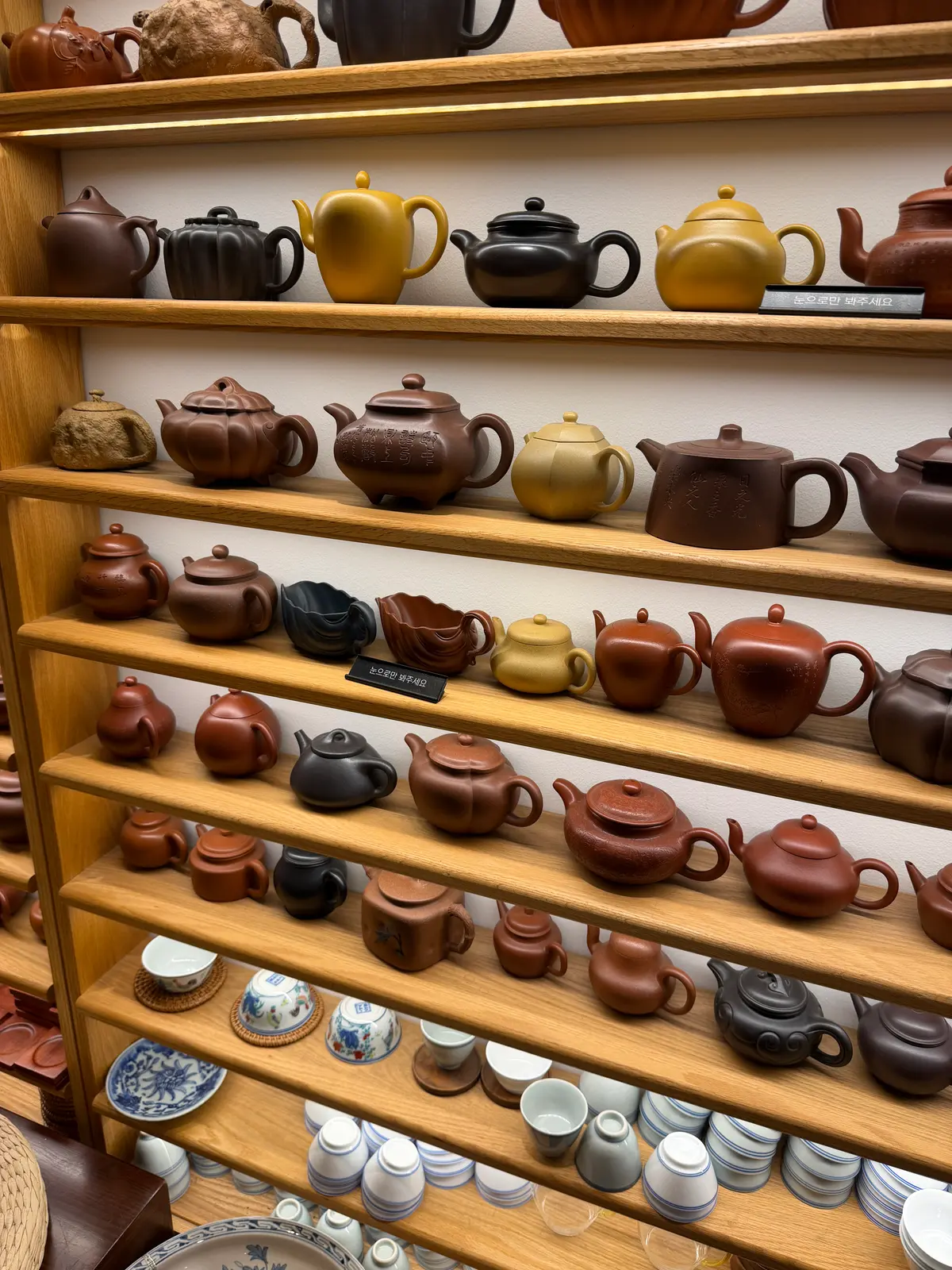
No half-day in Insadong is complete without an hour in a chatjip — a traditional tea house. They are the soul of the neighbourhood, and most of them are tucked into the side alleys rather than directly on Insadong-gil. Tea houses are the other essential Insadong experience; the district is one of the few places in Seoul where sitting down for tea still feels central rather than optional, with traditional fruit teas, herbal blends, quiet wooden interiors, and low-key desserts.
The canonical order: omija-cha, the five-flavour berry tea served cold in a pale pink glass; yuja-cha, citron preserved in honey and stirred into hot water; or daechu-cha, jujube tea steeped slow. Most tea houses serve a small plate of yugwa — puffed rice sweets — alongside the pot. A reasonable budget is fifteen to twenty thousand won for tea for two.
A short guide to what to order, and when:
| Tea | Character | Best in |
|---|---|---|
| Omija-cha | Cold, pink, five flavours layered | Warm afternoons |
| Yuja-cha | Hot, sweet, citrus-bright | Cold mornings |
| Daechu-cha | Hot, mellow, jujube-rich | Cool evenings |
| Ssanghwa-cha | Hot, herbal, restorative | After long walking |
The etiquette is gentle. Sit on cushions if the room is floored with ondol, take your shoes off at the threshold, and do not rush. The tea is served in courses; the second pot is often better than the first.
Beyond Insadong-gil: Jogyesa Temple
If you still have an hour, step out of the south-western corner of Insadong toward Jogyesa Temple — the head temple of the Jogye Order and the closest active Buddhist temple to the district. Jogyesa is the chief temple of the Jogye Order of Korean Buddhism, dating back to the late 14th century and becoming the order's chief temple in 1936. From Anguk Station Exit 6, the temple is a short walk; from inside Insadong itself, allow five to ten minutes through the lanes.
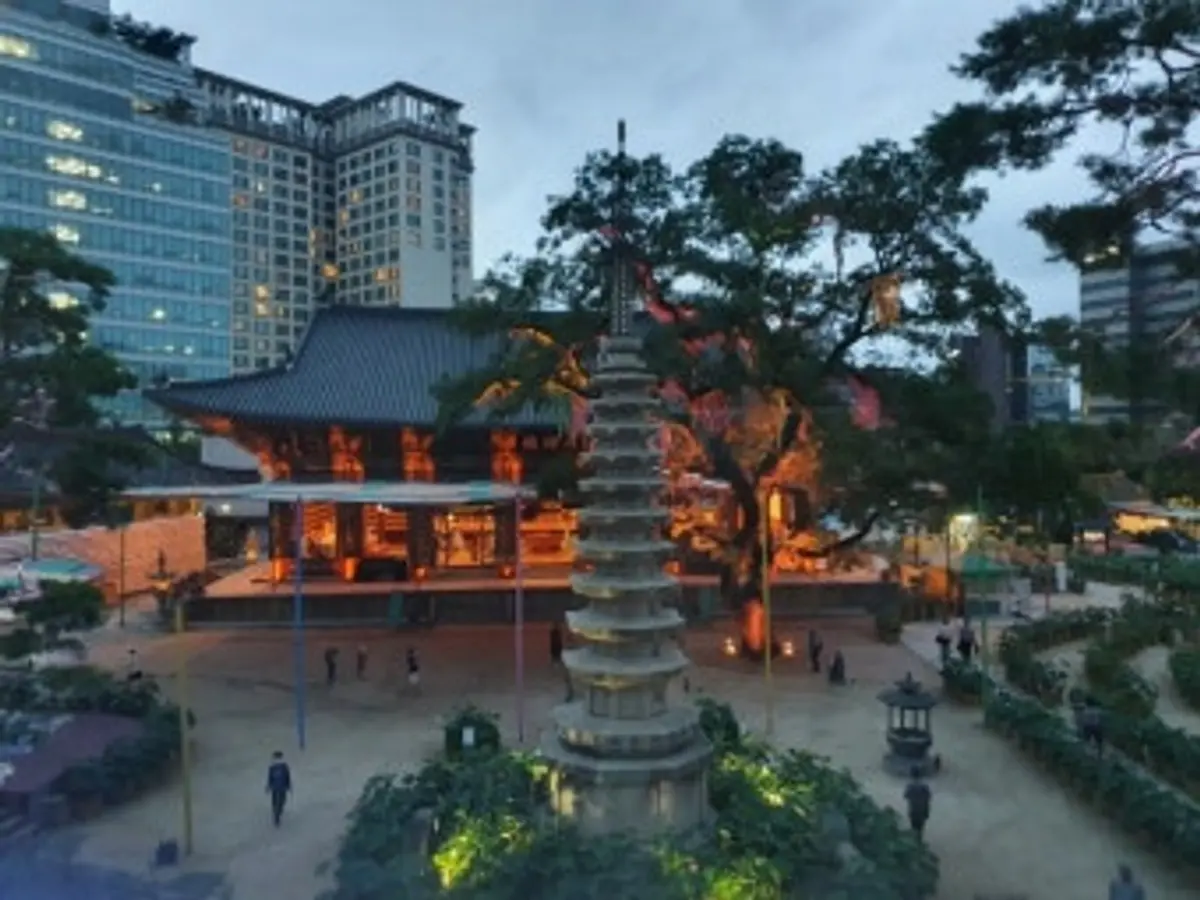
The compound is small but dense. The temple grounds are open 24 hours, while Daeungjeon (Main Dharma Hall) and Geuknakjeon (Paradise Hall) are open 4:00–21:00. Inside the main hall, three gilded Buddha statues — Amitabha, Shakyamuni, and Bhaisajya — face the courtyard. Outside, a white pine designated Natural Monument No. 9 and a 450-year-old Chinese scholar tree stand near the bell pavilion. If your visit falls in late spring, the courtyard is canopied with thousands of paper lanterns for the Lotus Lantern Festival.
A Sample Half-Day Schedule
For planning purposes, here is how the four to five hours typically unfold:
| Time | Stop |
|---|---|
| 10:30 | Arrive Anguk Station Exit 6; enter Insadong-gil |
| 10:45 | Browse two galleries along the northern stretch |
| 11:30 | Ssamziegil — climb the spiral, rooftop view |
| 12:30 | Lunch in an Insadong alley restaurant |
| 13:45 | Hanji stationery and name-stamp commissions |
| 14:30 | Tea house — omija or yuja, unhurried |
| 15:30 | Jogyesa Temple, brief visit |
| 16:00 | Exit toward Jongno for the evening |
The rhythm matters more than the exact timing. The neighbourhood does not reward speed.
What Should You Know Before You Walk?
A few small things that improve the day. Bring some cash; many of the smaller antique and stationery shops still prefer it. Insadong-gil is car-free on Saturdays 14:00–22:00 and Sundays 10:00–22:00 (as of September 2026); on weekdays a few delivery trucks and taxis pass through, so stay aware. English is less consistently spoken here than in Myeongdong or Hongdae — a translation app is useful for the older shop owners. Weekends are busiest; for fewer crowds, visit on a weekday morning when the shops are just opening, and most galleries and shops are open from around 10:00 AM to 8:00 PM.
Dress for walking and for indoor-outdoor transitions. Many galleries are upstairs, several tea houses require removing your shoes, and the rooftops at Ssamziegil are exposed to the weather. In summer, carry water; in winter, layers.
If you are pairing Insadong with Bukchon Hanok Village to the north, the two combine naturally into a full day of walking. Our Bukchon walking guide for first-time visitors covers the route in detail.
Ending Your Day in Jongno
A half-day in Insadong leaves you ideally placed for dinner. The southern end of Insadong-gil opens directly onto Jongno, where the district shifts from craft shops to restaurants and the evening begins. From here, almost everything worth eating in Seoul's oldest neighbourhood is within fifteen minutes on foot.
KUT SEOUL is directly across Jongno from the southern end of Insadong-gil, 2–3 minutes on foot — 3F Hanol Tower, 96 Jongno, next to Tapgol Park. Counter seats take the Posh course (₩175,000); private rooms start from Posh at weekday lunch, Signature (₩210,000) at dinner and on weekends, up to Royal (₩280,000); on weekdays the 8-dish ₩69,000 lunch runs 80 minutes at the counter. Reservation only on CatchTable — which seat suits your evening.
KUT SEOUL: Bar 8 dishes ₩69,000 (weekday lunch, counter only, 80 min) · Posh 11 ₩175,000 · Signature 13 ₩210,000 · Royal 15 ₩280,000 · Kids ₩45,000 (ages 7 and under). Signature and Royal are private-room only; Posh is also served in a private room at weekday lunch (counter at weekday dinner and on weekends and holidays). BMS No. 9 Hanwoo, vacuum (wet) aged four weeks — not dry-aged. Grades run 3/2/1/1+/1++; since December 2019, 1++ covers marbling scores 7–9 and the number is displayed. KUT serves No. 9 only.
3F Hanol Tower, 96 Jongno — 3 minutes from Jongno 3-ga Station (Lines 1·3·5) Exit 15 or Jonggak Station (Line 1) Exit 4; next to Tapgol Park; 20–25 minutes on foot from Gyeongbokgung. Lunch 11:30–15:00 (last order 14:30), dinner 17:30–22:00 (last order 19:30), closed Tuesdays. Reservation only, through CatchTable or Naver. Deposit is 100% of the order; cancellation is free two days before, 50% one day before, none on the day.
Whatever you choose for the evening, the half-day behind you should have left a particular kind of impression — not the rush of a sightseeing list, but the slower memory of paper, ink, tea, and a wooden room in the middle of a city that mostly moves too fast.