Jongno is where Seoul keeps its memory. The royal palaces, the slow stream of Cheonggyecheon, the tile-roofed lanes of Bukchon, the quiet counters of its oldest restaurants — all of it sits within a few square kilometres at the city's historic centre. For most travellers flying into Incheon International Airport (ICN), this is also the first place they want to reach.
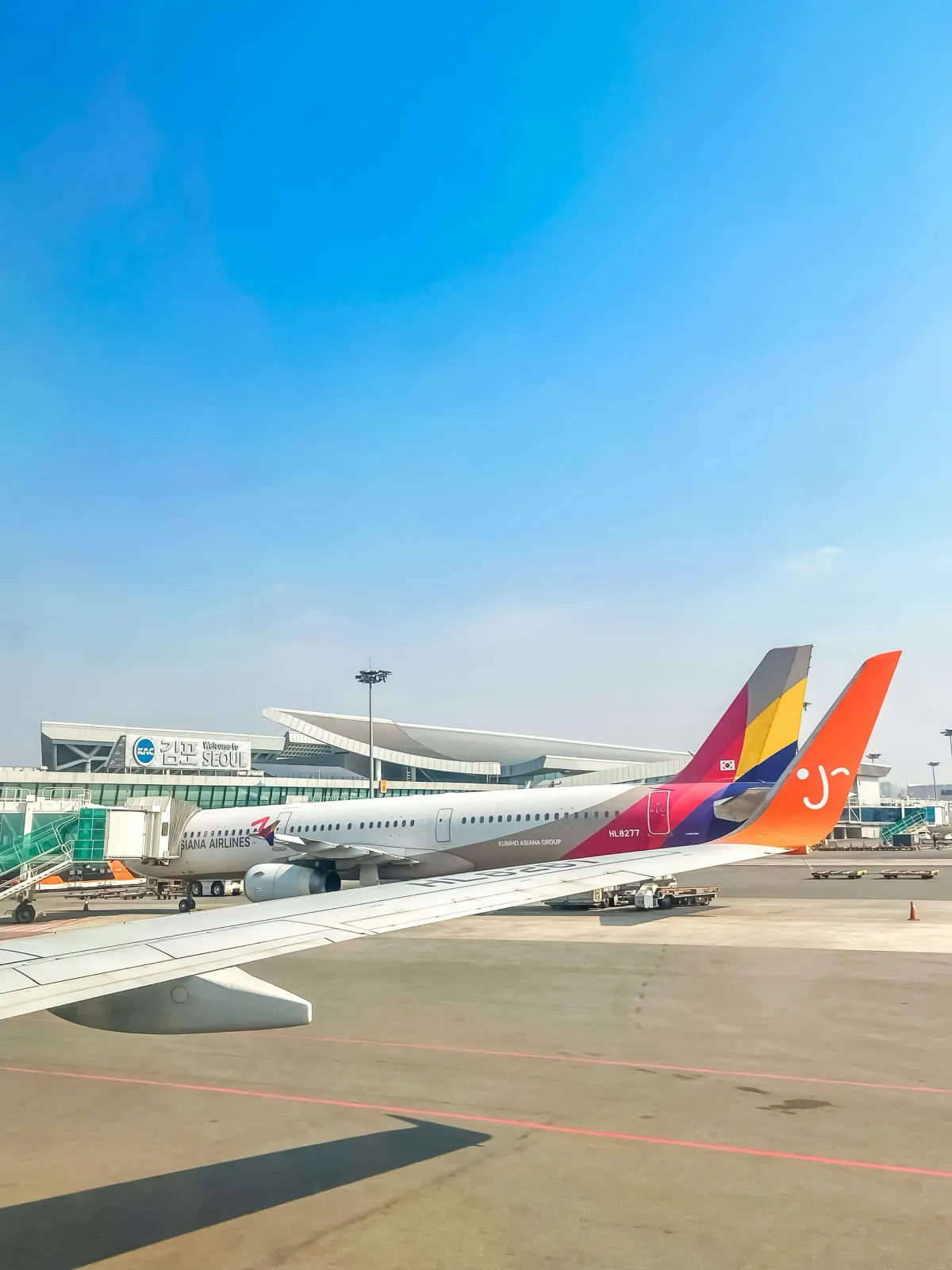
The distance from ICN to Jongno-gu is roughly 60 kilometres, and there is no single best way to cover it. The right choice depends on how much luggage you carry, what time you land, whether you are travelling alone or with family, and how much you value comfort over cost. The three main options — the AREX airport train, the 6002 and 6011 airport limousine buses, and a taxi — each suit a different kind of arrival.
What follows is a considered comparison, with current fares and times verified against operator and official tourism sources, written for travellers who want to plan precisely rather than guess on arrival.
At a Glance: The Three Routes Compared
For a direct overview, the table below sets the three main options side by side. Detailed notes on each follow in the sections after.
| Option | Journey time | Fare (one way, as of September 2026) | Best for |
|---|---|---|---|
| AREX Express Train | 43 min to Seoul Station, then ~15 min transfer (Line 1 to Jonggak) | ₩13,000 train + transfer | Solo travellers, light luggage, evening arrivals |
| AREX All-Stop Train | ~60 min to Seoul Station | ~₩4,150–4,750 from T1, up to ~₩5,350 from T2 | Budget travellers, no rush |
| Airport Limousine Bus 6002 / 6011 | 75–90 min direct to Jongno | ₩17,000 | 6002: Gwanghwamun, Jonggak, Jongno 3-ga · 6011: Gyeongbokgung, Anguk |
| Standard taxi | 60–80 min door-to-door | ₩65,000–100,000 inc. tolls (₩6,600 expressway / ₩2,000 Incheon Bridge) | Families, heavy luggage, late arrivals |
| International Taxi | 60–80 min door-to-door | Flat ~₩80,000 to Jongno (Zone B) + tolls | Non-Korean speakers wanting a fixed price |
All figures are as of September 2026 and should be reconfirmed on the day of travel against the operator's own information.
AREX Express: Is the Transfer Worth It?
The AREX Express is the quickest way into central Seoul, and for many travellers it remains the most civilised. It runs non-stop between Incheon International Airport and Seoul Station in 43 minutes from Terminal 1 and about 51 minutes from Terminal 2, with reserved seating, dedicated luggage racks and free onboard Wi-Fi. The standard adult fare is ₩13,000 (as of September 2026), with online vouchers from approved resellers often a little less.
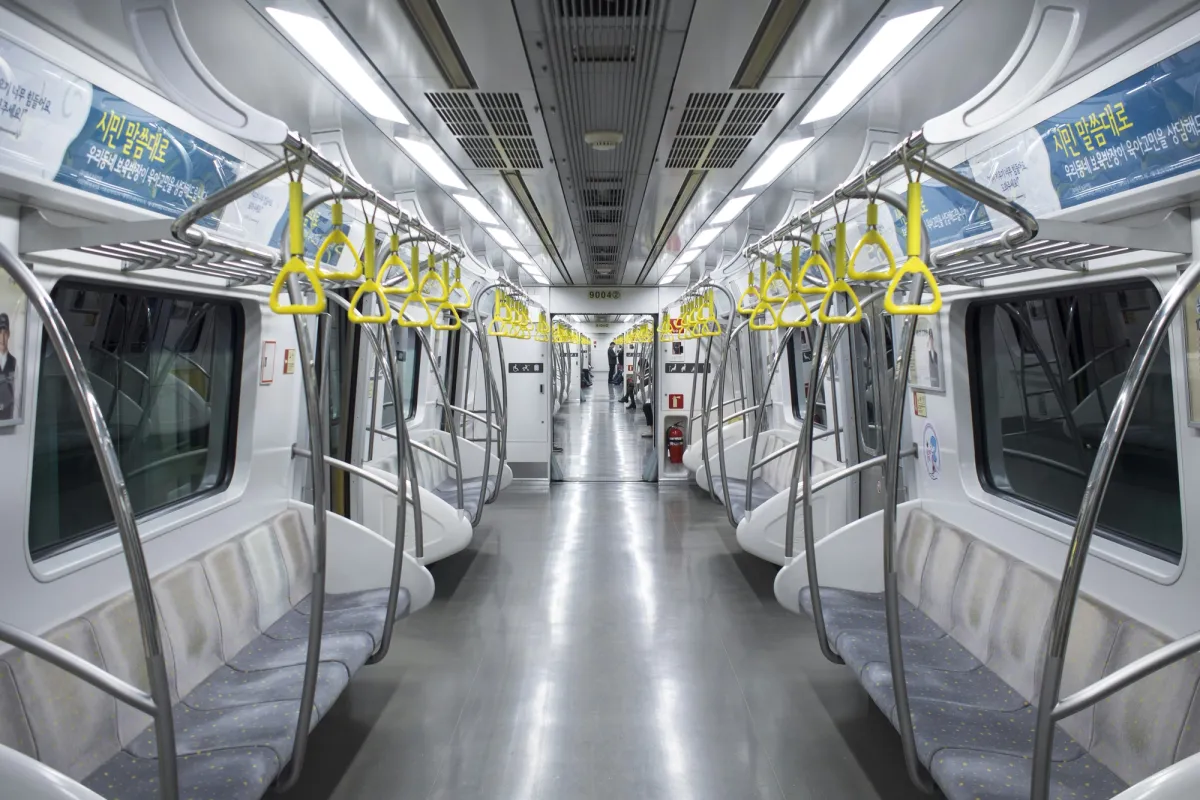
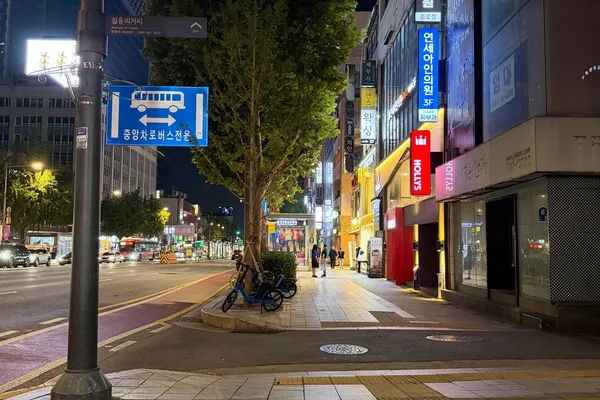
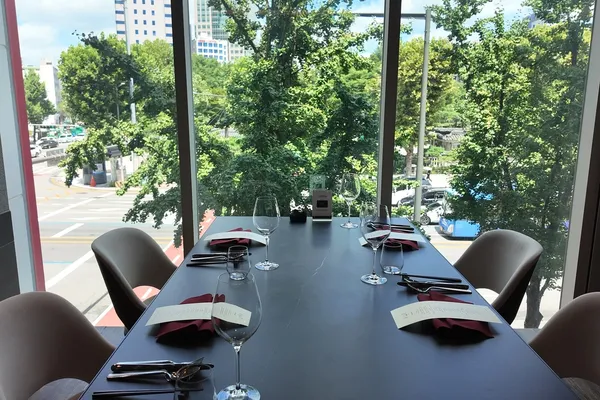
At Seoul Station follow the signs to Line 1 (dark blue) toward Cheongnyangni, ride two stops to Jonggak and leave by Exit 4 — KUT SEOUL is a five-minute walk, on the third floor of Hanol Tower overlooking Tapgol Park. Allow 15 minutes for the transfer; a taxi from the station rank reaches any address in central Jongno-gu inside fifteen minutes. The Express Train operates roughly every 20 to 40 minutes; the first train departs Incheon around 5:15 a.m. and the last around 10:48 p.m. (as of September 2026), so it does not cover the deep overnight hours.
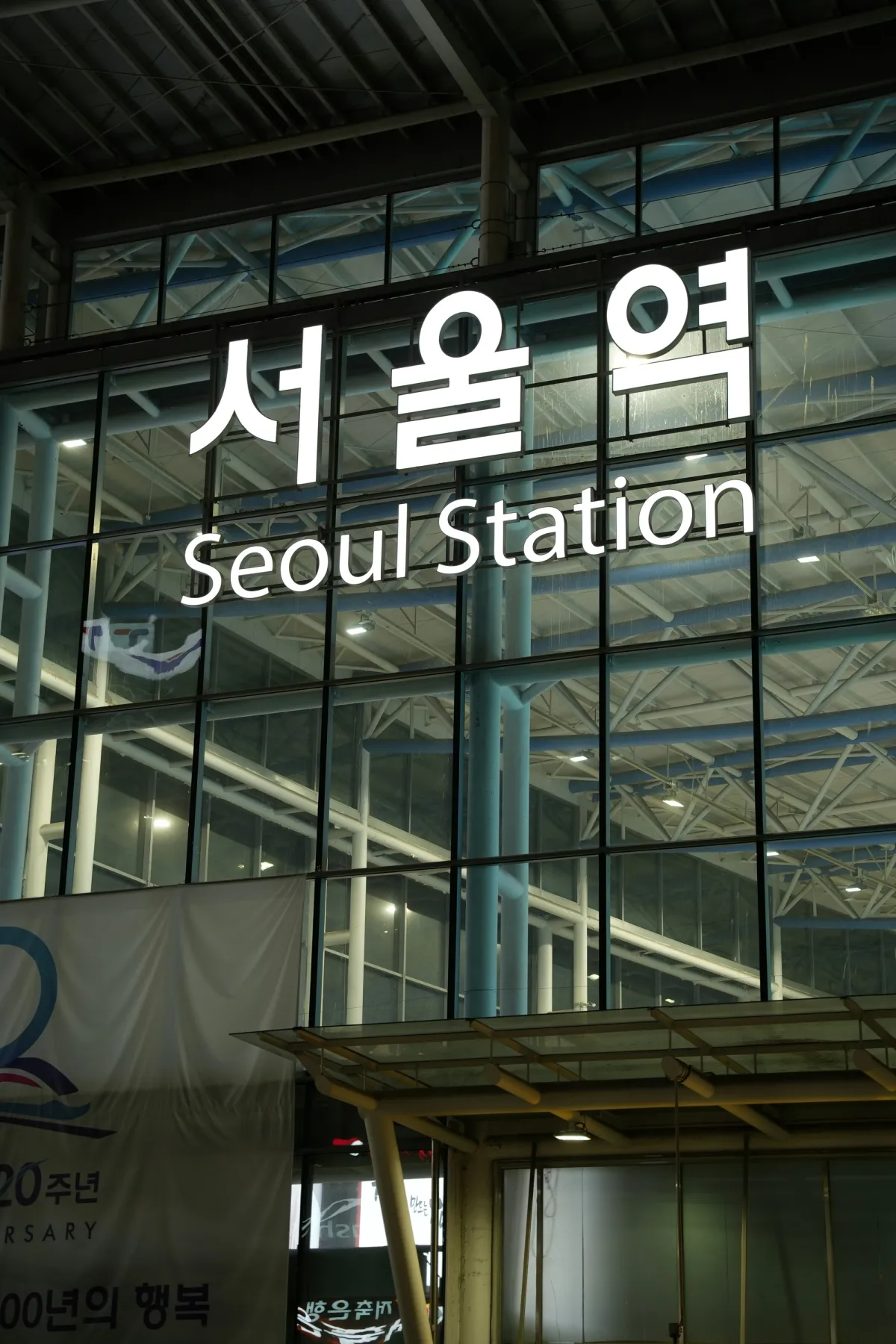
If budget matters more than minutes, the AREX All-Stop Train uses the same line but calls at every station along the route, including Gimpo Airport, Digital Media City and Hongik University (Hongdae). It takes about an hour to reach Seoul Station and costs ₩4,150–4,750 from Terminal 1 (up to about ₩5,350 from Terminal 2) with a T-money card (as of September 2026). The Climate Card is valid on the All-Stop train and the metro, but not on the Express or airport buses. The seating is commuter-style and side-facing, which can be tight if you have a large suitcase and arrive during rush hour, but it is the cheapest legitimate way to get into the city.
A practical note: ticket machines at the AREX counter sometimes reject foreign credit cards. The Express Train counter staff can process the same purchase manually, and English-language guidance is generally available at both the airport and Seoul Station.
Airport Limousine Buses 6002 and 6011: Direct to Jongno
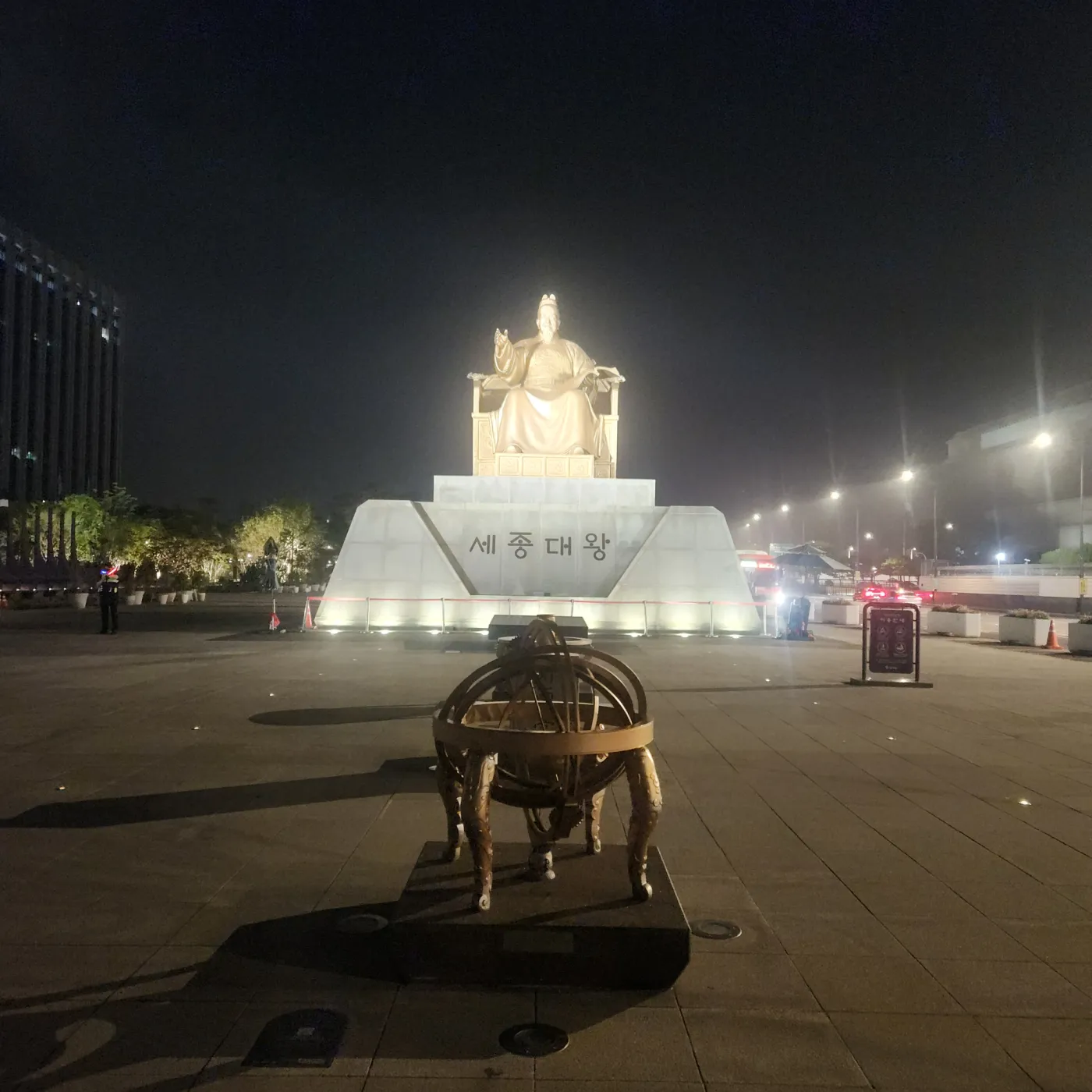
If your hotel or first stop is in Jongno itself, two limousine buses drop you there without any transfer (as of September 2026). Route 6002 runs along the Jongno spine — Gwanghwamun, Jonggak (YMCA) and Jongno 3-ga, which is the stop for KUT SEOUL and Tapgol Park — before continuing east. Route 6011 runs through northern Seoul, stopping at Gyeongbokgung Palace, Anguk (the gateway to Bukchon Hanok Village and Insadong), Changdeokgung Palace and Sungkyunkwan University.
Both routes run from early morning (around 05:30) to late evening (around 23:00); the exact first and last departures, and the boarding gate for each route at Terminal 1 (1st floor, outside Arrivals) and Terminal 2 (B1 Transportation Center), are listed on airport.kr — check them before you fly (as of September 2026). According to the Seoul Metropolitan Government's official transport guide, the typical airport limousine journey into Seoul takes approximately 60 to 80 minutes, varying with route and traffic.
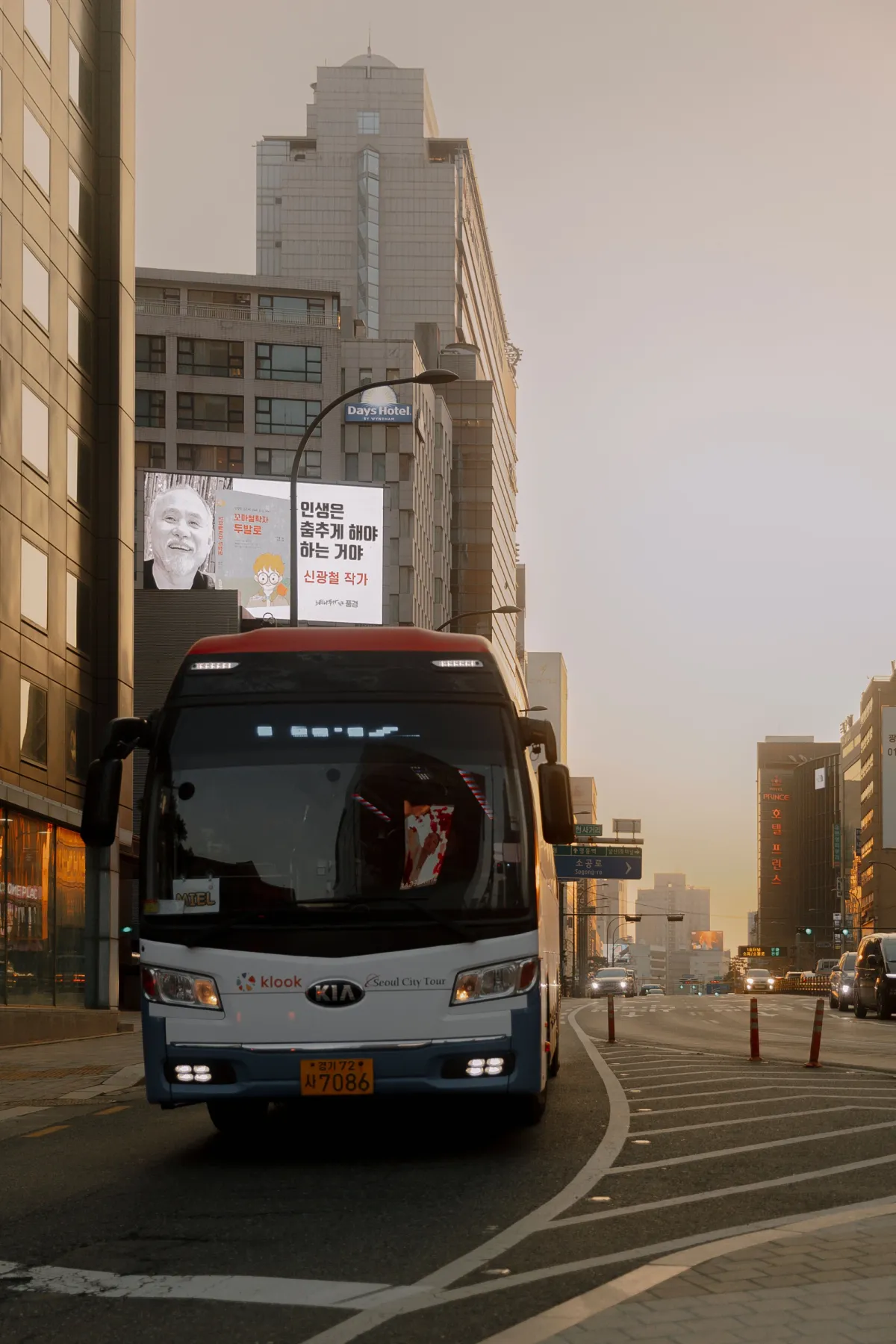
The fare is ₩17,000 one way on both routes (as of September 2026). You can pay with a T-money card or buy a ticket at the kiosks in the airport's bus terminal area; reservations are not required.
For anyone staying near Gwanghwamun, Jonggak or Jongno 3-ga, take the 6002; for Bukchon, Samcheong-dong or Insadong, the 6011. Either is slower than the train, but it removes a transfer with luggage — and for a tired arrival in the evening, that single change can matter more than the timing on a schedule. For background reading on the area itself before you arrive, our walking guide to Bukchon Hanok Village shows what waits a few minutes from the Anguk stop.
When Is a Taxi Worth It?
For families, travellers with heavy luggage, late arrivals, or anyone who simply wants to be at their hotel without negotiating stations and platforms, a taxi is the most direct answer. The drive from Incheon Airport to central Jongno is roughly 60 to 80 minutes depending on traffic, and crosses either the Incheon Bridge or the airport expressway. The toll is added to whatever appears on the meter: ₩6,600 for the Incheon International Airport Expressway or ₩2,000 for the Incheon Bridge, both reduced on 18 December 2025 (as of September 2026).
For metered fares, the standard range from ICN to central Seoul is around ₩65,000–100,000 inclusive of tolls, with the higher end reflecting heavy traffic, late-night surcharges, or larger vehicles. Late-night surcharges are 20% from 22:00 to 23:00 and 02:00 to 04:00, and 40% from 23:00 to 02:00. Incheon Airport's official taxi information notes that Seoul and Gyeonggi taxis apply a 20 percent surcharge, while Incheon taxis apply a 30 percent surcharge, so board the correct taxi class at the marked stand — Terminal 1 areas 5C, 6C and 6D; Terminal 2 stand 5C for Seoul taxis, 6D for Gyeonggi, 5D for Incheon and 3C for International Taxi (as of September 2026).
For non-Korean speakers, the International Taxi service is often the more relaxing option. Drivers speak English, Japanese or Chinese, and routes between ICN and central Seoul are offered at flat fares — for Jongno (Zone B) about ₩80,000 plus tolls (as of September 2026). That is roughly 20 percent above a regular metered taxi for the same journey, with the trade-off being a predictable price and a clear conversation about your destination.
A few practical notes from Korean transport authorities: illegal solicitation by unmarked vehicles posing as taxis is a known issue at Incheon Airport, so always board at the designated taxi stands rather than accepting an offer inside the terminal. Tipping is not customary in Korea — payment is by meter (or by quoted flat fare for International Taxis), with card and T-money accepted in virtually all vehicles.
Which Option Suits Your Arrival?
Most first-time travellers default to the AREX Express because the marketing is loudest, but the right answer depends on context. Three quick scenarios may help.
If you are travelling alone or as a couple with a single suitcase each, arriving during daytime, and staying anywhere central, the AREX Express into Seoul Station followed by a short taxi or metro transfer is the cleanest journey on paper and on the wallet. Forty-five minutes on a quiet reserved train after a long flight is no small thing.
If your hotel is specifically near Gwanghwamun, Anguk, Insadong or Bukchon, the 6002 (Gwanghwamun, Jonggak, Jongno 3-ga) or 6011 (Gyeongbokgung, Anguk) bus is the option that removes the most friction. You board once with your luggage, you sit by a window, and you step off within walking distance of where you are staying. For an evening arrival when the metro feels like one transfer too many, this is often the quiet right answer.
If you are arriving with children, with golf or ski equipment, after 11 p.m. when the trains have stopped, or simply prefer not to think about logistics, take a taxi. Choose the International Taxi if you want a fixed quote in English. The cost is real, but so is the value of stepping straight from the kerb into your hotel lobby.
Useful Apps and a Few Practical Tips
A T-money card, available from convenience stores at the airport, works on the AREX All-Stop Train, the Seoul metro, city buses, and most taxis — it is the single most useful purchase a traveller can make on arrival. The Naver Map and KakaoMap apps both provide reliable English-language routing in Seoul, while Kakao T is the standard taxi-hailing app once you are in the city.
For airport schedules, the official Incheon International Airport site (airport.kr) lists every bus route and its boarding gate; for AREX, the Airport Railroad's own English site is the authoritative source for timetables and seat reservations. Travellers planning a Jongno-based itinerary may also find our perfect day in Jongno guide useful — it threads the palaces, Cheonggyecheon stream and a quiet dinner into a single rhythm.
One small but useful detail: if you have purchased an Express Train voucher through a third party such as Klook or KKday, the voucher itself is not your seat reservation. You will still need to scan it at the AREX kiosk inside the airport station to choose a specific train and seat.
Ending Your Day in Jongno
There is a particular satisfaction in arriving in a strange city, dropping your bag at the hotel, and stepping out into a neighbourhood that already feels like the centre of things. Jongno does this well. The palace walls are lit at night, the side streets thin into hanok lanes, and the dinner tables behind quiet doors do not feel hurried.
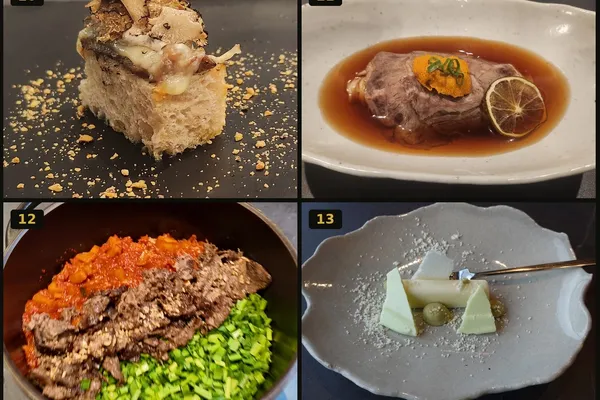
KUT SEOUL is about 75 minutes from Incheon Airport on limousine bus 6002 (₩17,000), which stops at Jonggak (YMCA) and Jongno 3-ga — 3F Hanol Tower, 96 Jongno, next to Tapgol Park. Counter seats take the Posh course (₩175,000); private rooms start from Posh at weekday lunch, Signature (₩210,000) at dinner and on weekends, up to Royal (₩280,000); on weekdays the 8-dish ₩69,000 lunch runs 80 minutes at the counter. Reservation only on CatchTable — which seat suits your evening.
KUT SEOUL: Bar 8 dishes ₩69,000 (weekday lunch, counter only, 80 min) · Posh 11 ₩175,000 · Signature 13 ₩210,000 · Royal 15 ₩280,000 · Kids ₩45,000 (ages 7 and under). Signature and Royal are private-room only; Posh is also served in a private room at weekday lunch (counter at weekday dinner and on weekends and holidays). BMS No. 9 Hanwoo, vacuum (wet) aged four weeks — not dry-aged. Grades run 3/2/1/1+/1++; since December 2019, 1++ covers marbling scores 7–9 and the number is displayed. KUT serves No. 9 only.
3F Hanol Tower, 96 Jongno — 5–7 minutes from Jongno 3-ga Station (Lines 1·3·5) Exit 15 or Jonggak Station (Line 1) Exit 4; next to Tapgol Park; 20–25 minutes on foot from Gyeongbokgung. Lunch 11:30–15:00 (last order 14:30), dinner 17:30–22:00 (last order 19:30), closed Tuesdays. Reservation only, through CatchTable or Naver. Deposit is 100% of the order; cancellation is free two days before, 50% one day before, none on the day.
If you would like to read more about the courses before reserving, our first-timer's guide to Hanwoo omakase walks through each tier in detail.
However you arrive — by train, by bus, by taxi — the last hundred metres of the journey are best taken slowly, on foot, with the lanterns of Jongno turning on around you.