Jongno-gu is the oldest part of Seoul, and arguably the most layered. Within a single square kilometer you'll find the principal palace of the Joseon dynasty, a restored stream that hosts the Seoul Lantern Festival each winter (mid-December to mid-January), hanok-lined lanes that have changed little in a century, and some of the city's most considered restaurants. For travelers with only one full day in Seoul, no other district offers a comparable concentration of meaningful experiences.
The rhythm of a good Jongno day is unhurried but purposeful. You move on foot — almost entirely — from royal grounds to teahouses to a stream walk that delivers you, by evening, into the dining quarter near Jongno 3-ga. What follows is an itinerary refined over many visits, designed for travelers who prefer atmosphere to checklists.
A note on timing: Gyeongbokgung closes on Tuesdays (if Tuesday is a public holiday, it closes the following day instead); Changdeokgung, Changgyeonggung and Deoksugung close on Mondays (as of September 2026). Plan accordingly.
Morning: When Should You Arrive at Gyeongbokgung?
Begin at Gyeongbokgung shortly after its 09:00 opening. Arriving early grants you the rare experience of the courtyards before tour groups fill them, and positions you well for the changing of the guard ceremony at 10:00.
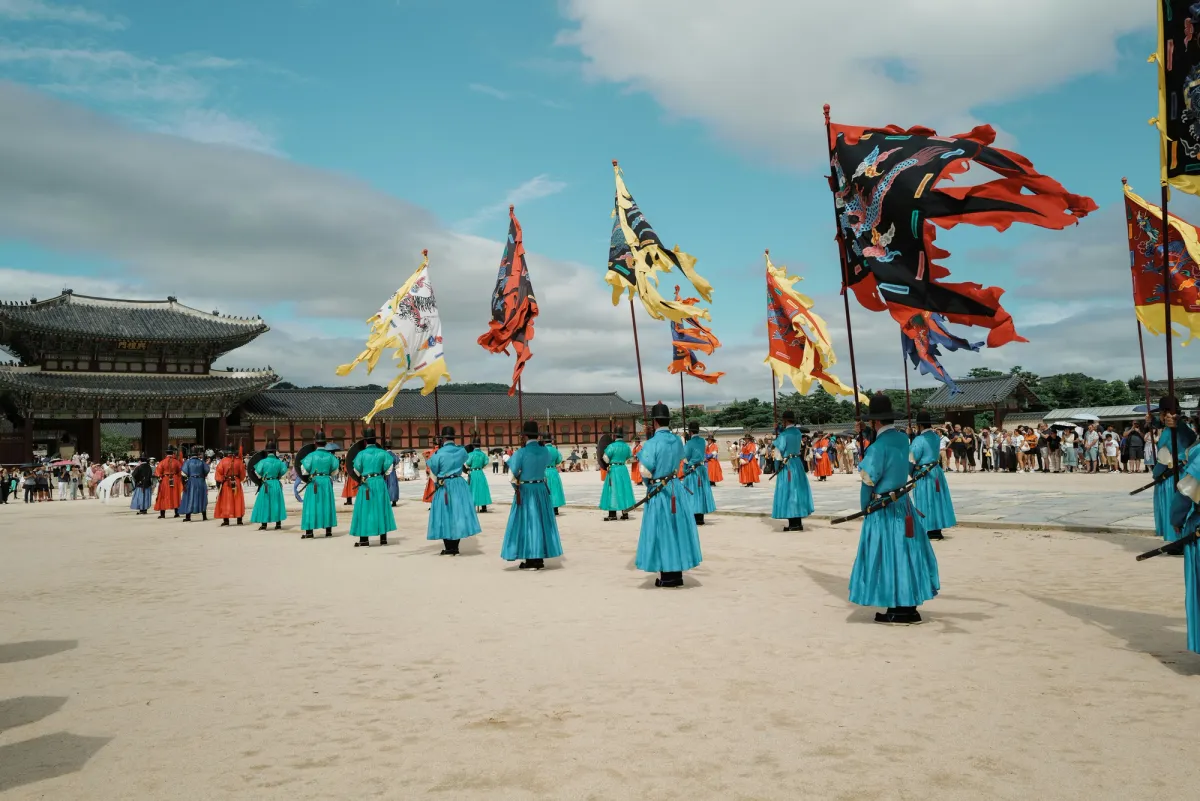
Built in 1395 as the principal palace of the Joseon dynasty, Gyeongbokgung — "the palace greatly blessed by heaven" — anchors the northern end of Sejong-daero. The grounds extend over 400,000 square meters and include the throne hall Geunjeongjeon, the pavilion Gyeonghoeru set on a square lotus pond, and the rear gardens around Geoncheonggung.
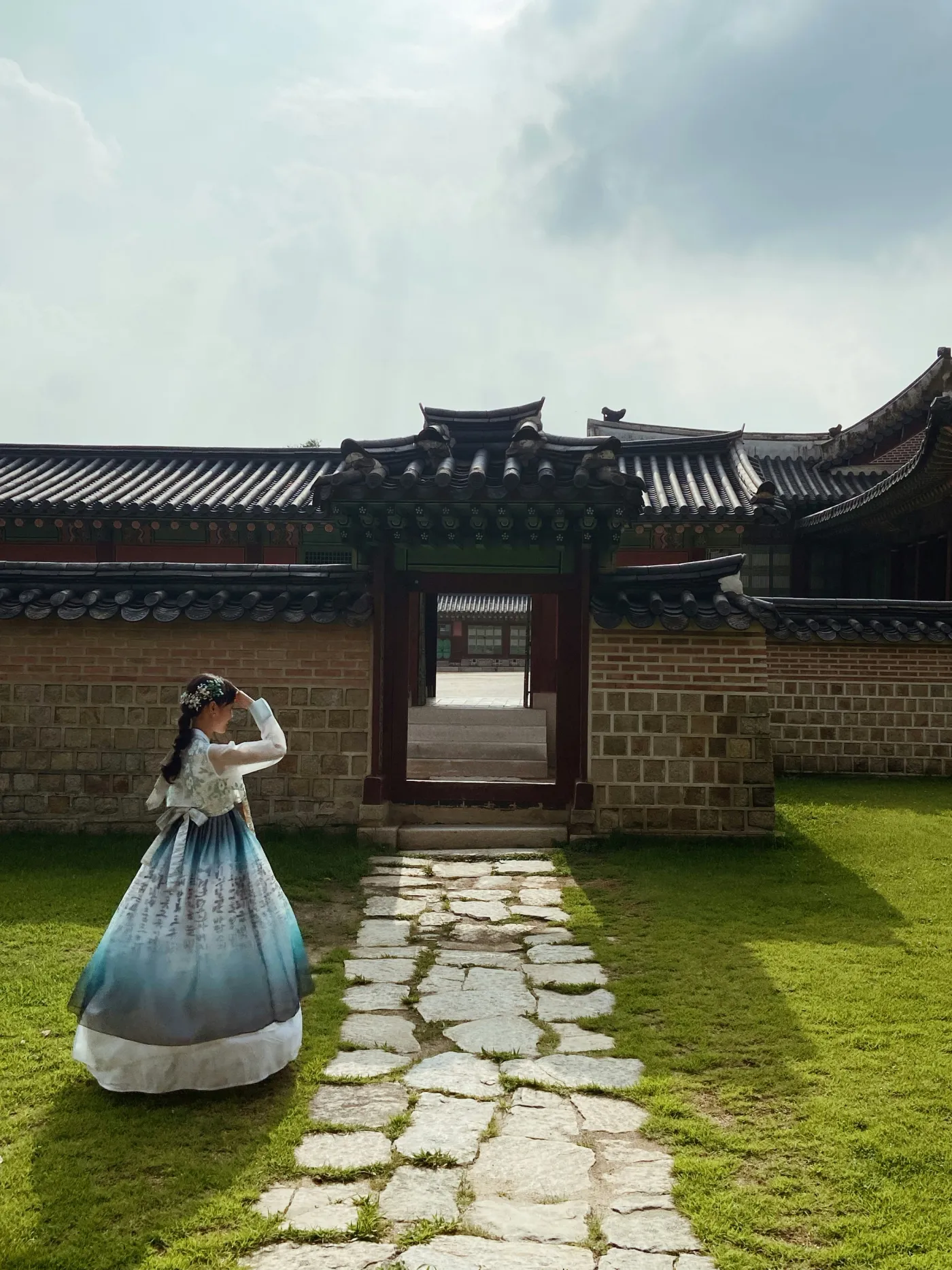
Admission is 3,000 KRW for adults. Visitors wearing hanbok (traditional Korean dress) enter free of charge — a policy administered by the Korea Heritage Service to encourage cultural engagement. Hanbok rental shops cluster east of the palace, around Anguk Station and Gyeongbokgung Station Exit 4, at roughly ₩15,000–35,000 for 2–4 hours (as of September 2026).
The Royal Guard Changing Ceremony, a reconstruction based on records from the Joseon court, takes place in front of Gwanghwamun Gate at 10:00 and 14:00 daily except Tuesdays, and runs roughly 20 minutes; it is cancelled in heavy rain or snow and scaled down in extreme heat or cold (as of September 2026). Stand on the western side of the gate plaza for the best vantage of the procession.
| Site | Hours (as of September 2026) | Admission | Closed |
|---|---|---|---|
| Gyeongbokgung Palace | 09:00–17:00 Nov–Feb · 18:00 Mar–May, Sep–Oct · 18:30 Jun–Aug (last entry 1 hour before) | 3,000 KRW (free in hanbok) | Tuesdays (next day if Tuesday is a holiday) |
| National Folk Museum | 09:00–18:00 Mar–Oct · 09:00–17:00 Nov–Feb | Free | 1 Jan, Seollal, Chuseok |
| National Palace Museum | 09:30–17:30 (Sat to 21:00) | Free | Last Monday of each month |
Allow two hours for the palace itself. If your interests lean toward decorative arts, the National Palace Museum on the southwestern edge of the grounds is worth an additional 45 minutes — its collection of Joseon royal seals and ceremonial objects is exceptional and rarely crowded.
Late Morning: What Are the Rules in Bukchon?
A seven-minute walk east of Gyeongbokgung's eastern gate brings you to Bukchon Hanok Village, a residential neighborhood of over 900 traditional Korean houses arranged along sloping lanes between the palaces — our Bukchon walking guide covers the eight viewpoints in detail.
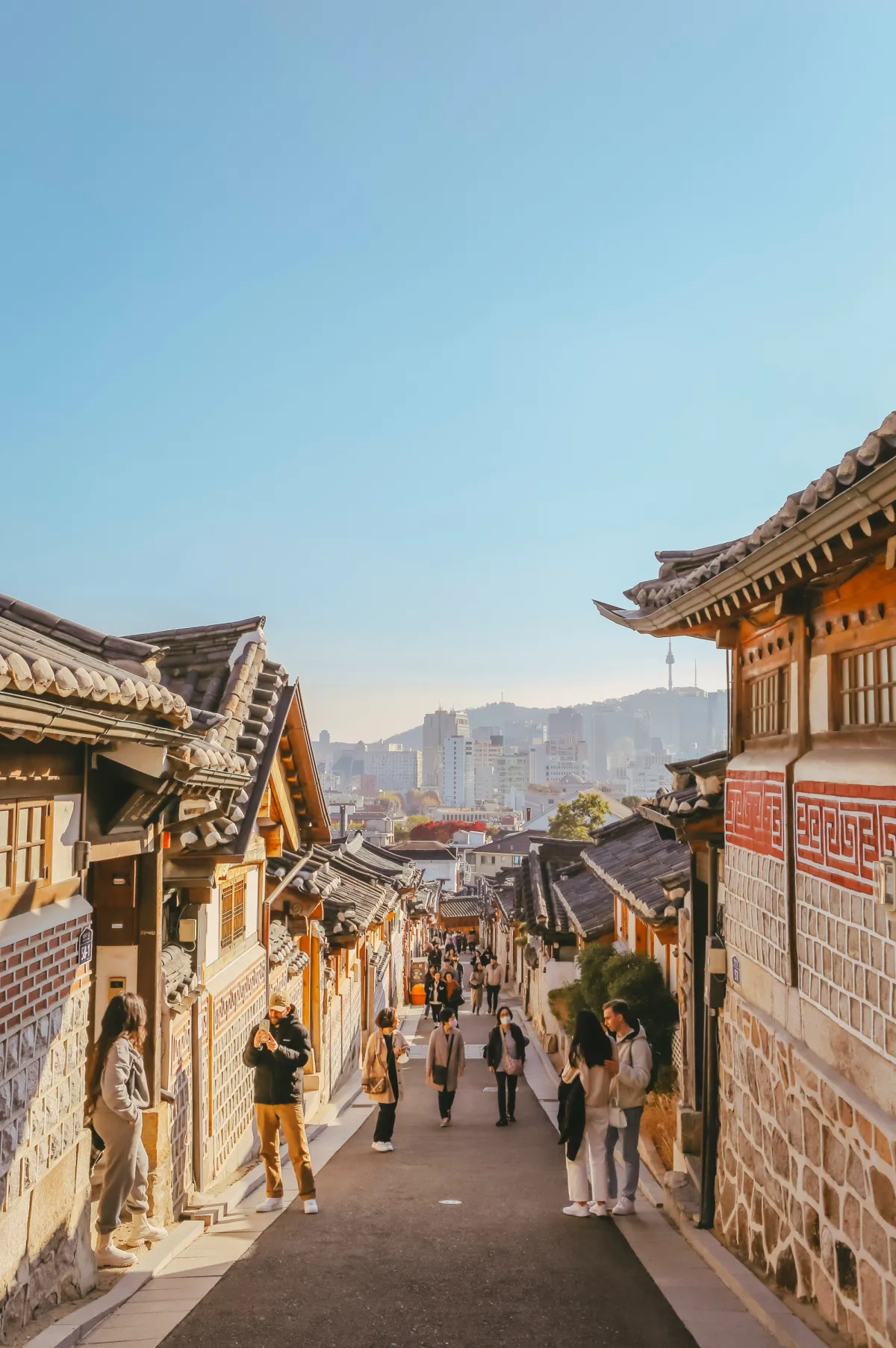
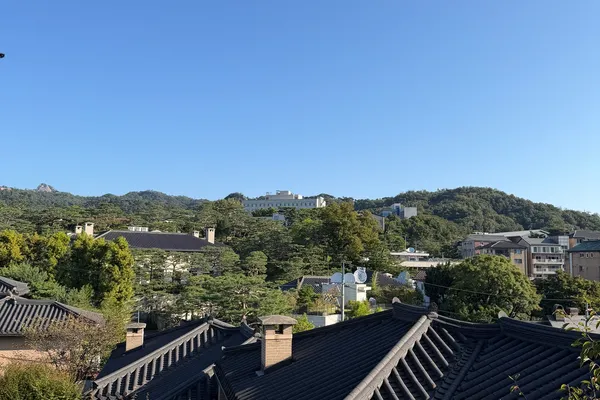
Bukchon is not a museum — it is a living neighborhood. Tourist access to the Bukchon-ro 11-gil residential zone is restricted 17:00–10:00, with a ₩100,000 fine for tourism entry outside 10:00–17:00 (enforced since 1 March 2025; as of September 2026), so visit between 10:00 and 17:00 and keep voices low. The most photographed viewpoint, often labeled "Bukchon-ro 11-gil," offers a south-facing prospect of tiled hanok roofs descending toward the modern city, with Namsan Tower beyond on clear days.
Rather than rushing the famous viewpoints, consider the smaller lanes east of Gahoe-dong, where craft studios and small museums occupy restored hanok. The Bukchon Traditional Culture Center offers a free orientation and a useful map. For tea, Cha Masineun Tteul on Bukchon-ro 11-gil pours seasonal Korean teas in a courtyard setting — a fitting pause after the morning's walking.
Midday: Insadong and a Considered Lunch
From Bukchon, descend southward along Samcheong-ro toward Insadong, a 12-minute walk. Insadong-gil, the main pedestrianized artery, runs roughly 700 meters between Anguk-dong and Jongno 2-ga. It is Seoul's traditional district for antiques, calligraphy supplies, and ceramics, though commercial pressure has introduced its share of souvenir shops. The galleries and tea houses remain the genuine draw.
For lunch, the side alleys reward exploration more than the main street. Ssamzigil, a four-story spiral complex of small craft shops, includes several quiet restaurants on its upper floors. Alternatively, the temple cuisine restaurants near Jogyesa Temple offer vegetarian Buddhist meals — a distinctive Korean culinary tradition known as sachal eumsik — at a measured pace appropriate for the middle of a long day.
Jogyesa itself, the chief temple of the Jogye Order of Korean Buddhism, sits a five-minute walk south. The 500-year-old white pine in its courtyard is designated a Natural Monument. Entry is free, and visitors are welcome provided they remain quiet during services.
Late Afternoon: How Far Should You Walk Cheonggyecheon?
From Jogyesa, walk south on Ujeongguk-ro for six minutes to reach Cheonggyecheon Plaza, the western terminus of the restored stream. Few urban interventions in Asia have proved as transformative as the 2003–2005
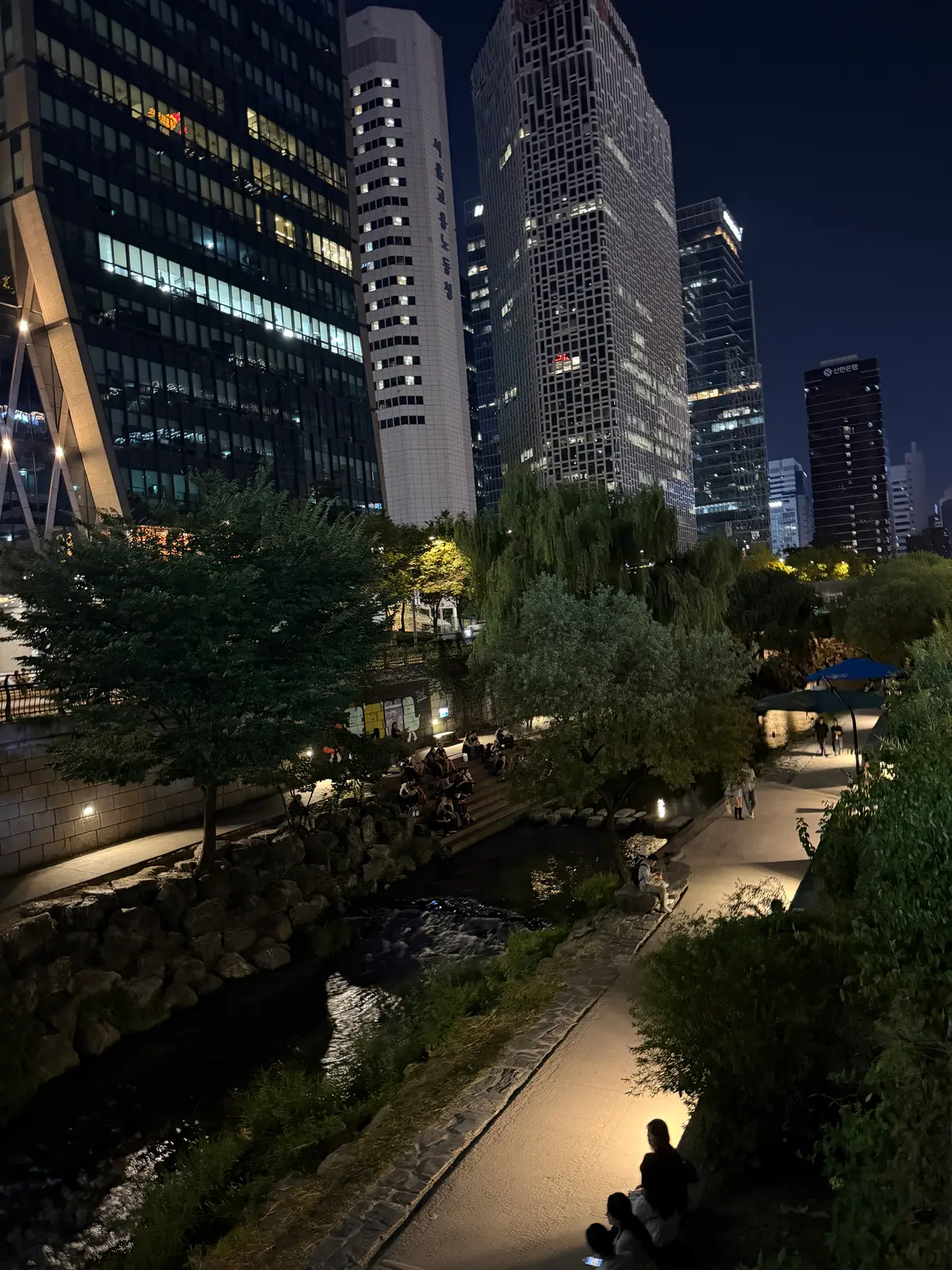
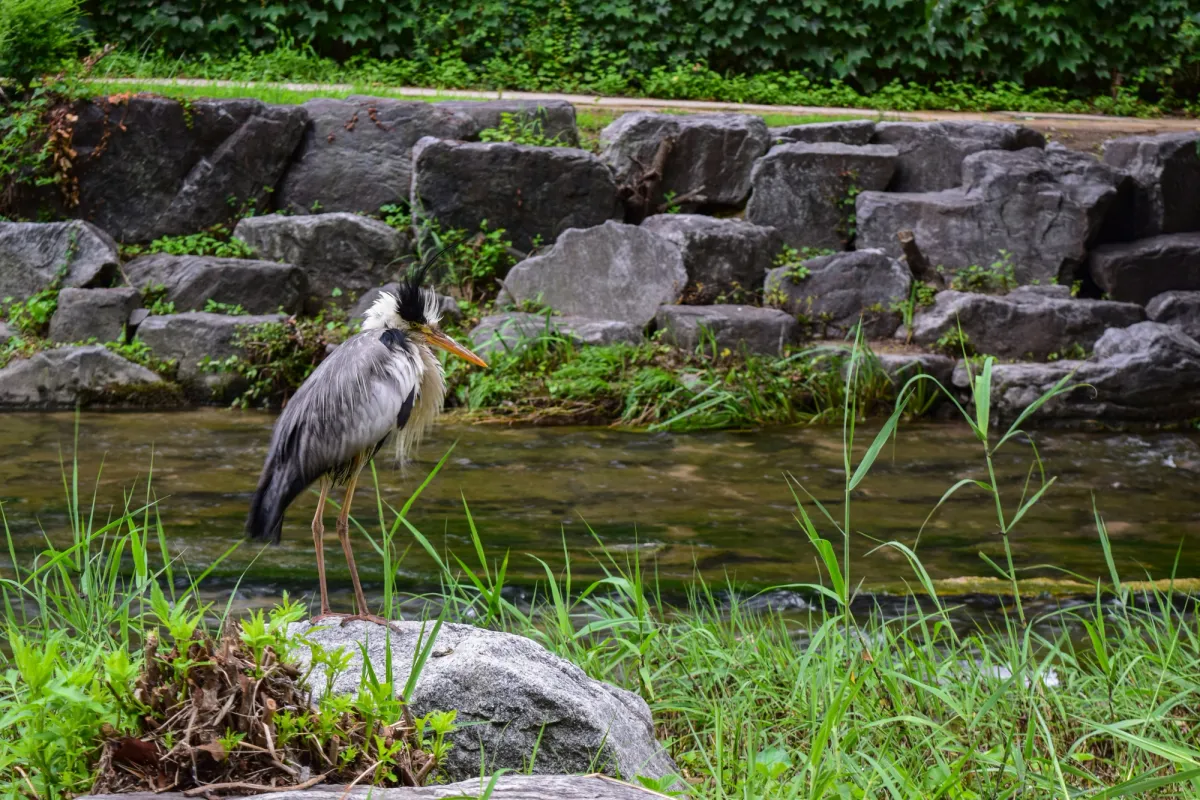
Cheonggyecheon restoration project, which removed an elevated expressway to expose and rehabilitate the long-buried stream beneath. The result is a restored 5.8-kilometer stream walk threading east through downtown Seoul.
For a one-day itinerary, walk the first two kilometers — from Cheonggyecheon Plaza to Gwansugyo Bridge — which takes roughly 40 minutes at a leisurely pace. The stream sits below street level, and the descent of even a few meters muffles traffic noise considerably. Stepping-stones cross at intervals, and benches face the water. In late afternoon, particularly between 16:00 and 18:00 in spring and autumn, the light is excellent.
From mid-December to mid-January the Seoul Lantern Festival illuminates the stream with large-scale paper lanterns themed by year (the 2025 edition ran 12 Dec 2025 – 18 Jan 2026, 18:00–23:00; as of September 2026). Visit Korea publishes the exact dates each autumn.
Exit the stream at Gwansugyo and walk north on Donhwamun-ro toward Jongno 3-ga Station. You are now in the heart of Jongno's evening district.
KUT SEOUL is five minutes from Jongno 3-ga Exit 15. A 17:30 counter seat (Posh course) finishes by 19:30; a private room (Signature and up at dinner) runs about three hours. Both are reservation-only, so book on CatchTable before you set out in the morning.
Practical Notes
- Getting in: Gyeongbokgung Station (Line 3, Exit 5) for the morning start; Jongno 3-ga Station (Lines 1, 3, 5) for the dinner conclusion. - Total walking: Approximately 6 kilometers across the day, almost entirely flat. - Best months: Late April for cherry blossoms along the palace walls; mid-October to early November for autumn foliage; mid-December to mid-January for the lantern festival. - What to bring: Comfortable walking shoes — palace courtyards are gravel, and Bukchon's lanes are sloped.
Ending Your Day in Jongno
The area around Jongno 3-ga has long been Seoul's late-night gathering ground — the lantern-lit alleys of Ikseon-dong, the grilled-fish lanes of Jongno Pojangmacha Street, and the historic Nakwon Arcade all sit within a few blocks. For travelers who have walked since morning, however, the more rewarding choice is a seated dinner in a quieter register.
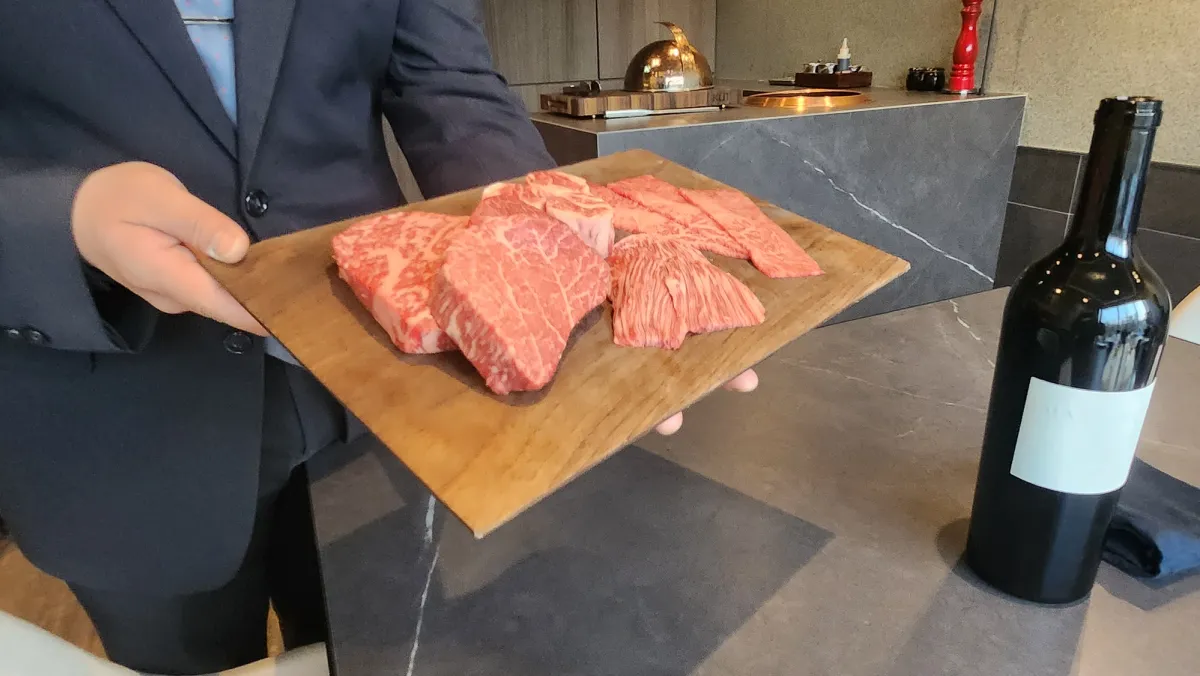
Hanwoo, the indigenous Korean cattle breed, is graded on a marbling scale culminating at BMS No. 9 — the highest tier, reserved for cuts with the most intricate intramuscular fat. A Hanwoo omakase, in which a chef selects and prepares cuts in sequence at the counter or in a private room, is one of Seoul's most refined dining experiences and a particularly fitting close to a day spent in the city's historic center.
KUT SEOUL is two blocks north of Cheonggyecheon, about 5 minutes on foot — 3F Hanol Tower, 96 Jongno, next to Tapgol Park. Counter seats take the Posh course (₩175,000); private rooms start from Posh at weekday lunch, Signature (₩210,000) at dinner and on weekends, up to Royal (₩280,000); on weekdays the 8-dish ₩69,000 lunch runs 80 minutes at the counter. Reservation only on CatchTable — which seat suits your evening.
KUT SEOUL: Bar 8 dishes ₩69,000 (weekday lunch, counter only, 80 min) · Posh 11 ₩175,000 · Signature 13 ₩210,000 · Royal 15 ₩280,000 · Kids ₩45,000 (ages 7 and under). Signature and Royal are private-room only; Posh is also served in a private room at weekday lunch (counter at weekday dinner and on weekends and holidays). BMS No. 9 Hanwoo, vacuum (wet) aged four weeks — not dry-aged. Grades run 3/2/1/1+/1++; since December 2019, 1++ covers marbling scores 7–9 and the number is displayed. KUT serves No. 9 only.
3F Hanol Tower, 96 Jongno — 5–7 minutes from Jongno 3-ga Station (Lines 1·3·5) Exit 15 or Jonggak Station (Line 1) Exit 4; next to Tapgol Park; 20–25 minutes on foot from Gyeongbokgung. Lunch 11:30–15:00 (last order 14:30), dinner 17:30–22:00 (last order 19:30), closed Tuesdays. Reservation only, through CatchTable or Naver. Deposit is 100% of the order; cancellation is free two days before, 50% one day before, none on the day.
After a day that began at a fourteenth-century palace and traced Seoul's historical spine south and east, the evening calls for stillness rather than spectacle. Jongno, more than any other district in the city, allows you both.