Fine dining in Seoul rewards planning. The city's most sought-after counters — omakase rooms in Cheongdam, natural-wine tables in Seongsu, Hanwoo private rooms in Jongno — rarely take walk-ins, and most do not answer the phone in English. Almost everything moves through two Korean apps, and both were designed for residents with a domestic phone number and a Korean credit card.
The good news is that the platforms have quietly become friendlier to foreign visitors over the last two years. A dedicated English app, foreign-card acceptance and passport-based identity verification now cover most of what a traveler needs. The bad news is that the rules are scattered across help pages in Korean, and each restaurant still writes its own deposit and cancellation policy on top of the national guideline.
This guide walks through how reservations actually work in Seoul in 2026 — which app to use, what a deposit really commits you to, how far in advance to book, and how to read a restaurant's cancellation clock. KUT SEOUL, a Hanwoo omakase in Jongno, appears at the end as a worked example of a typical fine-dining booking.
Which app do Seoul restaurants actually use?
Two platforms handle almost every online restaurant reservation in Korea: CatchTable and Naver Reservation. Two platforms handle most online restaurant reservations in Korea: CatchTable (캐치테이블) and Naver Reservation (네이버 예약). Both accept deposits at popular restaurants, and both are in Korean by default.
CatchTable is where fine dining lives. CatchTable is Korea's leading restaurant-reservation app, widely used for popular and high-end restaurants — many tables open here and only here. If a Michelin-listed omakase, a Hanwoo tasting room or a chef's-counter tasting menu takes reservations at all, they very likely take them here.
Naver Reservation is different in shape. It is not a separate app but a booking layer inside Naver Map, the navigation app Koreans actually use in place of Google Maps. Naver Reservation is worth checking first for an ordinary neighbourhood place. You find it by searching a restaurant's name on Naver rather than going to a separate app. If the restaurant uses the system, a booking button appears in the search result. It covers many mid-range Korean restaurants, cafés and neighbourhood spots that never bothered listing on CatchTable.
A third category still exists: restaurants that take bookings only by phone, in Korean. Phone only. Some restaurants, particularly smaller neighborhood places, do not list on either platform. A phone call is the only way to book. If the restaurant you want falls into this bucket, ask your hotel's front desk to call — most concierges in central Seoul are used to it.
At a glance
| Platform | Best for | Language | Foreign phone OK? | Foreign card OK? |
|---|---|---|---|---|
| CatchTable Global | Fine dining, omakase, Michelin | English, Japanese, Chinese | Yes | Yes |
| Naver Reservation | Cafés, mid-range restaurants | Korean (Naver Map is partly English) | Passport verification route | Naver Pay / cards |
| Direct phone call | Small neighbourhood places | Korean | N/A | Pay at the restaurant |
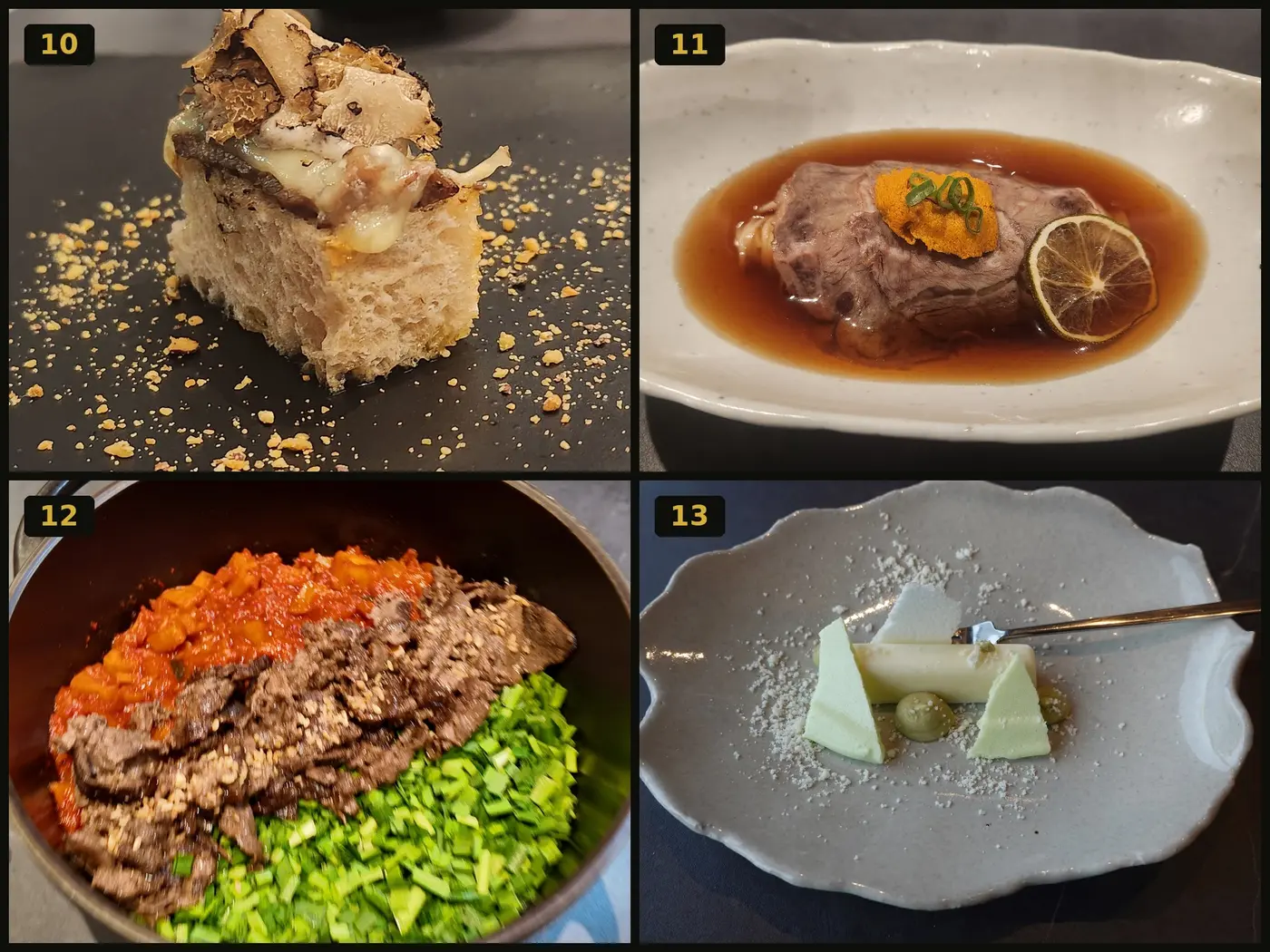
At KUT SEOUL in Jongno, that sequence is served from ₩69,000 for an 8-dish weekday lunch at the counter — see what is in a Hanwoo omakase, cut by cut.
Is there an English version of CatchTable?
Yes — and downloading the correct one is the single most important step. The domestic CatchTable app and CatchTable Global are two separate apps with almost identical icons, and only the Global version is built for tourists.
While the original local app requires identity verification via a domestic mobile carrier, CatchTable Global is designed specifically for international tourists. Languages: Supports English, Japanese, and Chinese (Simplified/Traditional), making it easy to use even if you don't speak Korean. The sign-up flow was rebuilt around the two things a short-term visitor cannot easily produce: a Korean phone number and a Korean credit card.
Catchtable Global allows users to easily create an account through Google or Apple without the need for a Korean phone number and make payments using foreign-issued credit cards. The service currently supports English, Japanese, Simplified Chinese, and Traditional Chinese, significantly lowering language barriers. In practice, sign-up takes under a minute; the app will ask for a name and preferred language, and you can leave the Korean phone number field blank because confirmations arrive by push notification and email.
Two details that trip travelers up. First, the Global app's restaurant catalogue is smaller than the domestic app's — Once you are inside the app, you instantly have access to over 2,000 verified restaurants. This includes everything from bustling neighborhood pasta bars and trendy natural wine spots to the highest echelon of Michelin-starred fine dining in Seoul and Busan. That covers most fine dining a foreign visitor would want, but not every restaurant on the domestic app appears on Global. Second, deposits on Global are card-only: Many reservation-only restaurants require a deposit to prevent no-shows, which in Catchtable Global can only be paid with foreign-issued cards.
Double-check the icon before you download. The domestic and Global apps sit next to each other in the store with similar branding, and installing the wrong one is a common early mistake.
Can foreigners use Naver Reservation?
Yes, but it takes more setup than CatchTable Global. Naver requires an account tied to a verified identity before you can hold a reservation.
Naver requires an identity-verified account to make a reservation. Naver's reservation help describes the verification requirement using domestic-citizen examples (내국인 기준). Foreign residents have a documented route. Naver's member help center describes passport verification (여권인증) for users who cannot complete Korean mobile-phone verification. The verification is done inside the Naver app by photographing your passport and passing a face-match check. It is not instant and it does not always succeed on the first try, so if Naver is the only route to the restaurant you want, do the verification a week or two before your trip rather than the day you land.
Once you are verified, the booking flow lives inside Naver Map. Search the restaurant's Korean name, tap into its listing, and look for a blue 예약 (book) button beneath the name. Pick a date, a time and a party size, and enter a contact number — a hotel's phone number is acceptable if you do not have a Korean one.
One warning specific to Naver: a submitted booking is not always a confirmed booking. A booking can sit in a "예약 확인중" (reservation pending) state after you submit it. This is not a confirmed reservation. Naver's own guidance states that the restaurant can turn you away if you show up while still in pending status. Wait for the confirmation before you go. Some restaurants approve instantly; others take a day. Do not assume the table is yours until the status changes.
How much is the deposit, and can I get it back?
Deposits vary. Every restaurant sets its own amount and its own cancellation clock, and the two together are the rules that actually govern your booking. Some Seoul tasting menus ask for a nominal ₩20,000 per seat; others take the full menu price up front, especially for private rooms.
What changed in late 2025 is the ceiling on what a restaurant can legally keep if you cancel late. A cancellation fee for failing to show up for a restaurant reservation is expected to be significantly increased later this year, the antitrust watchdog said Wednesday. Under a revised law currently pending administrative notice, no-show fees for missing a reservation without notice will be raised from the current 10 percent of the total bill to a maximum 20 percent, according to the Fair Trade Commission (FTC). In addition, restaurants that require advance reservations to prepare ingredients, such as omakase and fine dining establishments, will be allowed to impose a cancellation fee of up to 40 percent, the FTC said. The revised standards took effect on 18 December 2025.
There is a subtlety here that matters when you read a restaurant's own cancellation clause. The FTC standard is a mediation guideline, not a self-executing law. The Consumer Dispute Resolution Criteria is a non-binding mediation standard, not a directly enforceable law. A restaurant's own posted cancellation policy governs a specific booking; the FTC standard is what a dispute mediator applies if a complaint is filed. In practice this means the tighter of the two rules — the FTC ceiling and the restaurant's own posted policy — is what to plan around. Always read the cancellation window on the booking page before you confirm.
A typical fine-dining pattern in Seoul looks like this: free cancellation up to 2 days before, a partial refund 1 day before, and nothing back on the day of the booking or for a no-show. That is stricter than the FTC ceiling and it is entirely legal, because the restaurant tells you up front.
How far in advance should I book?
For most Seoul fine-dining rooms, two to four weeks ahead is the working answer. Michelin-listed counters and small omakase rooms can be tighter — sometimes a month for a Friday or Saturday evening — while quieter weekday lunches often open closer to the date.
A few practical habits help.
- Book the day and time before the trip itself is finalised if a specific restaurant matters to you. Fine-dining seats fill faster than flights and hotels.
- Check the platform once, then check it again a week out. Cancellations happen, and the best seats often reappear at the two-week and one-week marks.
- Note the restaurant's cancellation deadline in your own calendar the moment you book — not the day before it expires. A two-day window means the clock starts running the day the restaurant opens, not 48 hours before your reservation time.
- If a restaurant offers both a counter and a private room, decide which you want before you open the app; the two often have different deposit sizes and different cancellation clocks.
For a longer read on choosing between the two seat types at a Hanwoo omakase, see the guide to counter seats and private rooms.
A worked example: booking KUT SEOUL
KUT SEOUL, a Hanwoo omakase three minutes from Jongno 3-ga Station, is a useful example of how a reservation-only Seoul restaurant actually works in practice — because its policies are typical of the category, and because the whole flow is available in English.
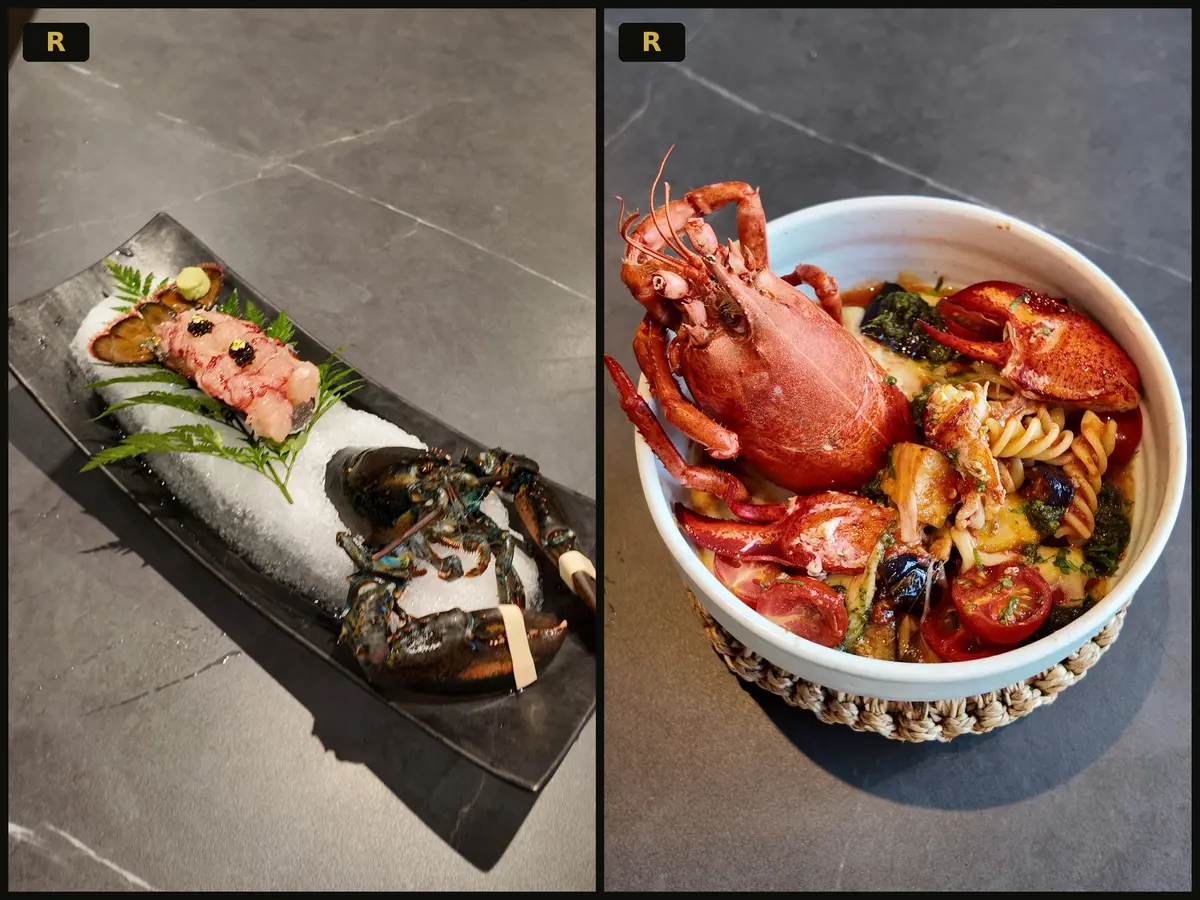
Reservation only, through CatchTable or Naver. Deposit is 100% of the order; cancellation is free two days before, 50% one day before, none on the day.
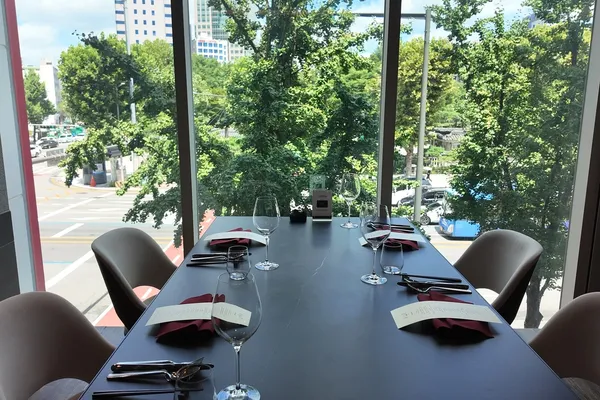
KUT SEOUL: Bar 8 dishes ₩69,000 (weekday lunch, counter only, 80 min) · Posh 11 ₩175,000 · Signature 13 ₩210,000 · Royal 15 ₩280,000 · Kids ₩45,000 (ages 7 and under). Signature and Royal are private-room only; Posh is also served in a private room at weekday lunch (counter at weekday dinner and on weekends and holidays).
Lunch 11:30–15:00 (last order 14:30), dinner 17:30–22:00 (last order 19:30), closed Tuesdays.
Once the reservation is held, two extras are worth requesting through the booking notes rather than trying to arrange on the day. Any food allergies should be flagged the day before, so the kitchen can adjust within the course. If the meal marks a birthday or anniversary, a message on the dessert plate can be arranged the same way. First-time visitors deciding between the five courses may find the first-timer's guide to choosing a course useful before opening the app.
What KUT SEOUL illustrates for the category as a whole is that Seoul's fine-dining reservations are not casual holds. The deposit is real, the cancellation clock is real, and the platform confirms in real time. But the setup — English CatchTable page, foreign-card deposit, allergy notes handled the day before — is entirely legible to a traveler who has never eaten in Korea.
Ending Your Day in Jongno
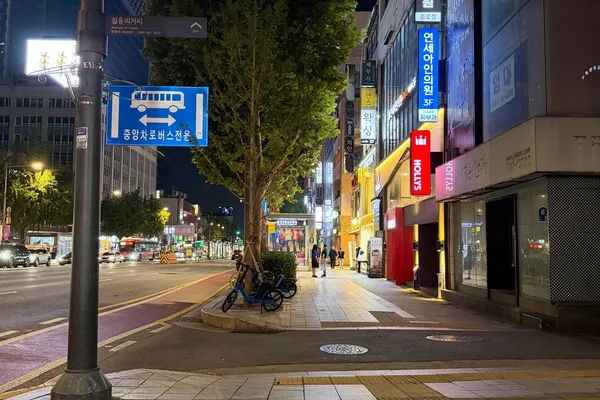
KUT SEOUL is a 3-minute walk from Jongno 3-ga Station (Lines 1·3·5) Exit 15 — 3F Hanol Tower, 96 Jongno, next to Tapgol Park. Counter seats take the Posh course (₩175,000); private rooms start from Posh at weekday lunch, Signature (₩210,000) at dinner and on weekends, up to Royal (₩280,000); on weekdays the 8-dish ₩69,000 lunch runs 80 minutes at the counter. Reservation only on CatchTable — which seat suits your evening.