Walk into any serious steakhouse in New York, London, or Tokyo and the vocabulary of prestige is almost always the same: dry-aged, 45 days, 60 days, the older the better. The pelt of dark, crusted beef hanging behind glass has become shorthand for seriousness. So it can surprise first-time guests at KUT SEOUL to learn that the four-week-aged Hanwoo on the counter has never spent a moment exposed to open air. It has been resting, quietly, inside a vacuum seal at just above freezing.
This is a deliberate choice, not a shortcut. Dry-aging and wet-aging are two distinct paths toward the same destination — tender, more flavorful beef — and the right path depends entirely on what kind of beef you started with. For Korea's indigenous Hanwoo, graded at the very top of the domestic marbling scale, the quieter path is almost always the more honest one.
What follows is an explanation of why KUT SEOUL's kitchen aged its beef the way it does, what actually happens inside that vacuum bag over four weeks, and how the method shapes the taste of every course from the Bar tier up to the Royal.
What Wet-Aging Actually Is
Wet-aging is the process of sealing primal cuts of beef in vacuum plastic and holding them under refrigeration for a period of weeks, allowing the meat's own enzymes to tenderize the muscle from within. It is, in a technical sense, the opposite of dry-aging: the beef ages inside its own juices rather than losing moisture to the surrounding air.
The method sounds modern, and in a way it is. Wet-aging as a large-scale technique only became possible after the mass development of food-grade plastics, which allowed producers to hold beef in sealed cryovac for extended periods. The typical wet-aging window ranges from about three to six weeks under refrigeration, with the beef held at temperatures just above freezing — cold enough to inhibit spoilage, warm enough for enzymatic activity to continue.
What happens inside the bag is essentially controlled digestion. Enzymes naturally present in the muscle break down connective tissue and long protein chains, softening the meat. Because the packaging is airtight, the beef's natural juices are held in place rather than evaporating, and no crust forms on the surface. The result is a piece of beef that is measurably more tender than fresh, with a mild, savory, distinctly "beefy" flavor and, as one industry description puts it, a subtle mineral tang.
Why Not Dry-Age?
The short answer is that dry-aging is a technique built for beef that needs help. Its long answer explains most of what KUT SEOUL does at the counter.
Dry-aging exposes unpackaged primal cuts to a controlled cold room for several weeks, with careful management of temperature, humidity, and airflow. Moisture diffuses from the interior of the meat to the surface and then evaporates, concentrating flavor compounds while enzymes break down proteins from the outside in. The signature results are well documented: nutty, buttery, sometimes funky aromas, a firmer bite, and a mouthfeel that lingers. Studies of the volatile compounds released during grilling show that dry-aged beef carries markedly higher concentrations of odour-active molecules — the compounds behind roasted, popcorn-like, and caramel notes — than its wet-aged counterparts.
That intensity comes at a cost. Dry-aging produces significant shrinkage and trim loss, and the process demands specialized rooms with tightly controlled conditions. It is also constrained by a ceiling: aging beyond roughly forty days is generally considered to push into diminishing returns, with increased lipid oxidation and microbial risk beginning to erode eating quality. The technique was originally designed to coax depth from leaner cuts and grass-fed carcasses whose flavor otherwise reads flat.
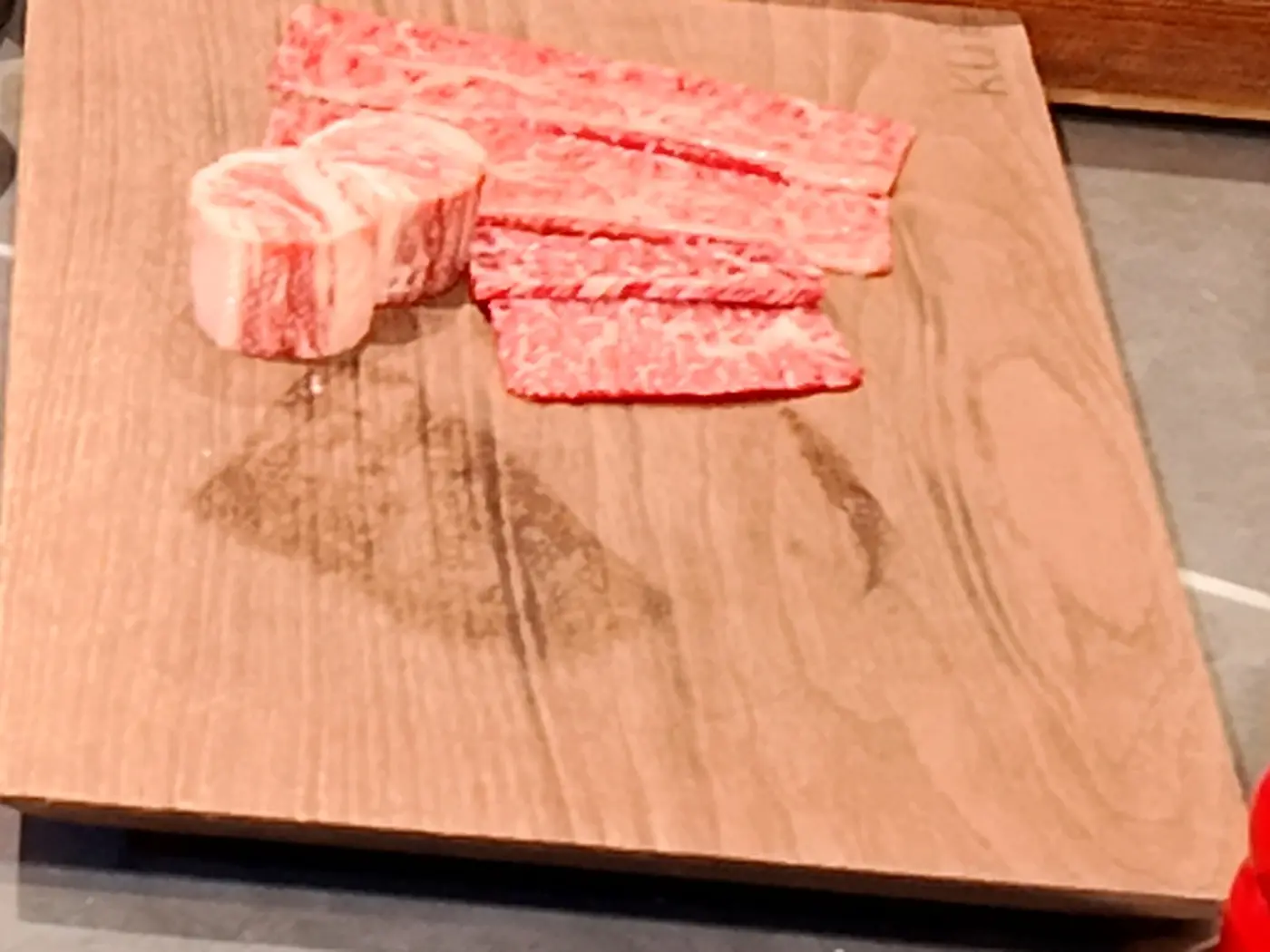
Hanwoo does not have that problem. Korea's grading system, established in 1992, evaluates every carcass on marbling score, meat and fat color, texture, firmness, and maturity — and the quality grade is decided principally by the Beef Marbling Standard, which runs from BMS No. 1 (devoid of intramuscular fat) to BMS No. 9 (very abundant). Since December 2019, marbling scores of 7, 8 and 9 all fall in the top 1++ grade, and the score itself must be displayed. The Hanwoo that arrives at KUT SEOUL is at the very top of this scale: intramuscular fat is not something the aging process needs to compensate for. It is already there, laced through the loin in delicate white filigree.
Applying an assertive dry-aged funk to beef this marbled would be a kind of over-writing. You would trade clarity for character you already had.
The Four-Week Window
So the question becomes not whether to age, but how long. Four weeks is the point at which KUT SEOUL's kitchen has settled — long enough for the enzymatic softening to reach the interior of a well-marbled primal, short enough to preserve the clean, sweet expression that defines top-grade Hanwoo.
Below is a simplified comparison of the two methods as they apply to premium beef.
| Wet aging (KUT SEOUL) | Dry aging | |
|---|---|---|
| How | Vacuum-sealed, dedicated aging refrigerator | Open air, humidity-controlled room |
| Moisture | Kept in the beef | Evaporates; crust trimmed |
| Weight loss | Minimal | Significant |
| Flavour | Deeper, cleaner, tastes of the beef | Concentrated, nutty, funky |
| Best for | Heavily marbled beef such as BMS No. 9 Hanwoo | Lean, large cuts |
| Effect | Amplification | Transformation |
Read across that final row and the philosophical difference is clear. Dry-aging is a transformation; wet-aging is an amplification. For a BMS No. 9 Hanwoo loin, KUT SEOUL's kitchen has decided that amplification is the truer service.
There is a practical dimension as well. Wet-aged primals lose no weight to trim, which means the cut you see on the counter is the same cut that entered the aging cooler four weeks earlier. Nothing was pared away to hide oxidation. What arrives on your plate is Hanwoo at its most direct.
What Four Weeks Tastes Like
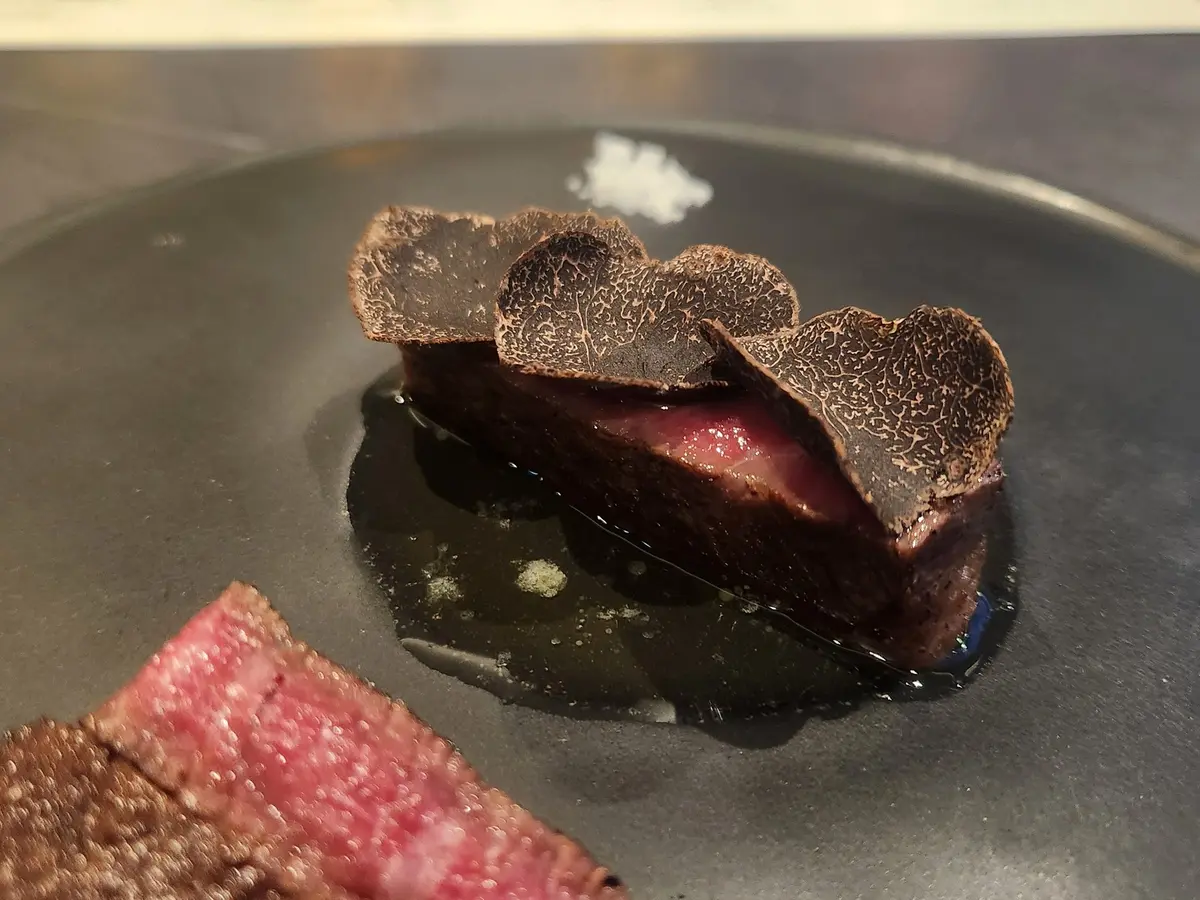
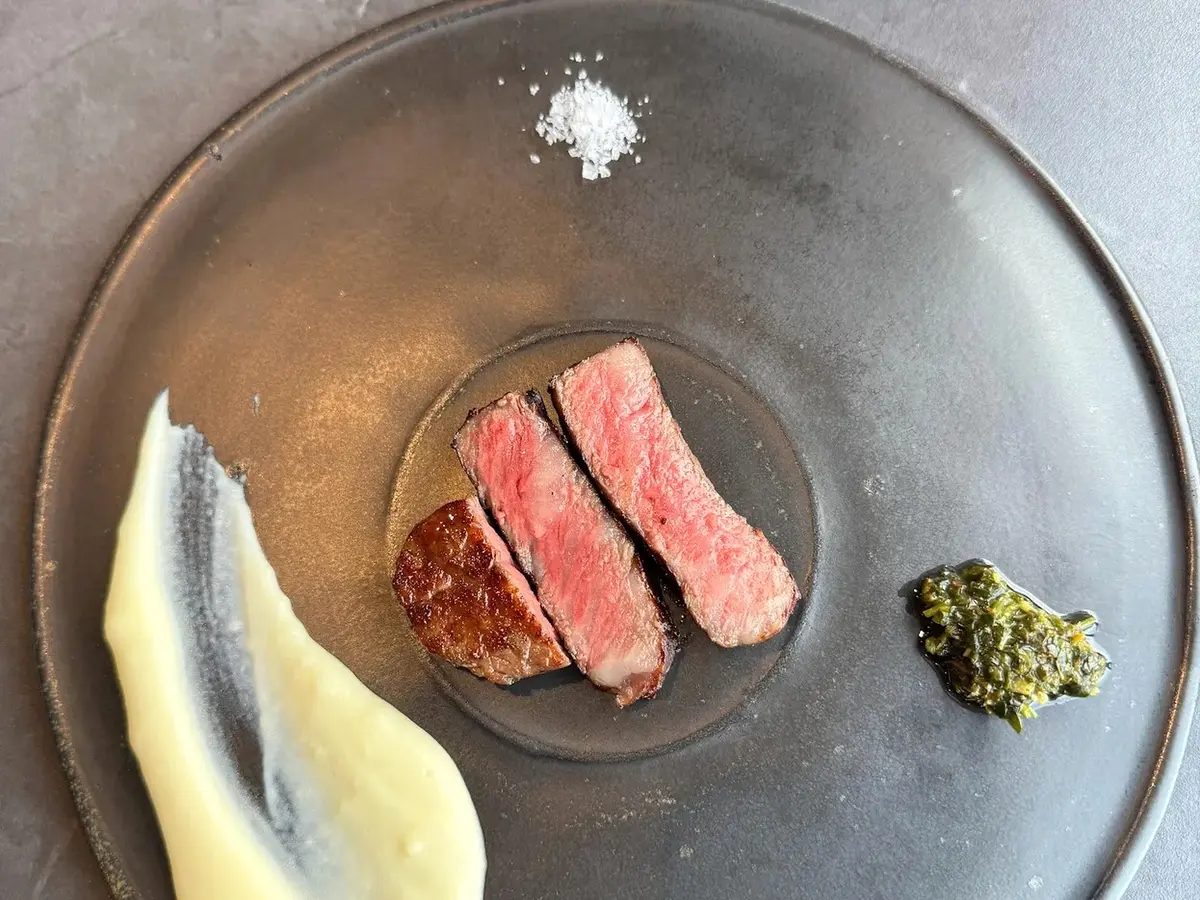
The difference the four weeks makes is subtle rather than showy, and it is easiest to notice in the two courses at KUT SEOUL where the beef is unmasked by strong sauces or garnish.
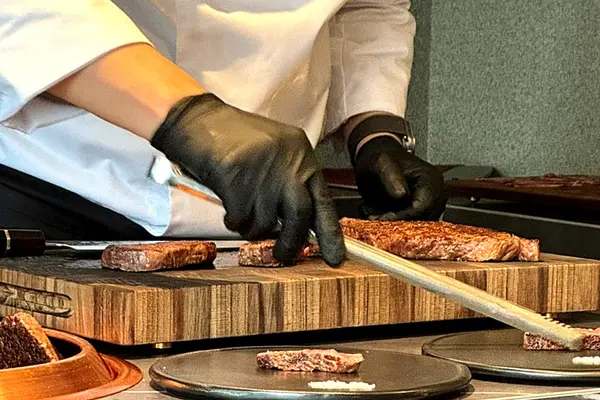
On the Signature course, priced at ₩210,000 and running to thirteen dishes, the Châteaubriand appears in its purest form — a small medallion of the tenderloin's heart, seared to render the outside and left almost raw at the core. Wet-aged Hanwoo behaves differently here than fresh Hanwoo would. The bite yields almost without resistance; the flavor is round and sweet rather than metallic; and the finish carries the faint mineral hum that is wet-aging's quiet signature. The kitchen finishes it with black truffle, which functions less as a partner than as a foil, its earthiness sharpening the beef's cleanliness.
On the Royal course, at ₩280,000 and fifteen dishes, the same aged beef appears alongside live lobster sashimi, Avruga caviar, and a lobster gratin. Here the wet-aging pays a different dividend: because the beef carries no assertive dry-aged aroma, it sits comfortably beside seafood without either flavor crowding the other. If you would like a fuller walk-through of what each course contains, our companion piece on every cut served at KUT SEOUL traces the thirteen dishes of the Signature in order.
Even the entry tier — the ₩69,000 Bar course served only at weekday lunch, and the ₩175,000 Posh course with its tenderloin and sirloin comparison — carries the same aged beef. The method does not change with the price point; only the number of cuts and the accompanying dishes do.
For the First-Time Guest
If you have arrived at Hanwoo omakase after years of dry-aged steakhouses in other cities, the wet-aged approach can take a beat to register. The first cut tastes lighter than expected. The second cut confirms that lightness is the point. By the third, most guests have adjusted their vocabulary — this is not a lesser version of the aged beef they know but a different question being answered.
BMS No. 9 Hanwoo is a rare enough material that most travelers will encounter it only a handful of times in a lifetime. The kitchen's job is not to layer character onto it, but to remove every obstacle between the beef and the diner. A four-week wet-age achieves precisely that: tenderness without theatre, depth without disguise.
For readers still deciding which course to book, our first-timer's guide to choosing a Hanwoo omakase course walks through the differences between the Bar, Posh, Signature, and Royal tiers in more practical detail.
Ending Your Day in Jongno
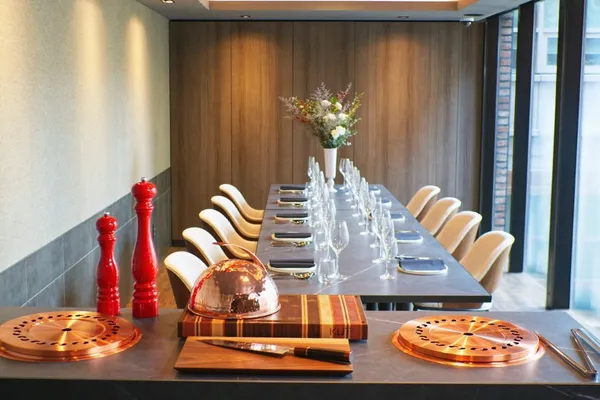
KUT SEOUL sits on the third floor of Hanol Tower, 96 Jongno, a five-minute walk from Jongno 3-ga Station (Lines 1, 3 and 5) and the quieter alleys of Insadong. The dining room holds a counter and five private rooms, so an evening here can be arranged as either a chef-facing performance or a closed conversation among friends. Reservations for the Signature and Royal courses are available at both lunch and dinner, and both are served in the private rooms; the counter serves the Bar course at weekday lunch and the Posh course at other sittings.
If you would like to plan an evening around the four-week wet-aged Hanwoo — perhaps after an afternoon at Gyeongbokgung or an early walk through Bukchon — the full course details and reservations are available on the KUT SEOUL homepage. Come with an appetite for restraint. The beef will do the rest.