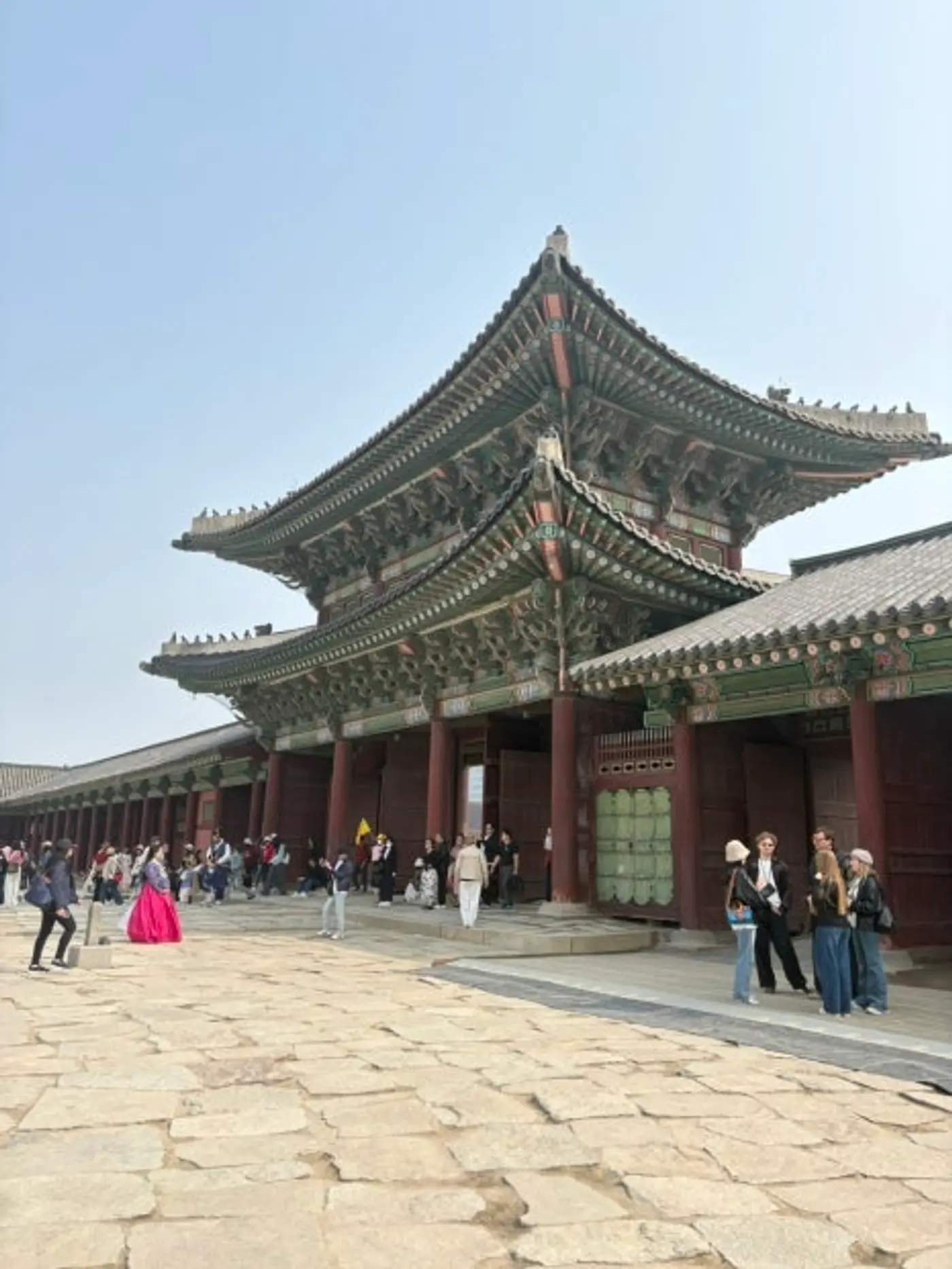
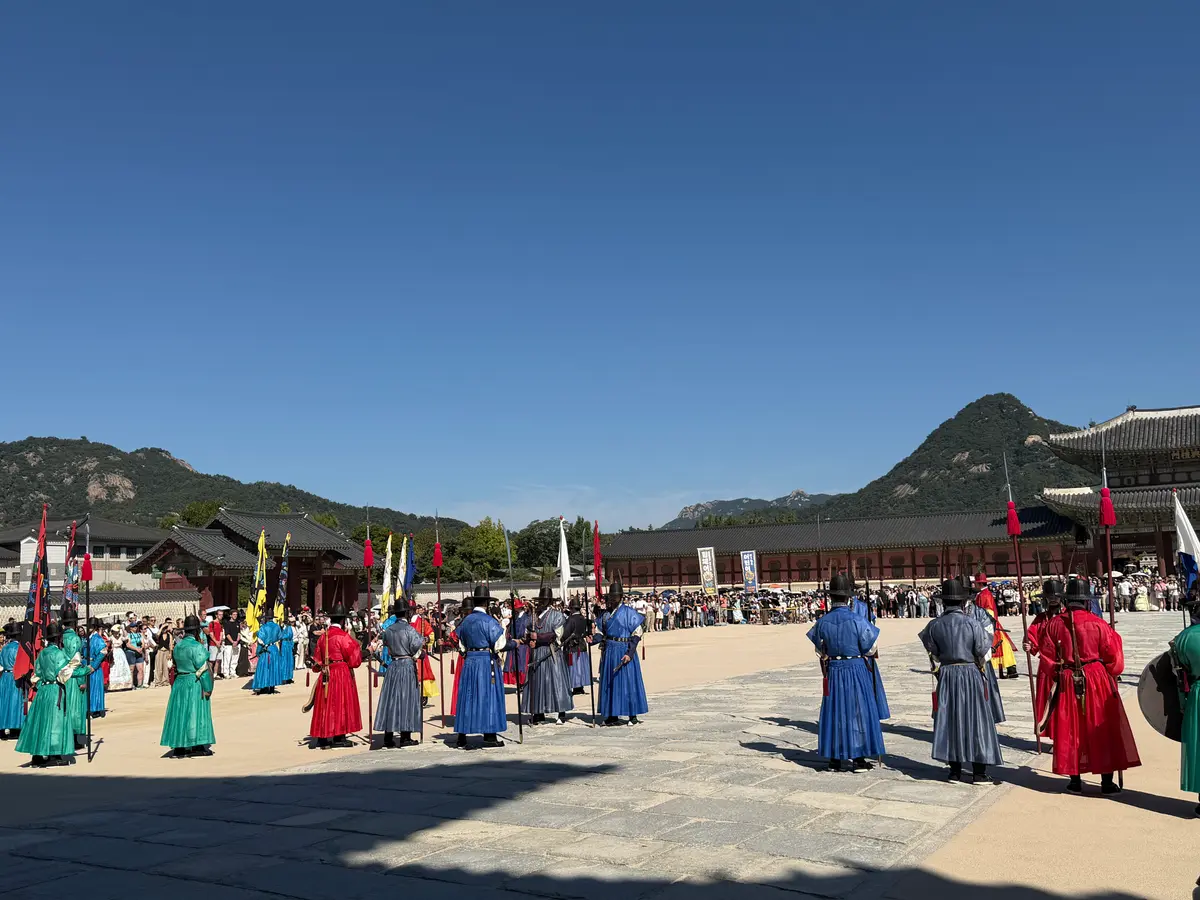
Gyeongbokgung closes at sundown, and the hour that follows is one of the best in Seoul. The palace crowds thin, lanterns come on along Sejong-daero, and the neighborhoods that ring the old royal quarter — Seochon to the west, Gwanghwamun to the south, Jongno to the east — begin to settle into their dinner service. What makes this stretch of the city rewarding for travelers is the sheer range of what a single evening can hold: a bowl of soup that has been simmering, in one form or another, since the reign of Emperor Gojong; a modern chef's counter reinterpreting Joseon court cuisine; or a three-hour tasting of four-week-aged Hanwoo in a private room.
This guide walks through the dinner options a Jongno local would actually recommend, grouped by neighborhood so you can plan around where the day has left you. Every restaurant here is within a fifteen-minute walk or a short subway ride of Gwanghwamun Gate. None require a rental car, and most reward the walk itself.
A note on timing: many of the neighborhood's older institutions keep short evening hours (last order 20:00 or 21:00), while the tasting-menu rooms take last seatings around 17:30–18:00 for dinner. Book ahead where noted.
How Do You Get from Gyeongbokgung to Dinner?
For most restaurants in this guide, the answer is simple: walk. Gyeongbokgung's main gate, Gwanghwamun, sits at the top of Sejong-daero, and the three dining neighborhoods fan out from there. Seochon lies immediately west (five minutes on foot from Gyeongbokgung Station Exit 2), Gwanghwamun's office-tower restaurants are directly south, and Jongno proper — the historic east-west artery — runs from Jonggak to Jongno 3-ga Station along the same subway line.
Gyeongbokgung Station (Line 3) Exit 2 puts you at the head of Sejong Village Food Street in under a minute. From Gwanghwamun Station (Line 5), Exit 6 rises into the office district. For Jongno restaurants further east, take Line 5 from Gwanghwamun one stop to Jongno 3-ga — the ride itself takes three or four minutes. Taxis are inexpensive across this area but often slower than the metro at 18:00–19:00, when Sejong-daero backs up.
Gyeongbokgung's own hours frame the evening. The palace runs 09:00–18:00 in spring, September and October, and 09:00–17:00 from November through February, with last entry one hour before closing. It is closed on Tuesdays. If Tuesday is a public holiday, it closes the following day instead. Plan dinner reservations for 18:30 or later after a full palace visit; earlier if you leave the grounds before closing.
At KUT SEOUL in Jongno, that sequence is served from ₩69,000 for an 8-dish weekday lunch at the counter — see what is in a Hanwoo omakase, cut by cut.
Seochon: The Neighborhood West of the Palace
Seochon — literally the "western village" — is the older, quieter counterpart to Bukchon. Its low-rise lanes hold two of the most storied everyday restaurants in Seoul, plus one of the city's few Michelin-starred fine dining rooms.
Tosokchon Samgyetang
At the top of anyone's list is Tosokchon, the samgyetang institution five minutes on foot from Gyeongbokgung Station Exit 2. The restaurant occupies a preserved hanok and, according to Korea Tourism Organization's listing, operates 10:00–22:00 daily (last order 21:00). The signature bowl is a whole young chicken stuffed with glutinous rice, ginseng, garlic and jujube, simmered until the meat falls from the bone. Queues form at both lunch and dinner; arriving before 18:00 or after 20:00 shortens the wait considerably.
A note on the black-chicken variant (ogolgye): several recent visitors report it must be ordered in advance rather than as a walk-in, so if that is what you have come for, call ahead.
Imun Seolnongtang
A short taxi ride or a fifteen-minute walk east, tucked in an alley off Ujeongguk-ro three minutes from Jonggak Station Exit 3-1, sits Imun Seolnongtang. Founded around 1904, it is widely cited as the oldest continuously operating restaurant in South Korea and is listed as a Seoul Future Heritage site. It has appeared in recent Michelin Guide Bib Gourmand selections.
The menu is essentially one dish: seolleongtang, a milky ox-bone soup simmered for the better part of a day, served with sliced beef, soft wheat noodles, and a mound of green onion you add yourself. Season the broth with the salt and pepper on the table — the kitchen deliberately underseasons. Hours run 08:00–21:00 Monday to Saturday and 08:00–20:00 on Sunday, with a mid-afternoon break; verify current break times on arrival. It closes on national holidays.
Onjium
For a completely different register, Onjium sits on the fourth floor at 49 Hyoja-ro, directly across from the west wall of Gyeongbokgung. The Michelin Guide describes it as a chef's-table restaurant awarded one star, with a kitchen led by court cuisine specialist Cho Eun-hee and Park Sung-bae that reinterprets traditional Korean flavours through modern techniques and seasonal ingredients. Dinner service is 18:00–22:00, closed Mondays. It is one of the few places in Seoul where Joseon-era royal court cuisine — the food once served inside the palace you have just visited — is treated as a living, evolving cuisine rather than a museum piece. Reserve well in advance.
Gwanghwamun: Quick, Reliable, Local
Gwanghwamun is Seoul's civic heart — home to the U.S. Embassy, Kyobo Book Centre, and a dense grid of office towers. Its restaurants tilt toward Korean office-worker classics: hearty stews, grilled fish, handmade noodles. Walkable within ten minutes of the palace, these places rarely require reservations and serve until 21:00 or 22:00.
Sejong Village Food Street, immediately behind Gyeongbokgung Station Exit 2 in Seochon (but usually grouped with Gwanghwamun for planning purposes), is a 280-metre pedestrian-friendly lane closed to traffic 11:00–22:00 daily. It is the neighborhood's densest cluster of small, mid-priced restaurants — grilled pork, hand-cut noodles, kalguksu, jokbal — and one of the easiest places in central Seoul for a group with mixed appetites to find something everyone will eat without booking.
Jongno Proper: The Eastern Half of the Neighborhood
Walk or take Line 1 one or two stops east and the character shifts again. Jongno-gu's namesake road — Jongno itself — is the old commercial spine of Seoul, running past Jonggak (the bell pavilion), Insadong's southern entrance, Tapgol Park and, eventually, Jongno 3-ga and Ikseon-dong. Here the density of restaurants rises: barbecue houses, hanok bars, tasting-menu rooms, izakayas and everything in between.
For a slower, seated dinner — the kind that closes an itinerary rather than fuels the next stop — this stretch is where Jongno holds its own against Gangnam or Cheongdam. Hanwoo omakase in particular has clustered here in the past few years, drawn by the combination of a serious food-loving clientele and the palace-adjacent atmosphere. For a broader overview of the format, our first-timer's guide to Hanwoo omakase courses walks through what to expect at each price tier.
A Comparison of the Options
| Restaurant | Neighborhood | What to Order | Approx. per person | Reservations |
|---|---|---|---|---|
| Tosokchon Samgyetang | Seochon | Samgyetang | ₩20,000 | Walk-in |
| Imun Seolnongtang | Jongno (Jonggak) | Seolleongtang | ₩15,000 | Walk-in |
| Onjium | Seochon | Royal-court tasting | ₩₩₩₩ (check official site for current rates) | Advance booking |
| Sejong Village Food Street | Seochon | Varies by shop | ₩15,000–30,000 | Walk-in |
| KUT SEOUL | Jongno | Hanwoo omakase | See below | CatchTable / Naver |
Is Dinner near Gyeongbokgung Worth Planning For?
It is, and more than most travelers assume. The palace itself takes two or three hours to see properly, which usually pushes the visit into late afternoon. Rather than trekking back to a hotel in Myeongdong or Gangnam and losing the golden hour on the metro, most visitors are better off staying in the neighborhood, watching the changing light on Gwanghwamun Gate over an early dinner, and walking the palace perimeter or Cheonggyecheon afterward.
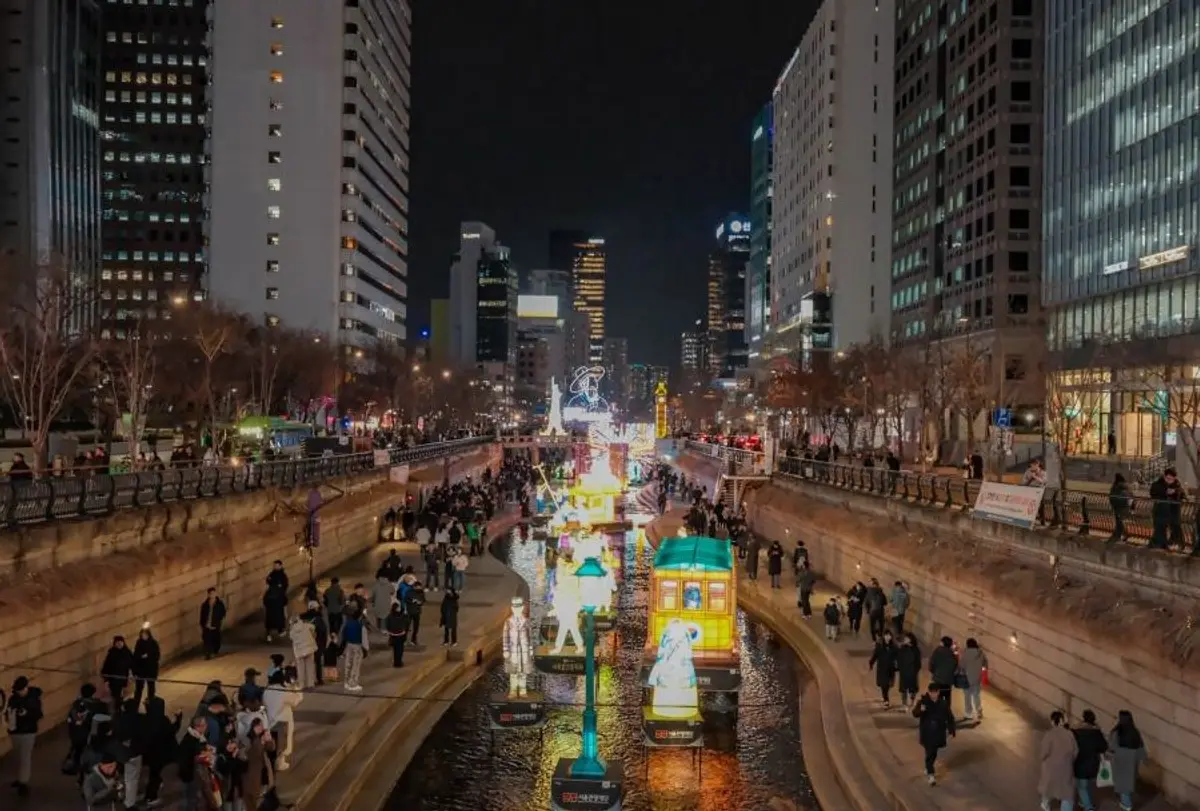
Seoul's evenings are also — and this is easy to forget in a summer heatwave — the coolest and quietest part of the day for much of the year. Cheonggyecheon, the restored 5.84 km stream that runs two blocks south of Jongno, is at its best after sunset, when the walkways are lit and the office crowds have thinned. From mid-December to mid-January the stream hosts the Seoul Lantern Festival (the 2025 edition ran 12 December 2025 – 18 January 2026, 18:00–23:00; check the official site for current details on the 2026 edition).
What About Hanwoo Omakase?
If your dinner is the anchor of the day rather than a stop between sights, Jongno's Hanwoo omakase rooms are worth the reservation effort. Hanwoo — Korea's native cattle breed — is graded on a five-tier system by the Korea Institute for Animal Products Quality Evaluation, with grade 1++ (the top tier) further subdivided by marbling score. Since December 2019, grade 1++ has covered marbling scores 7, 8 and 9, and the specific number must be displayed at retail. At the omakase level, expect BMS No. 9 across the board.
KUT SEOUL sits about 20–25 minutes on foot from Gyeongbokgung — or roughly ten minutes on Line 3 to Jongno 3-ga — in a quiet corner of Jongno beside Tapgol Park.
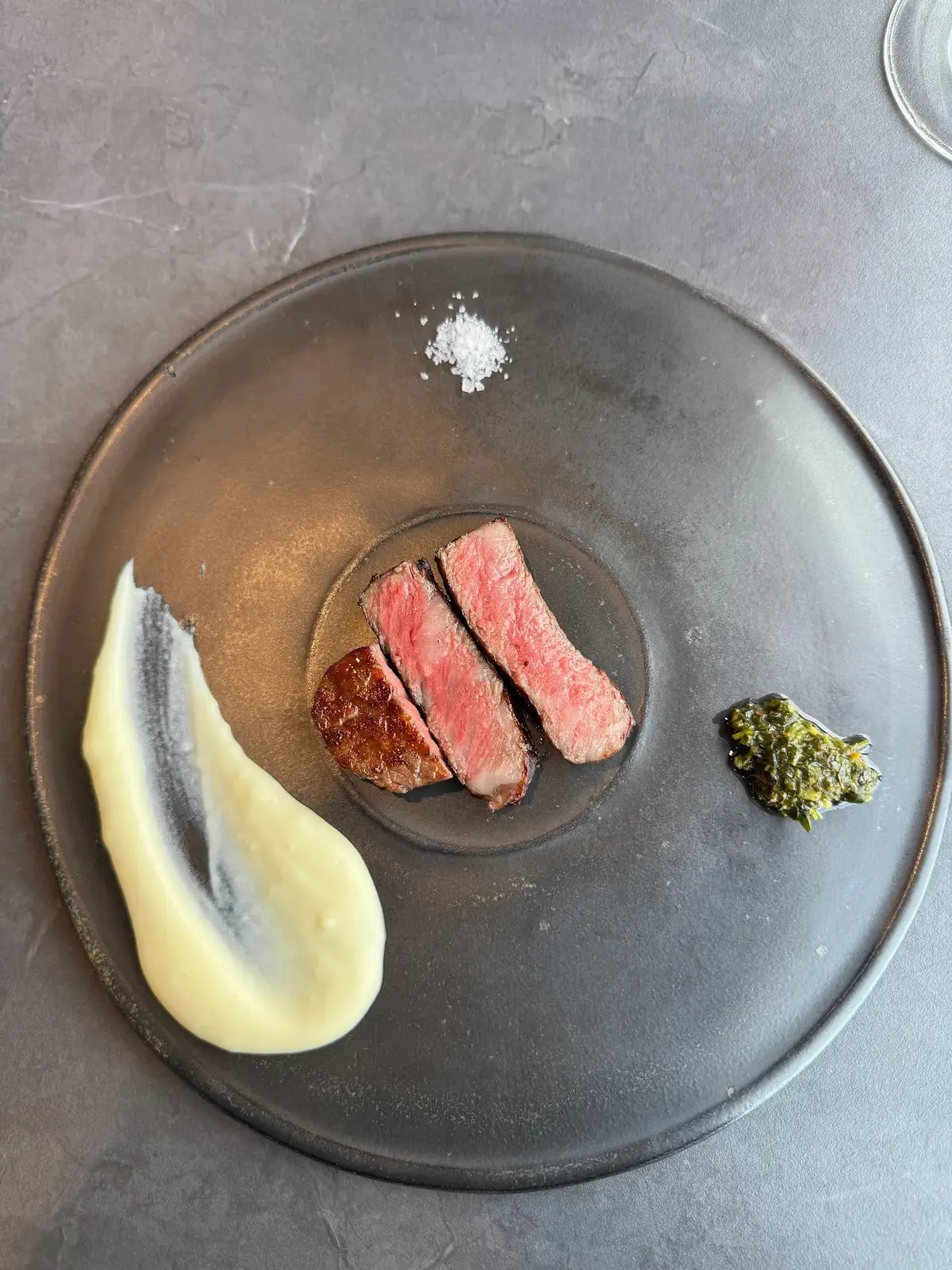
BMS No. 9 Hanwoo, vacuum (wet) aged four weeks — not dry-aged. Grades run 3/2/1/1+/1++; since December 2019, 1++ covers marbling scores 7–9 and the number is displayed. KUT serves No. 9 only.
KUT SEOUL: Bar 8 dishes ₩69,000 (weekday lunch, counter only, 80 min) · Posh 11 ₩175,000 · Signature 13 ₩210,000 · Royal 15 ₩280,000 · Kids ₩45,000 (ages 7 and under). Signature and Royal are private-room only; Posh is also served in a private room at weekday lunch (counter at weekday dinner and on weekends and holidays).
Lunch 11:30–15:00 (last order 14:30), dinner 17:30–22:00 (last order 19:30), closed Tuesdays.
Reservation only, through CatchTable or Naver. Deposit is 100% of the order; cancellation is free two days before, 50% one day before, none on the day.
Because a private-room dinner runs three hours from the welcoming tea to dessert, book the 17:30 or 18:00 seating; a later start bumps against the 22:00 close. For the difference between the counter and the private rooms, see our guide to choosing between counter seats and private rooms.
Ending Your Day in Jongno
KUT SEOUL is 20–25 minutes on foot from Gyeongbokgung, or about 10 minutes on Line 3 to Jongno 3-ga — 3F Hanol Tower, 96 Jongno, next to Tapgol Park. Counter seats take the Posh course (₩175,000); private rooms start from Posh at weekday lunch, Signature (₩210,000) at dinner and on weekends, up to Royal (₩280,000); on weekdays the 8-dish ₩69,000 lunch runs 80 minutes at the counter. Reservation only on CatchTable — which seat suits your evening.