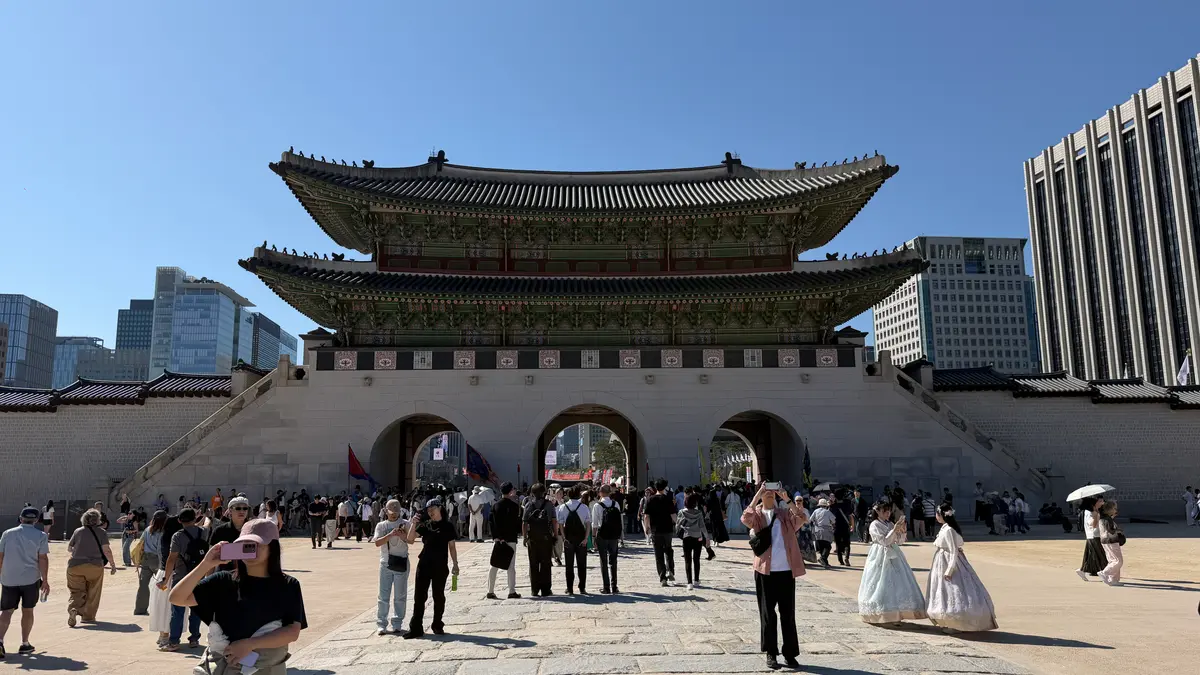
Most visitors arrive at Gyeongbokgung with a ticket and a camera, and leave with a question: what now, and where do we eat? The palace grounds are large enough to fill three hours, small enough to finish in ninety minutes, and the answer to dinner depends less on taste than on the clock. A 14:30 exit is a late-lunch problem. A 17:00 exit — the last-entry cutoff in winter — is a dinner problem. And a 18:00 exit in autumn, when the palace stretches its hours, lands squarely in the awkward hour between kitchens closing and dinner service beginning.
This is a plan built around Gyeongbokgung's actual closing bell, the rhythm of Seoul's neighbourhood kitchens, and the two directions you can walk from Gwanghwamun Square. West and north lie Seochon and Bukchon — quieter, residential, closing early. East lies Jongno: broader streets, later hours, and a straight run along Jongno-daero toward Jongno 3-ga, where the city's more considered dining rooms keep their lights on well past ten.
What follows is a time-of-day plan. Read it against your watch, not your appetite.
What time does Gyeongbokgung actually close?
Seasonally. That is the short answer, and it matters more than most itineraries acknowledge. Gyeongbokgung's hours are 09:00–17:00 November–February, 09:00–18:00 March–May and September–October, and 09:00–18:30 June–August, with last entry one hour before closing; the palace is closed on Tuesdays, and if Tuesday falls on a public holiday it closes the following day instead (as of 2026-09). The Korea Heritage Service confirms the winter window at 09:00–17:00 with final admission at 16:00.
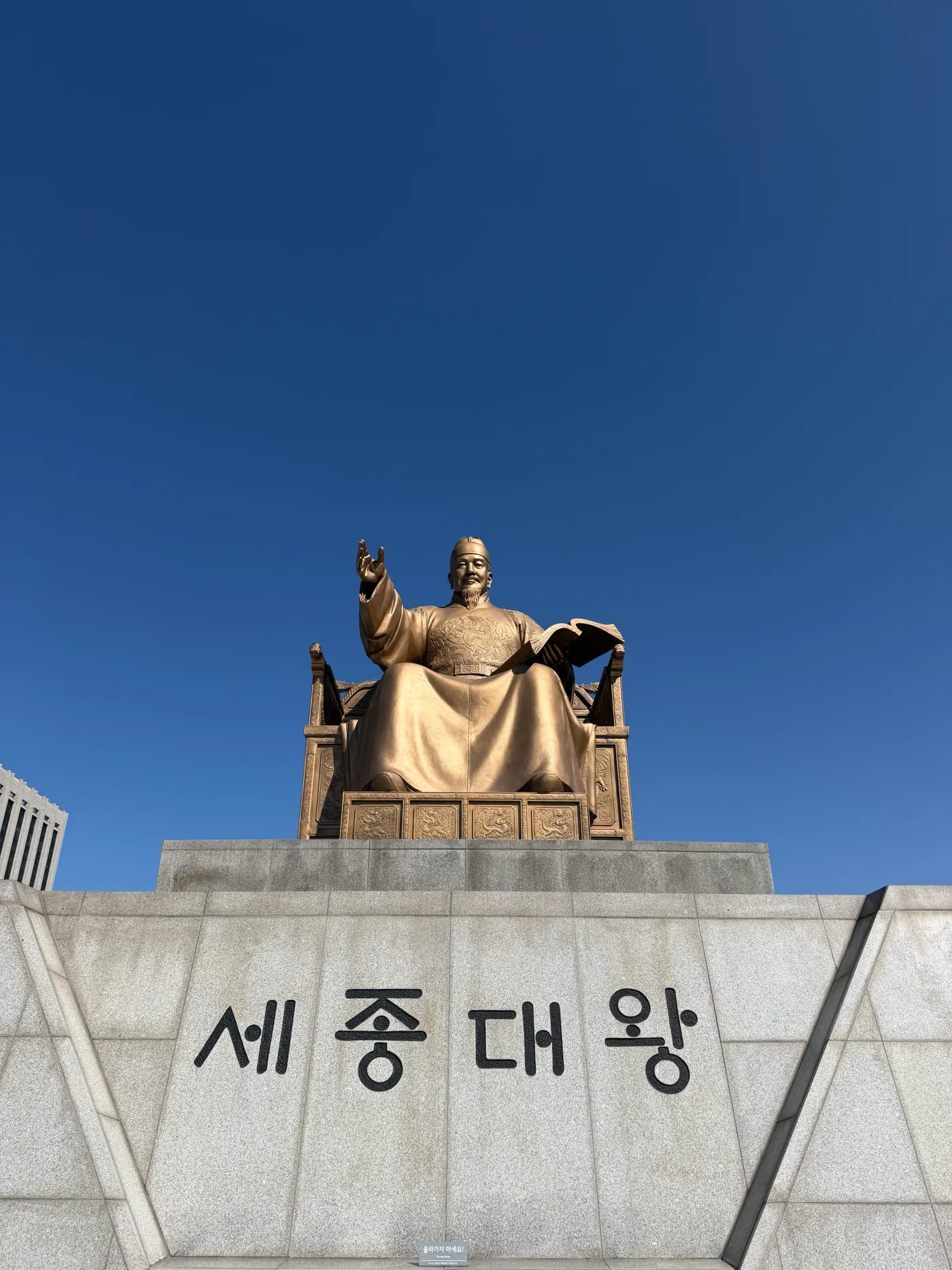
What this means in practice: in September and October, you will step through Gwanghwamun Gate onto the square somewhere between 17:00 and 18:00. In midsummer, closer to 18:30. In deep winter, as early as 16:00, with the sky already darkening. Each of these three exits calls for a different meal, and the biggest mistake is treating a 16:30 palace exit as a dinner cue — most dinner kitchens do not open until 17:30.
| Season | Palace hours | Last entry | Likely exit time |
|---|---|---|---|
| Nov–Feb | 09:00–17:00 | 16:00 | 16:30–17:00 |
| Mar–May, Sep–Oct | 09:00–18:00 | 17:00 | 17:30–18:00 |
| Jun–Aug | 09:00–18:30 | 17:30 | 18:00–18:30 |
One more note before you leave the grounds: the Changing of the Royal Guard runs at 10:00 and 14:00 in front of Gwanghwamun Gate, with no ceremony on Tuesdays and cancellations in heavy rain or snow (as of 2026-09). If you catch the 14:00 ceremony, plan on a late lunch closer to 15:30 — most kitchens will just be entering their break.
At KUT SEOUL in Jongno, that sequence is served from ₩69,000 for an 8-dish weekday lunch at the counter — see what is in a Hanwoo omakase, cut by cut.
Where to eat if you exit before 15:00 (late lunch, 10 minutes on foot)
A late lunch, not an early dinner. Between roughly 14:00 and 15:00, the neighbourhoods immediately around Gyeongbokgung are still serving their lunch menus, and three dish categories travel best across this window: samgyetang (ginseng chicken soup), sundubu-jjigae (soft-tofu stew), and handmade knife-cut noodles (kalguksu). All three are hot, restorative after a morning on stone courtyards, and quick enough to leave you room for tea afterward.
Seochon, west of the palace across Jahamun-ro, is the natural direction for this meal. The lanes behind Tongin Market hide small kitchens that have been serving office workers for decades — quieter than Insadong, less polished than Bukchon, and better suited to a single considered plate than a tasting menu. Portions are generous and prices sit well below dinner rates.
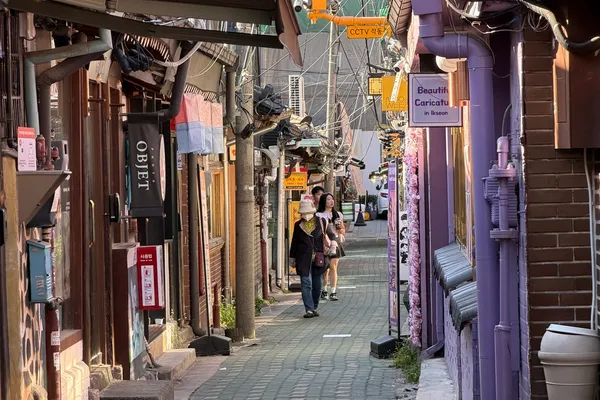
If you exit Gwanghwamun Gate and walk east instead, toward Anguk, you land on the northern edge of Insadong within ten minutes. Insadong-gil is car-free Saturday 14:00–22:00 and Sunday 10:00–22:00 (as of 2026-09), which turns the main street into a slow-moving parade of tea houses and craft shops. A bowl of noodles here, followed by a hanok tea house upstairs, is a well-worn Seoul afternoon for a reason.
Whatever you choose, order by 14:30. Many neighbourhood kitchens take a break between 15:00 and 17:00 to reset for dinner service, and the ones that stay open through the afternoon are mostly cafés.
What about the 15:00–17:30 dead zone?
Coffee, tea, or a pastry. This is the honest answer, and it is the block most itineraries skip past. Lunch service has ended, dinner has not begun, and forcing a full meal into this window means either eating standing up at a market stall or settling for a hotel restaurant that keeps its kitchen open all day.
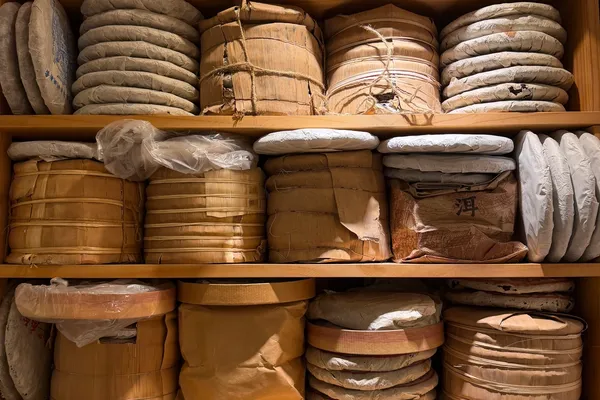
The more considered use of these two-and-a-half hours is a tea house. Insadong is dense with them — second-floor hanok rooms overlooking the main street, serving citron tea, jujube tea, or aged pu-erh in small ceramic pots. A pot of tea and a plate of tteok (rice cake) is the right register for the hour, and it buys you the time to walk to your dinner destination without arriving early.
An alternative is Cheonggyecheon. The restored 5.84 km stream walk (as of 2026-09) begins a few minutes south of Jonggak and runs east through the city; twenty minutes along the water in the late afternoon light is a good bridge between the palace's ceremonial scale and the smaller register of a dinner table. In mid-December to mid-January, the Seoul Lantern Festival runs along Cheonggyecheon in the evenings (2025 edition: 12 Dec 2025 – 18 Jan 2026, 18:00–23:00; as of 2026-09), which turns the walk itself into a destination.
Should you stay in Gwanghwamun for dinner or move east to Jongno 3-ga?
Both work; they are different meals. Staying in Gwanghwamun means shorter walking distances and a wider spread of international restaurants — the hotel dining rooms of the Four Seasons and the Fairmont, the modern Korean tables in the D Tower food halls, and the ground-floor bistros on the streets behind Kyobo Book Centre. It is the easier choice if you are tired, jet-lagged, or travelling with children who need to eat by 18:00.
Moving east — twenty to twenty-five minutes on foot along Jongno-daero, or about ten minutes on Line 3 to Jongno 3-ga — trades convenience for a different atmosphere. Jongno east of Jonggak is older, denser, and quieter in the evenings than the office blocks around Gwanghwamun. It is where Seoul's century-old ox-bone soup shops sit around the corner from Michelin-listed tasting menus, and where the city's Hanwoo (Korean beef) omakase rooms have quietly clustered over the past decade. For a considered dinner that lingers past 21:00, this is the direction to walk.
| Route | Distance | Time | Best for |
|---|---|---|---|
| Stay in Gwanghwamun | on foot | 5–10 min | early dinner, families, hotel dining |
| Walk to Jongno 3-ga | 1.8 km along Jongno-daero | 20–25 min | slow dinner, sunset walk past Jonggak Bell |
| Line 3 to Jongno 3-ga | two stops (via Anguk) | ~10 min with transfer | rain, cold, or tight timing |
For a broader look at the food landscape between the two neighbourhoods, our local's picks for dinner near Gyeongbokgung and Jongno covers samgyetang, ox-bone soup, royal-court cuisine and Hanwoo omakase in one round-up. If you want the fuller day-long route that stitches the palace to the stream to the dinner table, a perfect day in Jongno from Gyeongbokgung to Cheonggyecheon reads as the itinerary this article is a chapter of.
What is Hanwoo, and why is it the Jongno evening dish?
Hanwoo is Korea's native beef breed, graded under a five-tier system — 3, 2, 1, 1+ and 1++ — with 1++ further divided by marbling score. Since December 2019, grade 1++ has covered marbling scores 7, 8 and 9, and the score must be displayed on the label; grading is performed by the Korea Institute for Animal Products Quality Evaluation (KAPE) under Ministry of Agriculture standards (as of 2026-09). It is not the same product as Japanese Wagyu, and the two should not be used interchangeably on a menu.
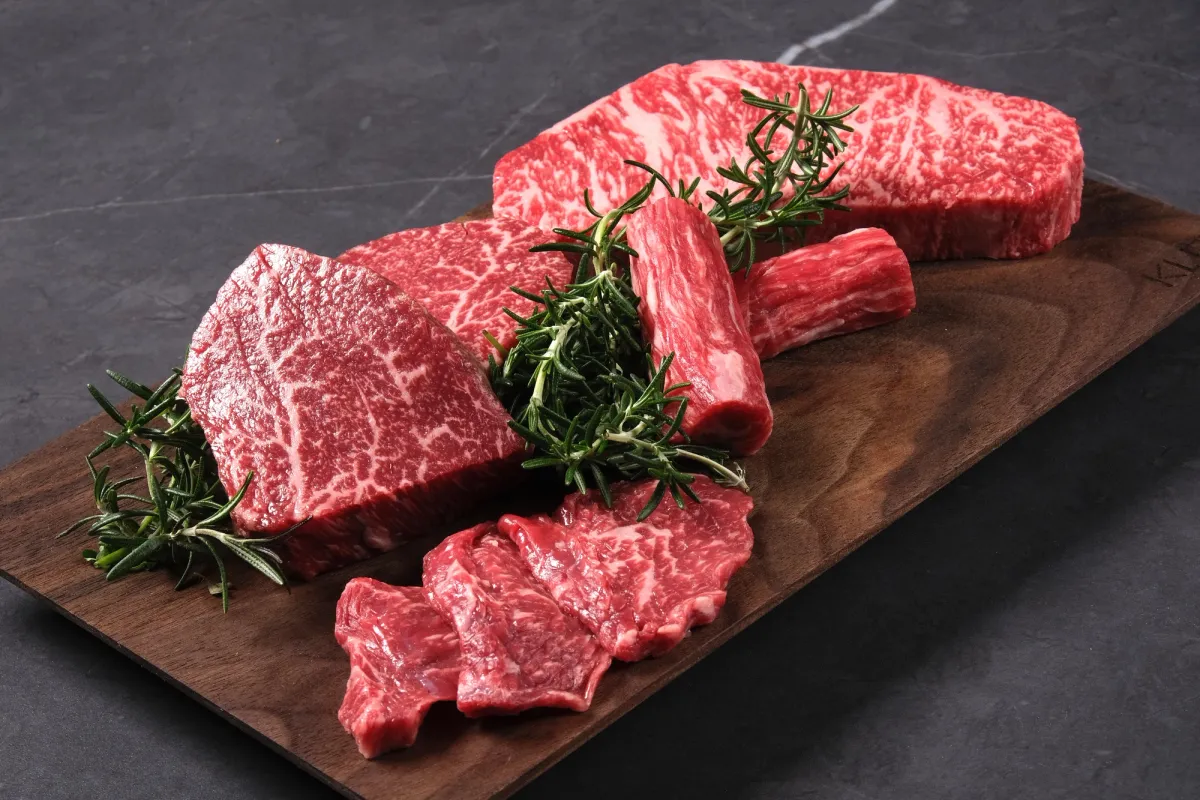
Jongno's Hanwoo restaurants divide roughly into two kinds: the traditional charcoal grill houses, where you cook your own thick-cut galbi over live coals; and the newer omakase counters, where a chef portions and finishes each cut in front of you across a longer tasting menu. The first is convivial and smoky; the second is quieter, and structured more like a European tasting room. For a first-time visitor deciding between them, our Hanwoo beef guide for Seoul travellers walks through the cuts and the order they typically arrive in.
The full timeline, from palace gate to dinner table
| Time | Where | What |
|---|---|---|
| 13:30 | Gyeongbokgung | Finish the palace walk; exit Gwanghwamun Gate |
| 14:00 | Seochon or Insadong | Late lunch — samgyetang, sundubu, or kalguksu |
| 15:30 | Insadong hanok tea house | Pot of tea, plate of tteok |
| 16:30 | Cheonggyecheon | 20-minute walk east along the stream |
| 17:30 | Jongno 3-ga | Arrive for a private-room dinner |
| 20:30 | — | Coffee, or a nightcap on the way home |
In winter, shift everything ninety minutes earlier: palace exit at 16:30, tea by 17:00, dinner from 17:30. In midsummer, hold the same clock but linger longer over the tea. The plan is not rigid; it is a way of making sure the palace and the dinner table both get the hours they deserve, without forcing a meal into the two hours when Seoul's kitchens are quietly resetting.
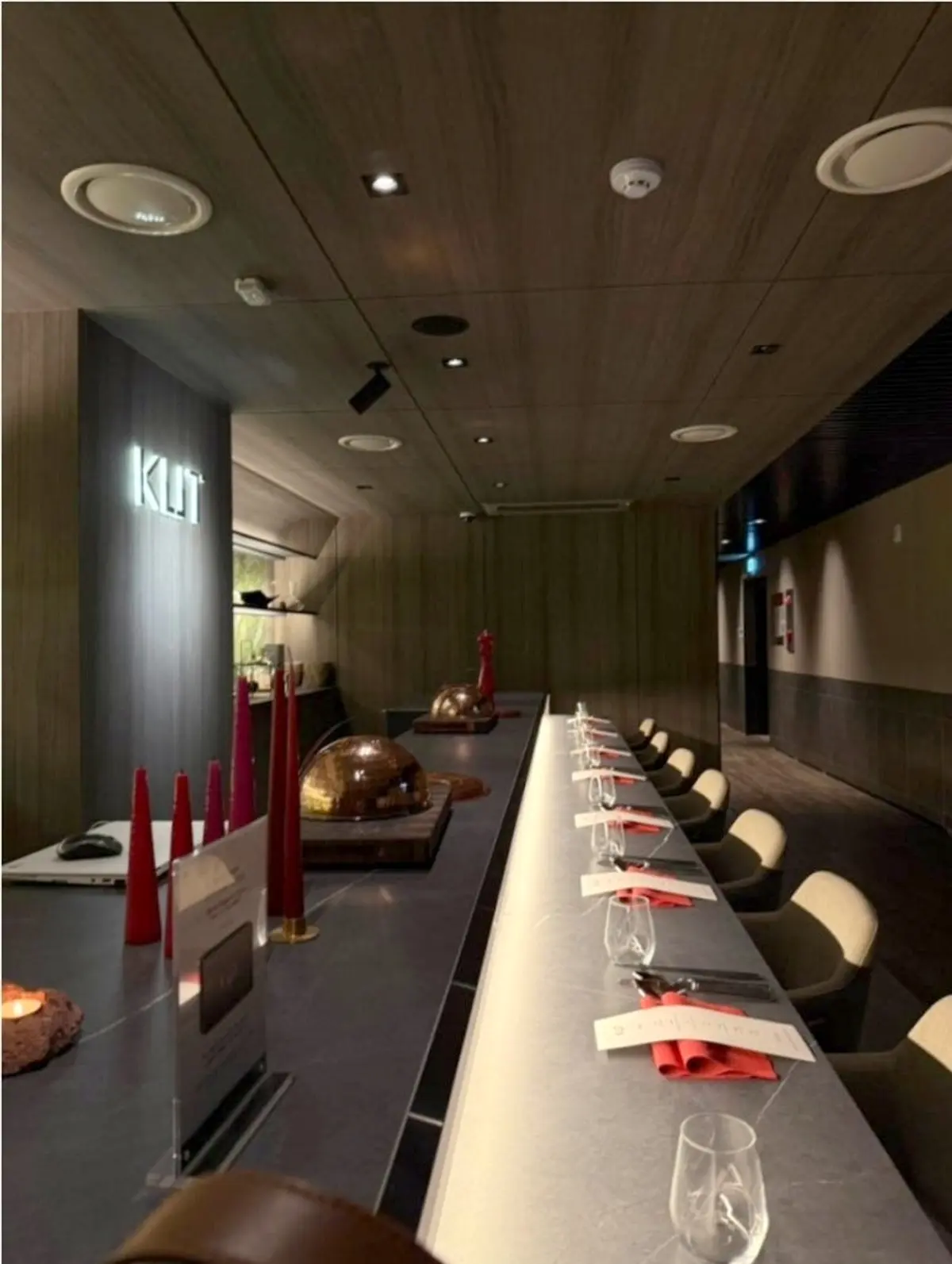
A final practical note on getting between the two ends of the day. From Gyeongbokgung Station on Line 3, it is about ten minutes to Jongno 3-ga with no transfer; from Gwanghwamun Station on Line 5, one transfer at Jongno 3-ga itself. On foot, the walk east along Jongno-daero passes Jonggak Bell Pavilion, the northern edge of Cheonggyecheon, and the mouth of Insadong-gil before reaching Jongno 3-ga. For the door-to-door details on the Jongno 3-ga end of that walk, see our guide to getting to KUT SEOUL from Jongno 3-ga and Jonggak stations.
Ending Your Day in Jongno
KUT SEOUL is 20–25 minutes on foot from Gyeongbokgung, or about 10 minutes on Line 3 to Jongno 3-ga — 3F Hanol Tower, 96 Jongno, next to Tapgol Park. Counter seats take the Posh course (₩175,000); private rooms start from Posh at weekday lunch, Signature (₩210,000) at dinner and on weekends, up to Royal (₩280,000); on weekdays the 8-dish ₩69,000 lunch runs 80 minutes at the counter. Reservation only on CatchTable — which seat suits your evening.