Two Korean meals, both built around beef, could not feel more different. In one, a charcoal brazier is lowered into the middle of your table, thin ribbons of marinated short rib hit the grate with a hiss, and the room fills with smoke, laughter and the clatter of scissors on meat. In the other, a chef in a still, low-lit dining room places a single warm slice of four-week-aged tenderloin on the counter in front of you, tells you which muscle it came from, and turns to the next course.
Both are honest Korean traditions. Neither is better than the other; they are simply built for different evenings. A first-time visitor with only a handful of dinners in Seoul often wants to know which one to book — and the answer depends less on your budget than on the kind of night you want.
This guide sets the two formats side by side on eight practical axes, then explains what a Hanwoo omakase course actually contains, using KUT SEOUL in Jongno as the working example.
What exactly is Korean BBQ?
Korean BBQ — *gogi-gui* in Korean, literally "meat grilling" — is the format most travellers already picture when they think of eating out in Seoul. A gas or charcoal grill is set into the centre of the table, thin cuts of pork belly (*samgyeopsal*), marinated short rib (*galbi*), unmarinated short rib (*saeng-galbi*) or brisket-adjacent cuts arrive raw on a platter, and you cook them yourself. A staff member may drop by to change a scorched grate or turn the first pieces for you, but the choreography of the meal is yours.
Alongside the meat come *banchan* — a dozen small side dishes of kimchi, pickled radish, bean sprouts, seasoned greens — and leaves of lettuce and perilla for wrapping. You build each bite: a piece of just-cooked meat, a smear of *ssamjang*, a sliver of raw garlic, a wrap. Soju and beer flow. It is loud, hands-on, and gloriously communal.
Most Korean BBQ houses are walk-in friendly or take same-day bookings, seat groups of two to eight comfortably, and turn a table in roughly 90 minutes. Your clothes will smell of smoke afterwards — this is not a defect but a feature.
What is a Hanwoo omakase?
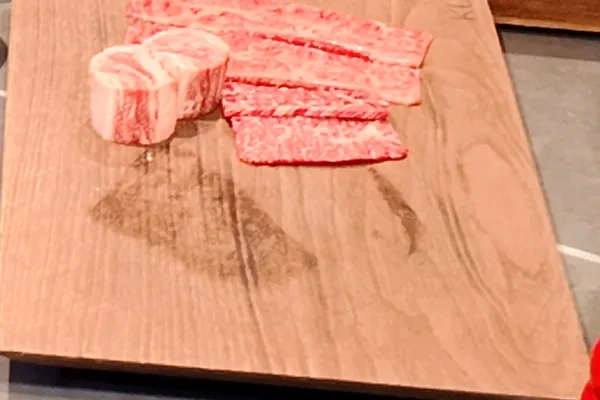
Hanwoo omakase is a much younger format, borrowed in name from Japanese sushi culture but built entirely around Korean beef. *Hanwoo* is Korea's native cattle breed, graded on a five-step scale where BMS No. 9 sits at the very top of the 1++ tier. In an omakase, a chef selects the cuts, ages them in-house, cooks each portion behind the counter or in a service kitchen, and sends out a fixed sequence of small courses. You do no cooking. You choose no cuts. The chef decides the order, the doneness, the accompaniments and the pace.
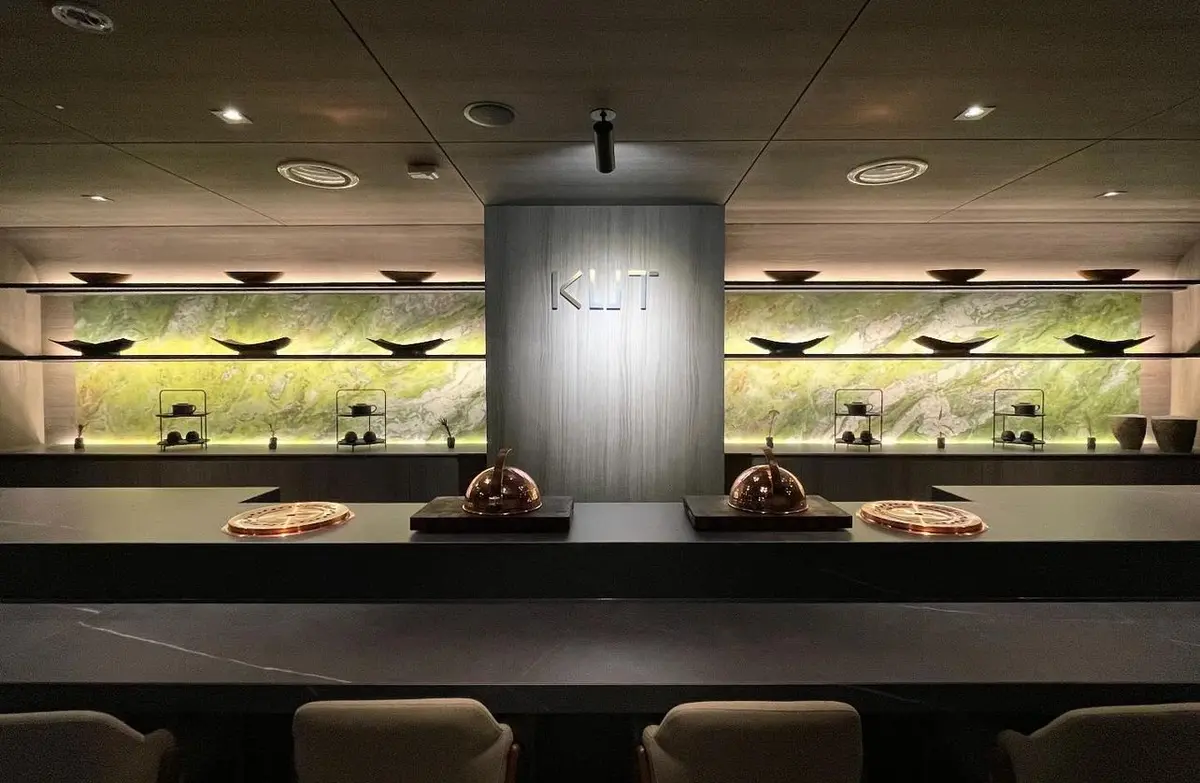
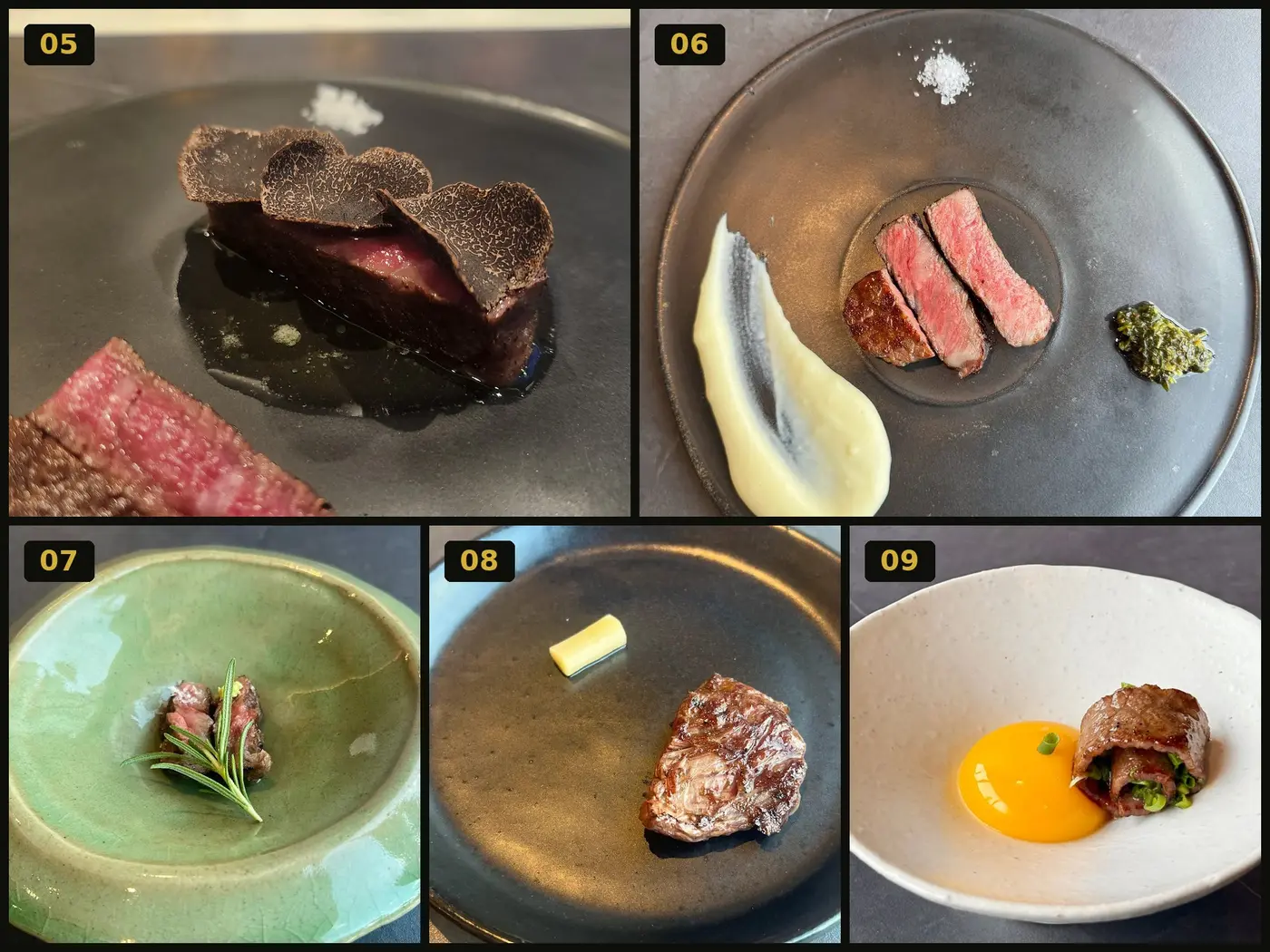
A typical Seoul Hanwoo omakase serves between 8 and 15 courses over 80 minutes to three hours, moving from cold appetisers through tartare, sashimi-style raw beef, grilled prime cuts, a rice or noodle course and dessert. Because portions are single-serve and the cooking is done for you, the room is quiet. There is no tabletop smoke, no scissors, no shouting across a grill.
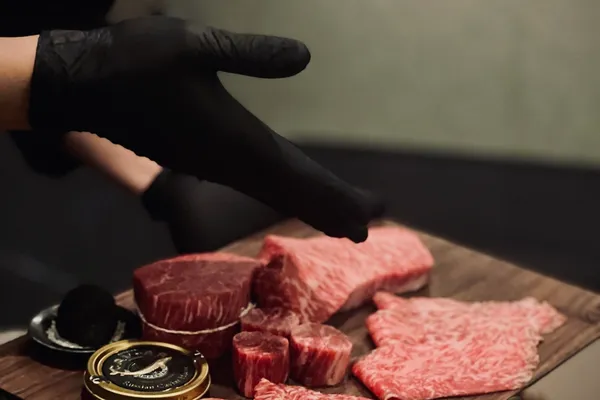
At KUT SEOUL, every cut is BMS No. 9 Hanwoo, vacuum-aged for four weeks in a dedicated refrigerator — a wet-aging method chosen specifically to suit the fine marbling of top-grade Korean beef. If the difference between wet and dry aging matters to you, our wet-aged, not dry-aged guide explains why.
How do they compare on eight practical axes?
Here is the head-to-head, using KUT SEOUL as the omakase reference:
| Axis | Korean BBQ | Hanwoo Omakase (KUT SEOUL) |
|---|---|---|
| Who cooks | You, at the table | The chef, out of sight or at the counter |
| Cuts served | 1–3 cuts you order by weight | 5+ cuts within a set course |
| Pace | You control it; usually ~90 minutes | Chef-paced; 80 min (B KUT) to 3 hours (rooms) |
| Time needed | 60–120 minutes | 80–180 minutes |
| Price feel | Pay per 100 g plus sides and drinks | Single course price, all-inclusive |
| Group size | 2–8 works best | 1 (counter) to 12 (largest private room) |
| Smoke & clothes | Expect smoke on your clothes and hair | No tabletop grill; clothes stay clean |
| Reservation | Often walk-in or same-day | Reservation-only via CatchTable or Naver Booking |
At KUT SEOUL in Jongno, that sequence is served from ₩69,000 for an 8-dish weekday lunch at the counter — see what is in a Hanwoo omakase, cut by cut.
Which one should a first-time visitor pick?
The honest answer is that most travellers with four or five dinners in Seoul do both, on different nights.
Book Korean BBQ when you are with a group of three or more, when you want a boisterous evening with soju and shared plates, when you want to point at a menu and eat within minutes of sitting down, or when your itinerary is unpredictable and you would rather not commit to a fixed time three days ahead. It is the format that best captures the everyday sociability of Korean dining.
Book a Hanwoo omakase when you want to actually taste the difference between rump cap and Châteaubriand, when you are celebrating something quietly (an anniversary, a proposal, a milestone birthday), when you are eating as a couple and would rather talk than manage a grill, or when a business guest expects a certain level of ceremony. It is also the format that lets you eat top-grade Hanwoo without the arithmetic of ordering four portions of premium cuts à la carte.
If you have room for only one dinner and want the memorable one, most first-timers we host at KUT SEOUL tell us afterwards that the omakase went into the trip's short list of highlights precisely because it was so unlike anything at home. If you want the everyday one — the one that shows you what Seoul on a Friday night actually feels like — pick the BBQ.
Is Hanwoo omakase worth it?
Worth it, in this context, is really two questions: is Hanwoo worth eating at all, and is the omakase format worth its price over ordering the same cuts at a butcher-restaurant.
On the first, BMS No. 9 Hanwoo genuinely tastes different from imported wagyu or good Angus. It is leaner in the way top-grade Hanwoo tends to be, more savoury than sweet, with a marbling pattern that renders almost instantly at grilling temperatures. Four weeks of wet aging deepens the umami without introducing the funk of dry aging. Whether that appeals is a matter of taste — but it is a distinct experience, not simply a Korean take on wagyu.
On the second, omakase earns its price when you value three things: the breadth of cuts you would never order individually, the chef's precision on doneness for muscles that behave very differently on heat, and the pacing of a menu that alternates raw, cured, grilled and simmered courses. If those matter to you, an omakase is generous value. If you would rather eat 300 g of one favourite cut, a specialist BBQ house is the better choice.
What does a Hanwoo omakase course actually contain?
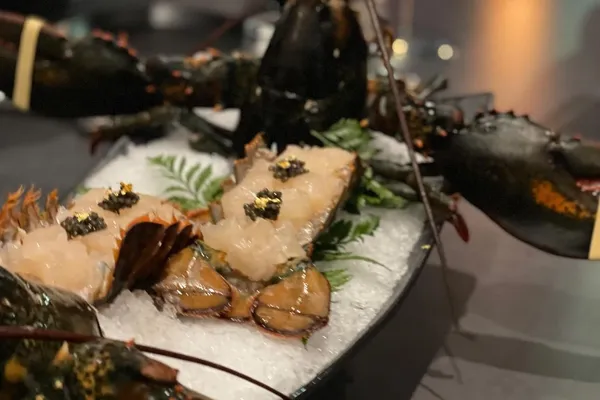
At KUT SEOUL, five courses give you five entry points into the same philosophy. The B KUT is an eight-dish bar course, weekday lunch only at the counter, designed as a first taste of the format. The P KUT is an eleven-dish course served at the counter or, at weekday lunch, in a private room. The S KUT is the thirteen-dish Signature — the course most first-timers are steered toward — in a private room, featuring wild ginseng, Avruga caviar and Châteaubriand with truffle. The R KUT is the fifteen-dish Royal, again in a private room, adding live lobster sashimi with caviar and gold flake, and a lobster gratin. A separate Kids KUT plate serves children aged 7 and under.
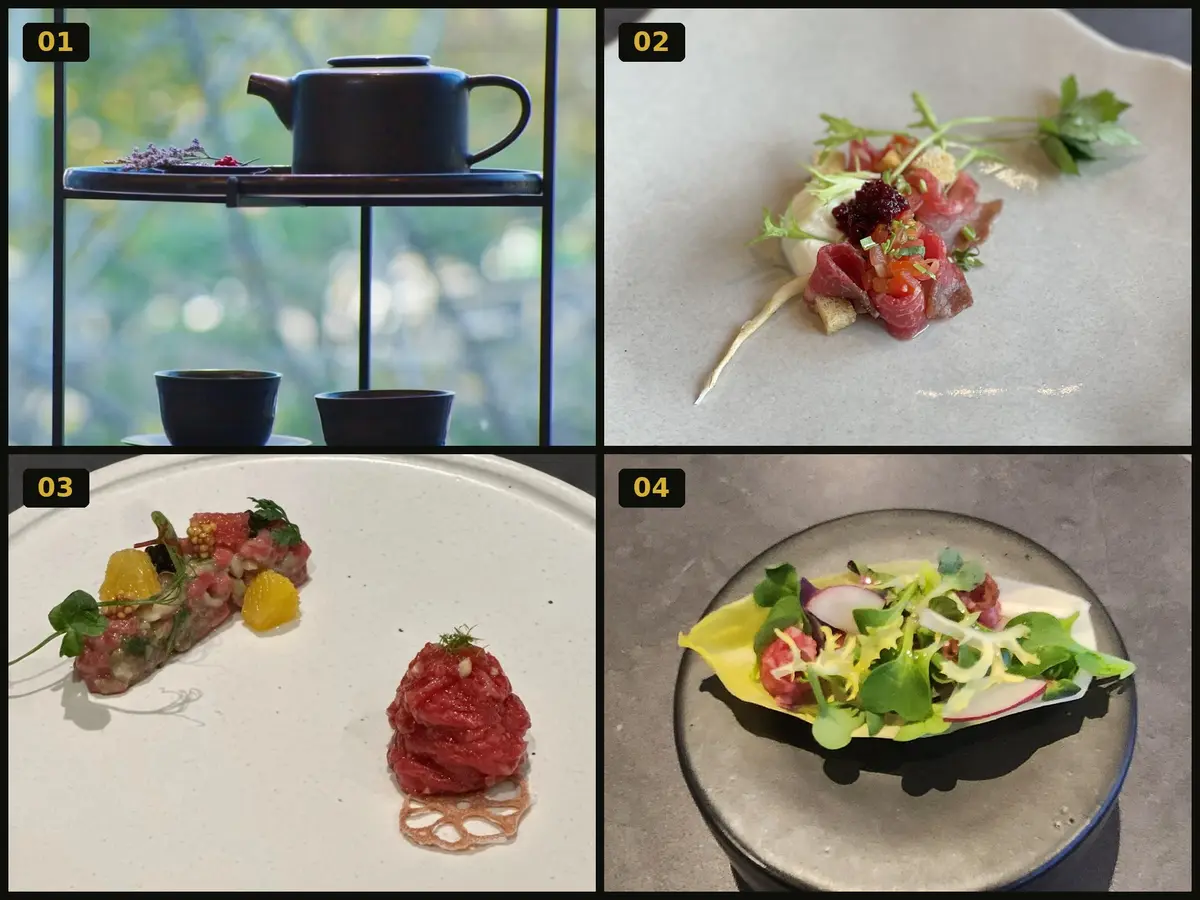
KUT SEOUL: Bar 8 dishes ₩69,000 (weekday lunch, counter only, 80 min) · Posh 11 ₩175,000 · Signature 13 ₩210,000 · Royal 15 ₩280,000 · Kids ₩45,000 (ages 7 and under). Signature and Royal are served in private rooms only.
For a course-by-course walk through what actually arrives on the counter, see our guide to every cut at KUT SEOUL. If you are undecided between tiers, the first-timer's course guide walks you through the choice.
BMS No. 9 Hanwoo, vacuum (wet) aged four weeks — not dry-aged. Grades run 3/2/1/1+/1++; since December 2019, 1++ covers marbling scores 7–9 and the number is displayed. KUT serves No. 9 only.
Where does KUT SEOUL fit in Jongno?
KUT SEOUL is a reservation-only Hanwoo omakase on the third floor of Hanol Tower, at 96 Jongno, midway between Jonggak and Jongno 3-ga stations. Inside, an 8-seat chef's counter and five private rooms — for parties from two to twelve — divide the day between counter courses at lunch and longer private-room courses at dinner.
3F Hanol Tower, 96 Jongno — 3 minutes from Jongno 3-ga Station (Lines 1·3·5) Exit 15 or Jonggak Station (Line 1) Exit 4; next to Tapgol Park; 20–25 minutes on foot from Gyeongbokgung.
Lunch 11:30–15:00 (last order 14:30), dinner 17:30–22:00 (last order 19:30), closed Tuesdays.
Reservation only, through CatchTable or Naver. Deposit is 100% of the order; cancellation is free two days before, 50% one day before, none on the day.
Because the counter serves the shorter Bar and Posh courses and the rooms serve the longer Signature and Royal, part of your choice is really a choice of seat. If you are unsure which suits your evening, see our comparison of the counter and private rooms, and the practical directions from Jongno 3-ga or Jonggak.
To book, use KUT SEOUL's reservation page.
Ending Your Day in Jongno
KUT SEOUL is a 3-minute walk from Jongno 3-ga Station (Lines 1·3·5) Exit 15 — 3F Hanol Tower, 96 Jongno, next to Tapgol Park. Counter seats take the Posh course (₩175,000); private rooms start from Posh at weekday lunch, Signature (₩210,000) at dinner and on weekends, up to Royal (₩280,000); on weekdays the 8-dish ₩69,000 lunch runs 80 minutes at the counter. Reservation only on CatchTable — which seat suits your evening.