Two days is the shortest trip that lets Seoul breathe. One day forces a march; three or more starts to spread across the river. Two days, based in Jongno, gives you exactly what the historic core does best: the five great Joseon palaces at their own pace, a UNESCO shrine, hanok alleys that have not yet turned into a theme park, and — as of September 2026 — the neighbourhood that Time Out just named the coolest on Earth.
This itinerary assumes you sleep somewhere within a ten-minute walk of Jongno 3-ga or Jonggak Station. That single decision removes most of the transit friction of a Seoul short break. Every stop below is either walkable from that base or one or two subway stops away. The pace is unhurried on purpose: Jongno rewards the traveller who lingers in a courtyard rather than the one who ticks off ten palaces.
Both evenings end with dinner at KUT SEOUL, a Hanwoo omakase three minutes from Jongno 3-ga Station Exit 15. Booking both nights in advance is the single most important preparation step for this trip — reservations at the Huwon Secret Garden and at KUT SEOUL are the two things that shape the rest of the schedule around them.
Where Should You Base Yourself in Jongno?
Stay within a ten-minute walk of Jongno 3-ga (Lines 1, 3, 5) or Jonggak (Line 1). That single axis puts you within twenty-five minutes on foot of every stop in this itinerary and one direct subway ride from both Seoul Station and Incheon Airport bus stops.
Jongno 3-ga is the practical centre of gravity. It is the only station where Lines 1, 3 and 5 all meet, which matters when you are moving between Gyeongbokgung (Line 3), Gwanghwamun (Line 5) and the airport bus stops on Jongno itself. It is also the neighbourhood that a panel of Time Out editors placed at the top of their 2026 world ranking, ahead of Rabat and Athens. The Korea Times reported that the district was praised for its mix of old Seoul and new energy — pocha tents, independent businesses and hanok houses.
For context on the neighbourhood's newer identity, our evening guide to Jongno 3-ga breaks down what Time Out actually praised and how to spend a night in it.
The two subway stations that anchor this itinerary — Jongno 3-ga and Jonggak — are about three minutes' walk apart from each other along Jongno itself. Choosing between them for your hotel is a matter of atmosphere: Jonggak leans toward office quiet in the evening, Jongno 3-ga toward the late-night alleys.
KUT SEOUL is a 3-minute walk from Jongno 3-ga Station (Lines 1·3·5) Exit 15 — on weekday lunches its 8-dish ₩69,000 Bar course runs 80 minutes at the counter, reservation only.
Palaces, Hanok, and the Cheonggyecheon Walk: How Should You Spend Day 1 in Jongno?
Day 1 stays on the western half of Jongno-gu. The morning belongs to Gyeongbokgung, the afternoon to Bukchon Hanok Village, and the early evening to Gwanghwamun Square and the head of Cheonggyecheon before dinner.
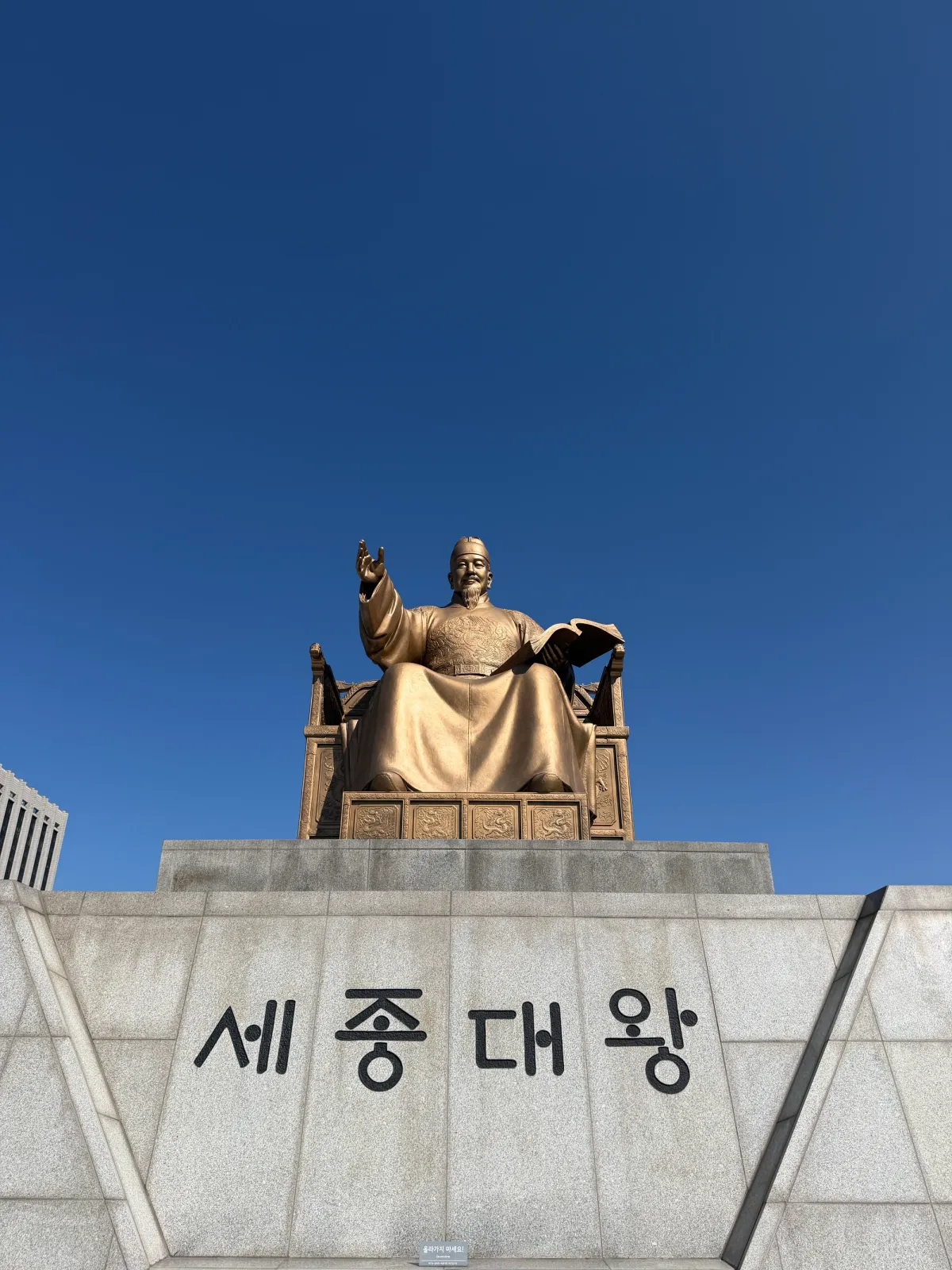
Morning: Gyeongbokgung Palace (09:00–11:30)
Arrive at Gyeongbokgung Station Exit 5 by 09:00, when the palace opens. From September to October, it stays open until 18:00 with last entry an hour before close; in November through February hours contract to 09:00–17:00, and in the summer months (June–August) it stretches to 18:30. The palace is closed on Tuesdays — if a Tuesday falls on a public holiday, it closes the following day instead. Time your trip accordingly.
The Royal Guard Changing Ceremony runs at 10:00 and 14:00 in front of Gwanghwamun Gate (as of 2026-09), so the morning slot pairs neatly with a first-hour arrival. There is no ceremony on Tuesdays, and it is cancelled in heavy rain or snow and scaled down in extreme heat or cold.
Before leaving the palace grounds, walk through the National Palace Museum of Korea (09:30–17:30, free, closed the last Monday of each month) and, if time allows, the National Folk Museum on the eastern side (09:00–18:00 March–October, 09:00–17:00 November–February) (as of 2026-09).
Late morning to early afternoon: Bukchon Hanok Village (11:30–14:30)
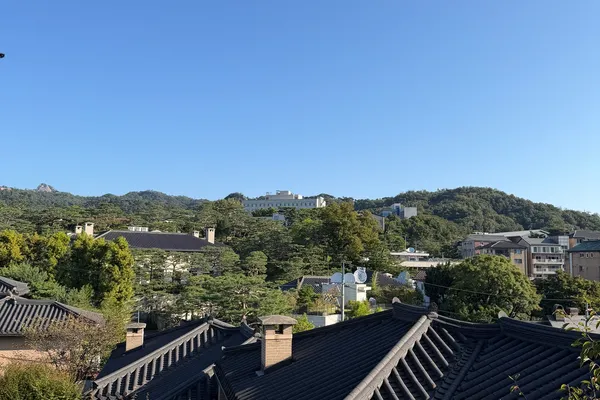
Walk east from Gyeongbokgung to Anguk Station and up into Bukchon. Since 1 March 2025, the residential Bukchon-ro 11-gil zone — the postcard-famous alley of tiled roofs — has been designated a Special Management Area with tourist access permitted only between 10:00 and 17:00. Entering outside those hours risks a ₩100,000 fine (as of 2026-09). There is no separate Sunday rule; the daytime window applies every day.
Inside the permitted window, Bukchon is best walked slowly. The Gahoe Minhwa Museum on 52 Bukchon-ro (₩5,000, closed Mondays) is a small folk-painting museum on the main road rather than up the restricted lane. Baek In-je House, a 1913 hanok, is free and open Tue–Sun 09:00–18:00 (as of 2026-09).
Lunch options thicken as you drift south from Bukchon toward Anguk and Samcheong-dong. Keep this course light — the day ends with a long Hanwoo dinner.
Afternoon: Gwanghwamun Square and Cheonggyecheon (15:00–17:30)
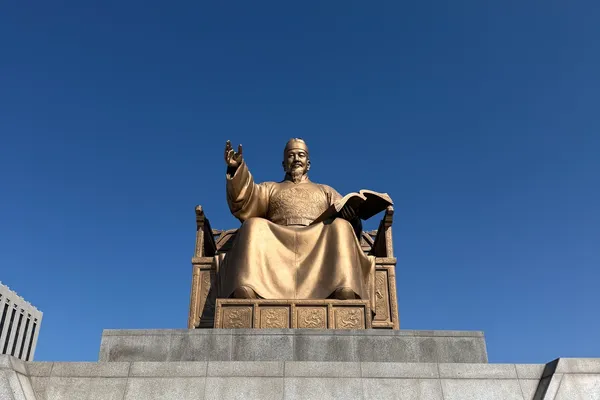
Doubling back through Gwanghwamun Square lets you see it in a different light from the morning ceremony crowd. The statues of Admiral Yi Sun-sin and King Sejong anchor the square; underneath the Sejong statue, the free Sejong Story exhibition traces the invention of Hangul. Our companion piece on Gwanghwamun Square and the Sejong Story walks the route east from here toward dinner.
From Gwanghwamun, the head of Cheonggyecheon begins one block south, at Cheonggye Plaza. The restored stream runs 5.84 km east through central Seoul; you only need the first twenty minutes of it to grasp the scale. If your visit falls between mid-December and mid-January, the Seoul Lantern Festival runs along the same stream in the evening — the 2025 edition ran 12 December 2025 to 18 January 2026, 18:00–23:00 (as of 2026-09); confirm this year's dates before planning around them.
Evening: Dinner at KUT SEOUL
Walk east along Jongno from Gwanghwamun (15 minutes on foot, or one stop on Line 5 to Jongno 3-ga) toward the restaurant. Aim for a 17:30 or 18:00 seating on the first evening — the longer private-room courses run three hours and will otherwise push against closing time.
Day 2: Changdeokgung, Jongmyo, Insadong and Ikseon-dong
Day 2 stays on the eastern half of the district. The core of it is a booked Huwon Secret Garden tour at Changdeokgung; the rest of the day flows outward from there.
Morning: Changdeokgung and the Huwon Secret Garden
Book the Huwon (Secret Garden) tour before you leave home. The garden is not open to independent walk-ins: admission is limited to 100 people per session (50 online, 50 on-site) under guided tours, and reservations are made through the Korea Heritage Service's Royal Palaces integrated reservation system. The palace ticket itself is separate from the garden ticket, and English-language tours run only a few times per day. Our Changdeokgung Huwon Secret Garden guide walks through the two-ticket system, the current English tour times and the 2.5-hour route in detail.
A typical morning: arrive at Changdeokgung by 09:30, walk the main palace buildings for an hour or so, then meet at the Huwon entrance well before your printed tour time. The whole visit — palace and garden combined — runs about 2.5 hours.
Late morning: Jongmyo Shrine
Exit Changdeokgung and walk south to Jongmyo Shrine, the UNESCO-listed royal ancestral shrine of the Joseon dynasty. Jongmyo also requires timed guided entry on weekdays; on Saturdays and the last Wednesday of each month you can enter freely. Book through the same Royal Palaces reservation portal you used for Huwon.
Jongmyo tends to be the quietest of the major heritage sites in Jongno. From the shrine's south gate, it is about seven minutes on foot to Jongno 3-ga Station and to Tapgol Park, which sits directly opposite Insadong across the wide Jongno road. Our Jongmyo Shrine guide covers the tour system and timings.
Afternoon: Insadong and Tapgol Park (14:00–16:30)
Insadong runs north from Jongno for about 700 metres. The main street, Insadong-gil, becomes car-free on Saturday 14:00–22:00 and Sunday 10:00–22:00 (as of 2026-09), which is the best window if your two days include a weekend.
The street is a survey of Korean craft: hanji paper shops, tea houses inside restored hanok, small commercial galleries and stationery specialists. A slow half-day here is the subject of our Insadong walking guide. Break for tea at one of the hanok tea houses — the ritual is more of the point than the caffeine.
At the southern end of Insadong-gil, cross Jongno to Tapgol Park (09:00–18:00 March–October, 09:00–17:00 November–February; free) (as of 2026-09), a small but historically significant park containing a 10-storey pagoda from the Wongaksa temple site and monuments to the 1 March 1919 Independence Movement.
Early evening: Ikseon-dong (16:30–17:30)
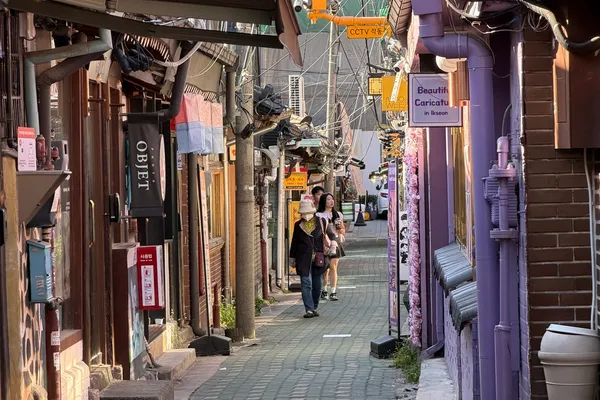
Walk ten minutes north-east from Tapgol Park (or one exit north from Jongno 3-ga) into Ikseon-dong, Seoul's oldest surviving hanok neighbourhood and one of the specific areas Time Out singled out in its 2026 write-up. The alleys are narrow, the roofline low, and the shops rotate faster than in Bukchon.
A half-hour loop through the main lanes is enough for a first pass. Our Ikseon-dong Hanok Alley guide covers the best hours, the quietest entrances and what to look for once you are inside.
Comparing the two days
| Day 1 | Day 2 | |
|---|---|---|
| Main palace | Gyeongbokgung | Changdeokgung + Huwon |
| UNESCO stop | (Gyeongbokgung is not UNESCO; Bukchon is not UNESCO) | Changdeokgung, Jongmyo |
| Neighbourhood walk | Bukchon (10:00–17:00 window) | Insadong, Ikseon-dong |
| Booking required in advance | Nothing beyond dinner | Huwon tour, Jongmyo weekday tour, dinner |
| Longest walk | Gyeongbokgung → Bukchon → Gwanghwamun | Changdeokgung → Jongmyo → Insadong |
| Best evening light | Cheonggyecheon head | Ikseon-dong alleys |
Evening: Dinner at KUT SEOUL, second seating
Second dinner at KUT SEOUL is the point at which a second night in Jongno starts to justify itself. On the first night you learned the room; on the second, you can graduate to a longer course — the 13-dish Signature or the 15-dish Royal, both served in the private rooms. Our counter versus private rooms guide explains which suits which occasion.
As on Day 1, aim for a 17:30 or 18:00 arrival if you are booking a room. The counter's Posh Course, which runs about two hours, is the more forgiving option if your Ikseon-dong walk runs long.
What About the Rest of Seoul?
Two days in Jongno deliberately leaves out Gangnam, Hongdae, Itaewon and the Han River parks. If you have a third day, spend it south of the river; if this is your only visit, Jongno gives you the densest concentration of what makes Seoul historically distinctive — three UNESCO sites (Changdeokgung, Jongmyo, and, via the Joseon royal tombs listing, Seonjeongneung), four royal palaces within walking distance of each other, and, since September 2026, the world's most-hyped neighbourhood.
Getting in from the airport is straightforward: limousine bus 6002 stops at Jonggak (YMCA) and Jongno 3-ga for ₩17,000 (as of 2026-09), or the AREX Express train (₩13,000, 43 minutes from Terminal 1) plus a two-stop Line 1 hop from Seoul Station lands you at Jonggak in about an hour total. Our Incheon Airport to Jongno guide compares all three routes with current fares.
Reservations for KUT SEOUL are made through CatchTable or Naver Booking — the restaurant does not take walk-ins and does not confirm bookings by phone (if you call, staff will send a booking link), so lock in both evenings before your Huwon slot.
Ending Your Day in Jongno
KUT SEOUL is a 3-minute walk from Jongno 3-ga Station (Lines 1·3·5) Exit 15 — 3F Hanol Tower, 96 Jongno, next to Tapgol Park. Counter seats take the Posh course (₩175,000); private rooms start from Posh at weekday lunch, Signature (₩210,000) at dinner and on weekends, up to Royal (₩280,000); on weekdays the 8-dish ₩69,000 lunch runs 80 minutes at the counter. Reservation only on CatchTable — which seat suits your evening.